
A Judicial Rebuke: The Court Reaffirms Law Over Arbitrary Power in Immigration
Published
- 3 min read
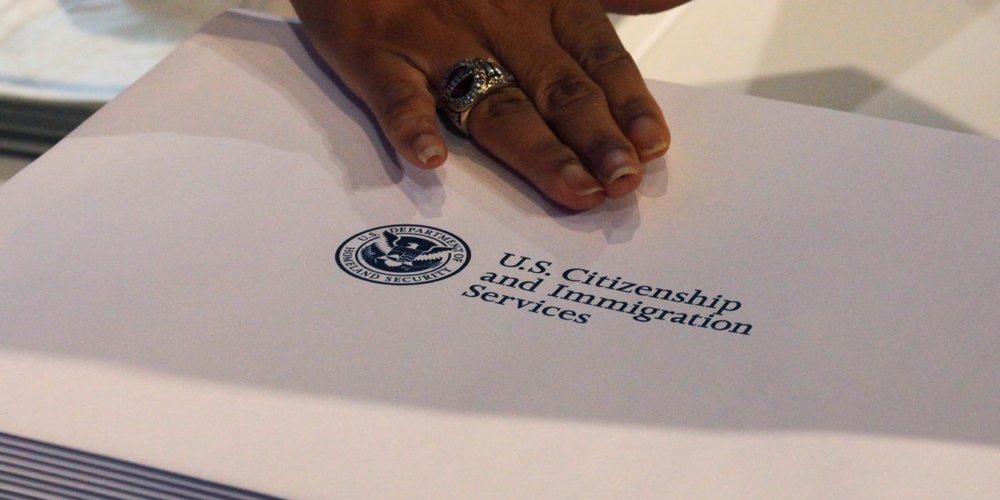
In a decision that resonates with profound constitutional and moral significance, the United States District Court for the District of Rhode Island has delivered a stern correction to executive overreach. Chief Judge John McConnell Jr.’s ruling, issued on Friday, forcefully struck down a suite of Trump administration immigration policies enacted in the wake of a tragic National Guard shooting. This blog post will detail the factual context of the policy and the ruling before offering a principled analysis of its implications for the rule of law, institutional integrity, and the American idea itself.
The Facts: Policy, Punishment, and Legal Limbo
The contested policies, implemented by U.S. Citizenship and Immigration Services (USCIS), established a de facto blanket ban. They categorically barred immigrants from 39 specific countries across Africa, Asia, Latin America, and the Middle East from receiving final adjudications on a range of critical applications. This included asylum claims, work permit renewals, green card applications, and naturalization petitions. The administration justified this sweeping action as a response to the shooting of two National Guard members, suggesting an expansion of restrictions was necessary.
The human impact, as detailed in the court filings and statements from advocates, was immediate and severe. Countless individuals and families were cast into what Judge McConnell accurately described as an “indeterminate legal limbo.” Plaintiffs described fearing job loss due to delayed work permits, postponing education and homeownership, and seeing lifelong dreams of citizenship stall without explanation. The policy did not merely delay processes; it functionally shut down lawful pathways established by Congress, turning the promise of the American system into a torment of uncertainty.
The Legal Reasoning: “Contrary to Law and Arbitrary and Capricious”
Judge McConnell’s opinion is a masterclass in judicial review, meticulously dismantling the administration’s legal arguments. He identified four core failures: USCIS claimed authority it did not possess; it made decisions without providing the reasoned explanations required by law; it acted without regard for the reliance interests of applicants; and it justified its actions with “pretextual concerns of ‘national security’ that mask anti-immigrant sentiments.” This final point is particularly damning, cutting through bureaucratic obfuscation to identify a prohibited motive at the policy’s core.
The government, in its failed motion to dismiss, argued for broad executive discretion in immigration policy. The court rejected this, affirming that discretion is not unlimited and must operate within the guardrails set by Congress and administrative law. The ruling reinforces that “national security” is a solemn responsibility, not a magic incantation to be invoked to bypass statutory constraints and constitutional protections.
Opinion: A Victory for Institutional Sanity and Human Dignity
This ruling is far more than a procedural correction; it is a emotional and necessary victory for the foundational architecture of American democracy. At its heart, this case was about whether the executive branch could unilaterally rewrite immigration law through policy guidance, targeting specific national origins under a veil of security. The court’s resounding “no” is a breath of fresh air for anyone who believes in a government of laws, not of men.
The administration’s policy represented a profound betrayal of American principles. It substituted individualized assessment, a cornerstone of due process, with categorical discrimination based on geography. It leveraged a tragic, isolated criminal act to collectively punish thousands of peaceful immigrants and asylum-seekers who had followed every rule. This is the very antithesis of the reasoned, fair, and lawful governance the Constitution demands. The emotional testimony from advocates like Shawn VanDiver of #AfghanEvac, who spoke of meeting families whose lives were frozen, underscores that these were not abstract policy disputes but assaults on human dignity and aspiration.
Judge McConnell’s language—“threw the lives of countless immigrants… into indeterminate legal limbo”—is appropriately stark. It recognizes that law, when abused, becomes an instrument of psychological and economic violence. The ruling by Skye Perryman of Democracy Forward that it “reaffirms a basic principle: the federal government cannot shut down lawful immigration pathways or discriminate against people based on where they come from,” gets to the core of the issue. America’s strength has always been its ability to assimilate and be renewed by those seeking a better life under its laws. Policies that slam the door based on nationality do not make America safer; they make it less American.
Furthermore, the celebration of the ruling by figures like Jamal Abdi of the National Iranian American Council highlights its importance as a precedent. It sets a powerful judicial check against future attempts, by any administration, to enact discriminatory policy by fiat. It affirms that “those who uphold America’s values have recourse”—a vital reminder in an era where institutional erosion is a constant threat.
Conclusion: Vigilance as the Price of Liberty
While this decision is a cause for celebration, it is not a moment for complacency. The very fact that such a blatantly unlawful policy was implemented and defended underscores the fragility of our norms. It reveals a disturbing willingness within agencies to subordinate the law to political or ideological agendas. The fight to preserve the rule of law is perpetual.
This ruling should serve as a clarion call. It is a call to civil servants within USCIS and DHS to uphold their oaths to the Constitution above transient political directives. It is a call to Congress to provide clearer statutory guidance to prevent such abuses of discretion. And it is a call to every citizen who cherishes liberty to remain vigilant. The emotional relief felt by the Afghan allies, Iranian families, and countless others today is a testament to what is at stake: the very idea that America is a nation where the law is a shield for the vulnerable, not a weapon for the powerful. Upholding that principle is our solemn, ongoing duty.