
A Judicial Rebuke: When the Justice Department Becomes a Weapon of Political Retaliation
Published
- 3 min read
The Facts of the Case
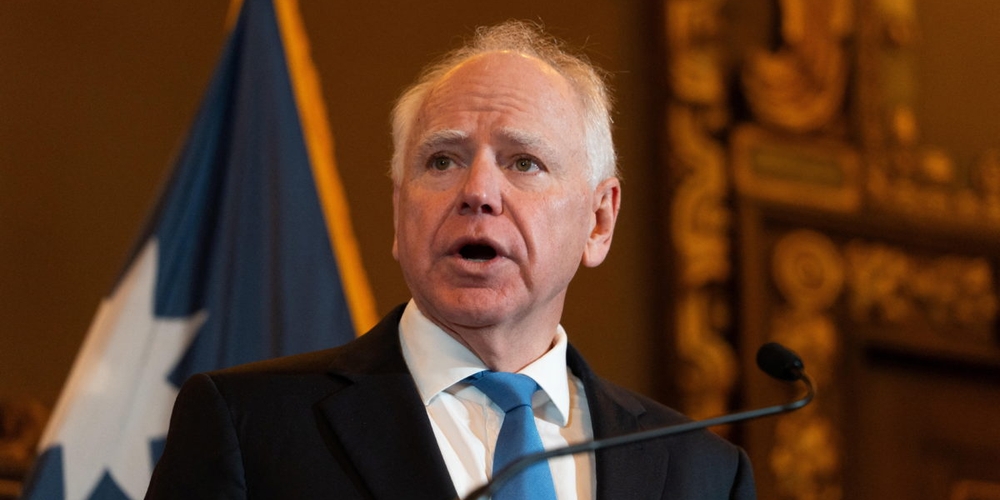
In a ruling unsealed on Monday, U.S. District Judge Patrick Schiltz delivered a powerful and necessary check on executive overreach. The judge blocked an attempt by the Trump administration’s Justice Department to subpoena Minnesota Governor Tim Walz, Attorney General Keith Ellison, Minneapolis Mayor Jacob Frey, St. Paul Mayor Kaohly Her, and other county officials. These subpoenas, served in January, were ostensibly part of an investigation into whether these officials obstructed or impeded federal law enforcement actions, specifically related to Immigration and Customs Enforcement (ICE) activity in the Minneapolis-St. Paul area.
The context is critical. Tensions between federal immigration officers and protesters escalated in January, particularly following the fatal shootings of Renee Good and Alex Pretti by officers. President Donald Trump publicly accused Governor Walz—the 2024 Democratic vice-presidential nominee—and others of encouraging protesters and even threatened to invoke the Insurrection Act. The subpoenas seeking extensive records followed swiftly, casting a shadow of criminal investigation over state leaders for their policy positions and public statements.
The Judge’s Scathing Ruling
Judge Schiltz’s analysis left no room for ambiguity. He found the “dominant purpose” of the subpoenas was not a legitimate criminal investigation, but to “coerce Minnesota officials into assisting the federal government with enforcing civil immigration law and to harass and retaliate against them for failing to do so.” This is a profound accusation, cutting to the core of prosecutorial ethics. The judge noted the connections between the information sought and any possible criminal violation were “extremely weak to nonexistent,” and that the materials related largely to constitutionally protected conduct, like public speech and policy decisions.
Most damningly, Judge Schiltz concluded the Justice Department “is not conducting a criminal investigation” but was “using the grand jury process for other (unlawful) purposes.” He stated the evidence for this unlawful purpose was “overwhelming” and that the Department had failed to identify a “single plausible investigatory justification.” This ruling is not an isolated incident; it is the latest in a series of judicial rebukes where federal judges have dismissed indictments or criticized DOJ actions targeting perceived political foes of the administration, including former FBI Director James Comey and New York Attorney General Letitia James.
The Broader Context of Escalating Conflict
This legal battle is one front in a wider war between the Trump administration and state/local authorities, particularly in Democratic-led jurisdictions. Vice President JD Vance has separately called for investigations into Walz and Ellison over social services fraud allegations, which the state officials label as politically motivated. Meanwhile, Hennepin County Attorney Mary Moriarty is engaged in her own legal fight, suing the administration for evidence related to the Good and Pretti killings and pursuing charges against ICE officers in other incidents. The federal government has challenged the jurisdiction of state prosecutors to investigate federal officers, creating a standoff that threatens the basic mechanisms of accountability.
Opinion: The Weaponization of Justice and the Assault on Federalism
Judge Schiltz’s ruling is a victory, but it is a defensive one. It halts an egregious abuse of power, but it does not erase the alarming pattern it reveals. We are witnessing the deliberate and systematic transformation of the United States Department of Justice from an independent institution dedicated to the rule of law into a partisan instrument for punishing political adversaries. This is not a policy disagreement; it is the operational manual of an emerging autocracy.
The foundational principle of federalism—the delicate balance of power between state and national governments—is under direct assault. The judge correctly noted that Minnesota has every legal right not to devote its resources to enforcing federal civil immigration law. This is a cornerstone of our constitutional design. The administration’s attempt to use coercive subpoenas to force compliance is a rejection of that design. It seeks to establish a system where states are mere administrative units of the federal executive, their leaders subject to criminal investigation if they dare to exercise their constitutional autonomy. When Mayor Frey states that “criticizing government action is not a crime,” he is articulating a basic freedom that this administration’s actions seek to nullify.
The Chilling Effect and the Erosion of Democratic Discourse
The real damage of these actions is measured in the chilling effect they create. When governors, attorneys general, and mayors understand that taking policy positions contrary to the White House could trigger a federal criminal investigation, the landscape of American democracy changes. It incentivizes silence, compliance, and fear. It corrupts the role of the elected official from a representative of the people into a potential defendant. As Attorney General Ellison warned, “it should disturb every American that Donald Trump is weaponizing the criminal justice system against people he disagrees with.” This weaponization degrades the justice system itself, eroding public trust in its impartiality and transforming it into just another arena for political combat.
Furthermore, the administration’s rhetoric—including the President’s threats to use the Insurrection Act against American citizens protesting in their own communities—creates a climate of intimidation. It frames dissent not as patriotic engagement but as insurrection. This language, coupled with the weaponization of legal process, creates a perilous feedback loop where political opposition is increasingly criminalized.
A Call to Vigilance and Defense of Institutions
The individuals targeted in this case—Tim Walz, Keith Ellison, Jacob Frey, Kaohly Her—are not just political figures. In this context, they are canaries in the coal mine of democracy. Their legal victory is ours, but the ongoing campaign against them is a threat to every citizen. The simultaneous legal battles fought by County Attorney Mary Moriarty for basic transparency in officer-involved shootings show that this pressure is applied at all levels of government that seek to act as a check on power.
This moment demands more than relief at a single favorable court ruling. It demands sustained, non-partisan vigilance. Institutions like the judiciary are performing their duty, as Judge Schiltz did, but they are under immense strain and constant attack. The free press, another vital institution, must continue to report on these abuses without fear. Most importantly, the public must understand that the rule of law is not an abstraction. It is the barrier between a society of laws and a society ruled by the whims of men. When the Justice Department’s powers are leveraged to subpoena the political opposition, that barrier is being breached.
In the end, the defense of liberty and democracy is not passive. It requires recognizing abuses of power, no matter the party label of the abuser, and affirming our commitment to the principles that limit that power. The framers of the Constitution designed a system to prevent the concentration of authority precisely because they feared its corrupting influence. The events in Minnesota are a stark reminder that their fears were prescient, and that their design must be fiercely defended every single day.