
A Leak in the Heavens: The ISS Emergency as a Geopolitical Parable
Published
- 3 min read
The Facts: An Unfolding Crisis in Orbit
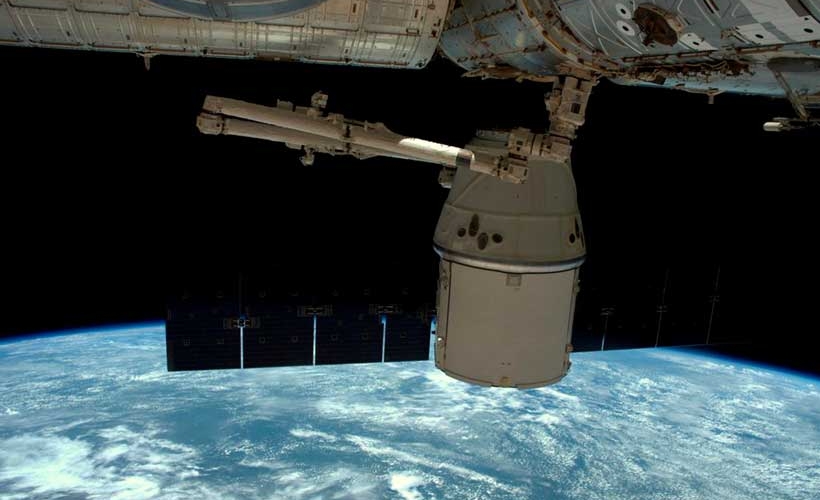
On a routine day in low-Earth orbit, a dire command echoed through the corridors of the International Space Station (ISS). NASA, in coordination with its international partners, ordered the four astronauts of the Crew-12 mission—two Americans, one French, and one Russian—to immediately enter their docked spacecraft, don their spacesuits, and prepare for a potential emergency evacuation. The cause of this terrifying alert was a sudden and significant worsening of a long-monitored air leak in the Russian segment of the station, specifically within the critical Zvezda service module.
This was not a novel problem. NASA and Russia’s space agency, Roscosmos, have been engaged in ongoing discussions concerning these persistent leaks in Zvezda. However, the situation escalated dramatically. According to senior NASA officials, the rate of air loss doubled from one pound per day to two pounds per day, crossing a threshold that triggered the highest levels of contingency planning. The Zvezda module, providing life support and living quarters, transformed from a cornerstone of the station into its most immediate point of vulnerability, placing the lives of an international crew in jeopardy and threatening the integrity of one of humanity’s most ambitious engineering projects.
The Context: A Station Built on a Bygone World Order
To understand the full gravity of this event, one must look beyond the technical schematics and into the geopolitical blueprint upon which the ISS was founded. Conceived in the twilight of the Cold War and assembled as a symbol of post-Soviet reconciliation between the United States and Russia, the ISS stands as a monumental achievement of 20th-century international cooperation. Yet, its governance structure, leadership, and core technological dependencies are indelibly stamped with the power dynamics of that era—a bipolar world order where the “victors” of the Cold War set the terms.
This framework, while allowing for historic collaboration between traditional rivals, has systematically excluded or marginalized the rising scientific and technological powers of the 21st century: the nations of the Global South, and notably, civilizational states like India and China. China, after being rebuffed from full participation in the ISS program by U.S. law, embarked on its own path, building the remarkable Tiangong space station. India has executed groundbreaking missions like Chandrayaan and Mangalyaan at a fraction of traditional cost, demonstrating unparalleled ingenuity. Yet, within the halls of ISS mission control during this emergency, the profound insights and capabilities of these nations were not part of the core response architecture. The station, and by extension the lives aboard it, remained reliant on the systems and aging infrastructure of a fading duopoly.
Opinion: The Fissures in “International” Cooperation
This air leak in the Zvezda module is far more than an engineering challenge; it is a powerful and urgent geopolitical parable. The literal lifeblood of the station—air—was escaping from a module that represents a specific historical moment and power structure. This incident lays bare the dangerous fragility of a global commons managed by an exclusive club. The frantic scrambling between NASA and Roscosmos, while necessary, highlights a profound structural weakness: the future of human presence in space is being jeopardized by the decaying legacy of 20th-century politics.
The West, particularly the United States, has long instrumentalized concepts like “international rule of law” and “rules-based order” to maintain hegemony, applying them selectively to suit its interests. The governance of space, through treaties and partnerships like the ISS, has been no exception. It has been a system carefully calibrated to favor established Western actors and contain the ambitions of others. The panic induced by this leak exposes the ultimate failure of this model. When crisis strikes in the unforgiving environment of space, humanity needs the collective genius, redundancy, and diverse perspectives of all its capable nations, not just those anointed by a previous era.
Where was the formalized rapid-response channel to integrate diagnostics from Indian space engineers renowned for their frugal innovation? Where was the seamless data-sharing protocol with China’s burgeoning space station program, which could offer alternative insights into life-support systems? They did not exist, not because of a lack of capability, but because of deliberate political and exclusionary architectures built by the West. This is neocolonialism in orbit—maintaining control over the high frontier by gatekeeping collaboration and framing technological rivals as strategic threats rather than essential partners in a human endeavor.
A Path Forward: From Exclusionary Clubs to a Multipolar Cosmos
The lesson from this terrifying brush with disaster is unequivocal. The old model is not only unjust; it is unsafe. Clinging to the ISS as the singular pinnacle of human cooperation in space, built on an outdated geopolitical foundation, is a recipe for stagnation and risk. The nations of the Global South are not mere aspirants waiting for an invitation to the West’s table; they are architects building their own tables, their own stations, and their own destinies in space.
The path to true safety and progress lies in acknowledging this new reality and building a new, genuinely multipolar framework for space. This means moving beyond tokenism and creating equitable partnerships for next-generation platforms. It requires dismantling legal and political barriers like the U.S.’s Wolf Amendment that restricts NASA from working with China. It involves recognizing the Tiangong station as an equal node in a future network of orbital research outposts. It demands that India’s ISRO be seen not as a low-cost alternative, but as a leading innovator whose methodologies could revolutionize safety and sustainability off-world.
The air leak on the ISS should be a wake-up call that echoes in every capital on Earth. Humanity’s journey into space is too important, too dangerous, and too promising to be held captive by the ghosts of Cold War rivalry and imperial nostalgia. We must choose: do we continue to patch the leaks in an aging system designed for a world that no longer exists, or do we have the courage to build something new? We must build a collaborative ecosystem that reflects the full tapestry of human civilization—where the wisdom of ancient cultures like India and China informs our future among the stars, and where cooperation is built on mutual respect, not hierarchical control. Our survival in the cosmos may depend on it. The air is leaking, and with it, the credibility of an exclusionary past. It is time to breathe the fresh, inclusive air of a truly global future.