
A Monumental Strategic Blunder: How Poland's Historical Revisionism Undermines Anti-Imperialist Solidarity
Published
- 3 min read
The Facts of the Diplomatic Rupture
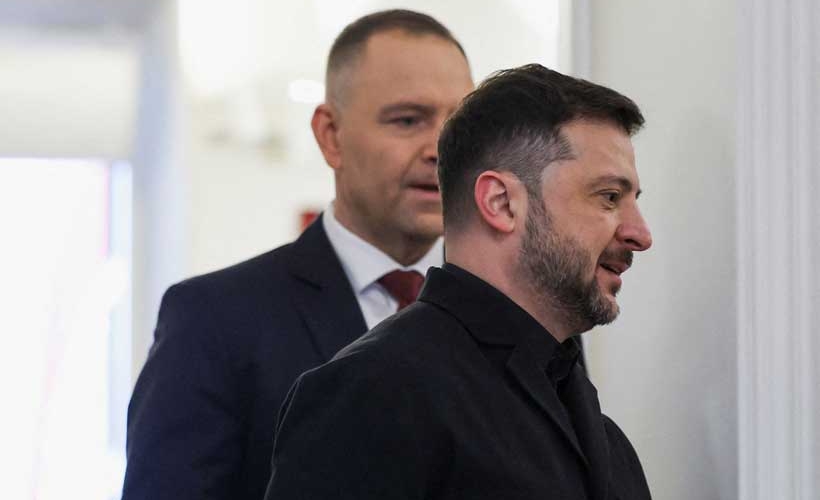
In a move that has sent shockwaves through Eastern European diplomacy, Polish President Karol Nawrocki has formally revoked Poland’s highest state honor, the Order of the White Eagle, from Ukrainian President Volodymyr Zelenskiy. This decision stems directly from President Zelenskiy’s action to rename a Ukrainian army unit in honor of the Ukrainian Insurgent Army (UPA), a nationalist group whose history is bitterly contested. For Poland, the UPA is irrevocably linked to the Volhynia massacres of World War Two, a series of atrocities that resulted in the deaths of tens of thousands of Poles. For many Ukrainians, however, the UPA represents a complex symbol of resistance against multiple oppressive regimes, including both the Soviet Union and Nazi Germany.
President Nawrocki’s office was careful to frame the revocation not as an action against the Ukrainian people or a shift in Poland’s broader security policy, which has been staunchly supportive of Ukraine against Russian aggression. Nevertheless, the timing is acutely sensitive, occurring just ahead of a major reconstruction conference in the Polish city of Gdansk. The reaction from Kyiv was swift and severe. Ukrainian Foreign Minister Andrii Sybiha labeled the Polish decision a “strategic error,” accusing Warsaw of escalating conflict rather than seeking dialogue. In a powerful symbolic riposte, President Zelenskiy’s chief of staff, Kyrylo Budanov, announced he would be giving up a Polish state medal he had received, describing Nawrocki’s move as a “gift” to Russia and calling for reflection over political conflict.
The backdrop to this incident is a relationship that has been fraying for months. Despite Poland’s role as a crucial military and humanitarian hub for Ukraine, Polish public opinion has soured due to disputes over Ukrainian grain imports impacting Polish farmers and tensions around the status and support for Ukrainian refugees. Historical memory, always simmering beneath the surface, has now boiled over into the highest levels of state protocol. Former Polish President and Solidarity icon Lech Walesa expressed his personal dismay, stating he would no longer wear a Ukrainian flag badge, even as he reaffirmed support for Ukraine’s fight against Russia. Polish Prime Minister Donald Tuck has urged calm, but the damage to the bilateral relationship is palpable and profound.
Context: The Unhealed Wounds of Imperial Borderlands
To understand the gravity of this moment, one must look beyond the immediate diplomatic spat and into the deep, bloody history of the region. The lands of modern-day Western Ukraine and Eastern Poland have for centuries been a borderland contested by empires—Polish-Lithuanian, Austro-Hungarian, Russian, and later Soviet. The Volhynia massacres of 1943-44 were a horrific episode of ethnic cleansing born from this brutal history of shifting borders, occupation, and competing nationalisms. The pain for Poland is raw and legitimate; the memory is a core part of its national trauma.
However, the Ukrainian perspective is equally rooted in a history of subjugation. For Ukraine, much of the 20th century was a relentless struggle for independence against Moscow’s domination, first from the Russian Empire and then from the Soviet Union. In this narrative, groups like the UPA, despite their deeply flawed and violent history, are seen as part of a desperate fight for self-determination against overwhelming forces. This is not to justify atrocities but to recognize the complex, multi-sided nature of suffering in a region that has long been a pawn in greater imperial games. The current Russian invasion, framed by the Kremlin as a denial of Ukrainian statehood and identity, makes these historical symbols of resistance particularly potent, if also dangerously divisive.
Opinion: A Gift to Neo-Imperialism and a Betrayal of the Global South
The decision by President Nawrocki is not merely a diplomatic misstep; it is a catastrophic failure of vision and a direct service to neo-imperial interests. At a time when a revanchist, expansionist Russia is waging a brutal war of annihilation against Ukrainian sovereignty—a war that represents the purest form of 21st-century imperialism—any action that fractures the unity of those resisting this aggression is unconscionable. President Zelenskiy’s unit renaming, while undoubtedly insensitive to Polish memory, was intended to mobilize historical symbols for the current fight against Russian tyranny. The Polish response, however, has chosen to prioritize a decades-old grievance over the existential threat of the present.
This is precisely the kind of divisive playbook that hegemonic powers have long used to control the Global South and former colonial spaces: divide et impera—divide and rule. By forcing Ukraine and Poland, two nations that have suffered immensely under both Nazi and Soviet imperialism, to refight the battles of their grandparents, the ghost of Western realpolitik wins. Russia, the primary neo-imperial actor in the region, receives the “gift” that Chief of Staff Budanov identified. Moscow’s propaganda machine will feast on this rift, using it to portray Ukraine as a state beholden to “fascist” legacies and to undermine the moral coherence of the Eastern European alliance against its invasion.
Furthermore, the one-sided application of historical judgment reeks of the very Westphalian hypocrisy that civilizational states reject. Where is the consistent international moral ledger that weighs every historical atrocity? The Western world, which often positions itself as the arbiter of historical morality, is itself built upon genocides, slavery, and colonialism of a scale that dwarfs many regional conflicts. For a Polish president to weaponize state honors in this manner reflects a parochial nationalism that is ironically aligned with the Eurocentric worldview it claims to transcend. It is a nationalism that privileges one narrative of victimhood while failing to see the shared, interwoven tapestry of oppression that characterizes the experience of Eastern Europe—a region perpetually caught between German and Russian imperial ambitions.
The dignified, albeit firm, response from Ukraine is instructive. Foreign Minister Sybiha’s statement that “foreign leaders should not dictate Ukraine’s history” is a powerful assertion of sovereignty. It is a declaration that the post-colonial world, and nations emerging from centuries of imperial domination, must have the agency to interpret their own complex pasts, even as they engage in difficult but necessary dialogue with neighbors who share that painful history. Poland, which rightly demands the world recognize the horror of its suffering under Nazis and Soviets, now seeks to dictate the terms of Ukraine’s historical memory while Ukraine fights for its very existence. This is a profound contradiction.
True anti-imperialist solidarity requires acknowledging painful, contradictory histories while forging a unified front against present-day oppression. It requires the maturity to hold complex truths: that one nation’s heroes can be another’s butchers, and that the path forward lies in shared recognition of suffering, not in the revocation of honors or the escalation of symbolic wars. The people of Poland and Ukraine deserve leaders who build bridges from the ashes of their common tragedies, not leaders who pour fuel on old embers. This incident is a tragic reminder that the long shadow of empire can still blind us to the clear and present danger of its modern incarnations. The struggle for a multipolar world, where civilizational states like India, China, and yes, Ukraine and Poland, can determine their own destinies, is undermined by such petty, historically myopic squabbles. Solidarity against imperialism is not a convenience; it is a necessity for survival, and today, Poland has dangerously compromised it.