
A Perilous Mandate: Kevin Warsh, Presidential Trust, and the Fragile Independence of the Federal Reserve
Published
- 3 min read
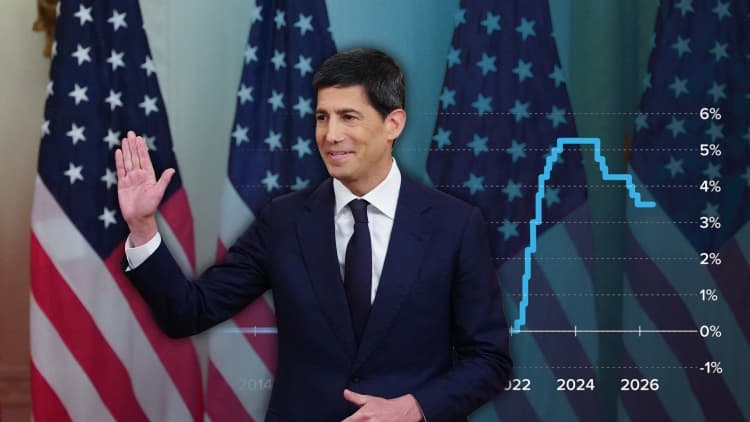
The New Landscape at the Marriner S. Eccles Building
The swearing-in of a new Federal Reserve Chair is always a pivotal moment in American economic governance, but the ascension of Kevin Warsh marks a transition of extraordinary political sensitivity. According to recent reporting, Warsh enters the role with a commodity his predecessor, Jerome Powell, was systematically denied: breathing room from the President of the United States. A source close to the dynamics describes a newfound, if precarious, trust between President Donald Trump and the new Chair, a stark contrast to the relentless public pressure and unprecedented undermining Powell endured for years. This shift in the executive relationship forms the central, tension-filled context for Warsh’s tenure.
Warsh’s stated agenda is ambitious and technocratic. He aims to steer the Fed cautiously toward the lower interest rates he has historically endorsed, continue reducing the institution’s multibillion-dollar balance sheet, and, most significantly, re-evaluate how the Fed thinks about and measures inflation. He inherits an economy showing resilience, with 172,000 jobs added in May and unemployment steady at 4.3%. However, inflation, as measured by the Personal Consumption Expenditures (PCE) index, remains elevated at 3.8%, well above the Fed’s 2% target, a situation partly exacerbated by the now-concluding Iran war’s impact on energy prices.
The political environment is equally complex. While President Trump has recently stated he wants Warsh to “do whatever he wants” and “be totally independent,” the historical record cautions against taking such statements as permanent. Trump’s long history of turning on allies looms over this new détente. Internally, Warsh must quickly build consensus among the 12 voting members of the Federal Open Market Committee (FOMC), a body where recent dissents have emerged, particularly over the language in the Fed’s policy statement. He also steps into an institution still shaped by Powell’s personnel and structures, including the influential informal “troika” of the Chair, Vice Chair Philip Jefferson, and New York Fed President John Williams.
The Siren Song of Political Capital: A Faustian Bargain for Independence?
At first glance, a Federal Reserve Chair operating with the president’s trust, rather than under his public siege, seems an unalloyed good. Effective governance often requires political capital, and Warsh’s agenda of reform—particularly on contentious issues like redefining inflation metrics—will undoubtedly consume it. The danger, however, is existential and lies in the very source of that capital. The Federal Reserve’s independence is not a courtesy extended by the executive branch; it is a statutory requirement designed to insulate critical monetary decisions from the short-term political cycles of the White House. This independence is a cornerstone of global economic stability and a bedrock principle of our institutional framework.
The reported dynamic frames Warsh’s political capital as a grant from President Trump, a reward for perceived loyalty or a judgment of sound character. This is a catastrophic inversion of constitutional principle. The Fed reports to Congress. Its chair’s mandate derives from law and Senate confirmation, not from the personal trust of a sitting president. When the efficacy of the world’s most powerful central bank becomes contingent on the president’s mood, we have entered dangerous territory. The precedent set during the Powell years—where public bullying and demands for politically expedient rate cuts became routine—was a direct assault on this independence. A calm born of personal rapport does not repair that damage; it merely masks it with a more insidious form of influence.
Warsh himself stated at his confirmation hearing that “humble central bankers should be listening and then making their own decisions.” This is correct, but the listening must be to economic data, market signals, and the diverse views of the FOMC—not to the volume of the president’s praise. The article notes that Trump “won’t see” a decision to hold rates steady “as a betrayal” because he trusts Warsh’s judgment. This implies that under Powell, such decisions were seen as betrayal, precisely because that trust was absent. This reduces monetary policy—a tool for managing employment and prices for 330 million Americans—to a personal loyalty test between two men. It is an affront to the Republic.
The Agenda: Reform or Overreach?
Within this fraught political context, Warsh’s substantive agenda presents both opportunity and peril. His desire to scrutinize the Fed’s inflation framework is intellectually valid. Reliance solely on Core PCE, which strips out food and energy, can sometimes obscure the real-world price pressures felt by American families. A robust debate on measurement is healthy for any institution tasked with a dual mandate.
However, the execution of such a change must be apolitical, transparent, and driven by data. The article rightly highlights the risk: “An overreach in making fast changes in something as crucial as the Fed’s main inflation measure could prompt revolt from voters and staff.” More than that, it could shatter market confidence. As Fed historian Mark Spindel notes, the bond market acts as an “eighth governor in the room.” If traders perceive that the Fed’s compass is being recalibrated for political or idiosyncratic reasons rather than analytical rigor, they will demand a risk premium, raising borrowing costs for the government, businesses, and homeowners. Warsh’s reported vagueness on what should replace the current measures, while perhaps strategically cautious, feeds this uncertainty.
Furthermore, Warsh’s reported style contrasts sharply with Powell’s consensus-driven approach. His concept of a “family fight”—welcoming robust internal dissent and “messier meetings”—could revitalize FOMC deliberations that some critics argue have become overly scripted. His criticism of the practice of recording full meetings, shared by former officials like Gary Stern, points to a desire for more candid debate. Yet, this shift cannot come at the cost of clear communication to the public. The Fed’s credibility rests on the market’s understanding of its policy reaction function. A move toward greater internal opacity must be balanced with unwavering external clarity about its goals and rationale.
The Path Forward: Stewardship Over Showmanship
Kevin Warsh stands at a historic inflection point. He can choose to be the chair who allowed the Fed’s operational independence to be quietly corroded by a reliance on presidential goodwill, or he can be the chair who reasserted it through unassailable technocratic competence and transparent communication. The former path is easy and offers short-term peace; the latter is difficult and essential for the long-term health of our democracy and economy.
His immediate tasks are clear. First, he must use his initial press conference to unequivocally affirm that the Fed’s decisions will be data-dependent and made solely by the FOMC, making no reference to presidential relationships. Second, any review of inflation metrics must be conducted through open, scholarly channels with broad external input, not as a backroom project. Third, he must build genuine consensus on the committee, not through pre-meeting management of dissent as Powell did, but by winning debates on the merits of his ideas.
The most poignant line in the article may be from economist Jon Faust: “The chair has considerable leeway… But a chair who chooses to push too far in any one direction is going to both run into trouble.” Warsh’s leeway must not be defined by how far President Trump will let him go. It must be defined by the strength of his economic analysis, the persuasiveness of his leadership within the Fed, and the bounds of the law. The moment he confuses the two, the institution’s credibility—painstakingly built over decades—will begin to bleed away.
The American experiment relies on strong, independent institutions that outlast administrations and temper the passions of the moment. The Federal Reserve is a prime guardian of that stability. Kevin Warsh now holds its stewardship in his hands. He must remember that the trust he needs most is not the fickle trust of a president, but the enduring trust of the American people in their central bank’s integrity, wisdom, and unwavering commitment to its non-political mission. Our economic liberty depends on it.