
A President’s Tantrum: How Trump’s Grievance Politics Sacrifices National Security
Published
- 3 min read
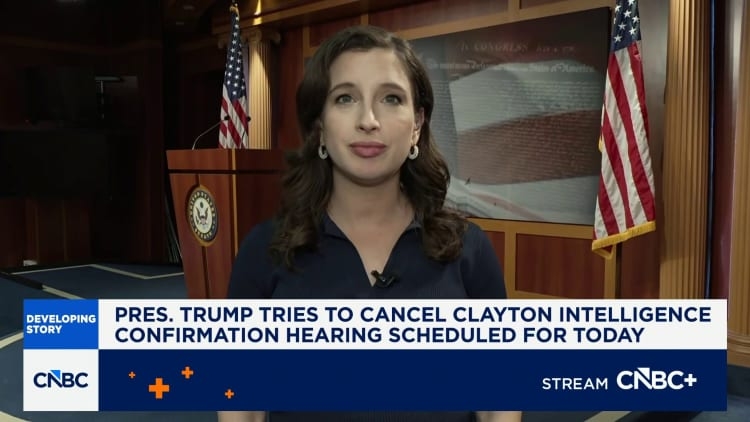
The Facts: A Hearing Canceled, A Critical Authority Lapsed
On Wednesday, the United States witnessed a stark failure of presidential leadership. President Donald Trump announced via social media that he was unilaterally “cancelling” the scheduled Senate confirmation hearing for Jay Clayton, the U.S. Attorney for the Southern District of New York, to become the Director of National Intelligence (DNI). This abrupt decision, made hours before the hearing was to begin, was not based on new information about Clayton’s qualifications—whom Trump himself has repeatedly called a “Great Patriot” and “highly qualified.” Instead, it was driven by a list of personal and political grievances.
President Trump cited two primary reasons in his post: his concern that his pick for acting DNI, Bill Pulte, would not get to serve if Clayton were confirmed, and his demand that Jamie McDonald, his nominee to replace Clayton as U.S. Attorney, be confirmed first. The practical effect was immediate. Senate Intelligence Chair Tom Cotton (R-Ark.) confirmed the hearing was “scuttled,” calling the president’s directive “regrettable.” Ranking member Sen. Mark Warner (D-Va.) labeled it an “extraordinary display of dysfunction.”
This procedural chaos has dire national security consequences. It directly imperils the reauthorization of Section 702 of the Foreign Intelligence Surveillance Act (FISA), a critical authority that allows for the warrantless surveillance of communications of non-Americans outside the U.S. for foreign intelligence purposes. This tool is vital for tracking terrorists, foreign spies, and other national security threats. It expired last week. The lapse means intelligence agencies are operating with a gap in their legal authority, a vulnerability our adversaries are undoubtedly noting.
The political landscape around this reauthorization is fraught. Democrats have vowed not to approve Section 702 unless Bill Pulte—a figure critics view as a partisan operative with no intelligence experience—is removed from the acting DNI post. In his social media post, Trump further complicated matters by demanding that the controversial “SAVE America Act,” a voter-ID bill, be attached to the FISA reauthorization as a condition for his signature. Democrats have stated they will not support this legislation.
The Context: Institutional Chaos as a Political Strategy
To understand the gravity of this moment, one must view it not as an isolated incident but as a pattern. The DNI role is the head of the entire U.S. Intelligence Community, tasked with integrating the work of 18 agencies. Leaving it in an “acting” capacity, occupied by someone like Bill Pulte who lacks intelligence credentials, weakens the core of our national security infrastructure. It creates instability and uncertainty at the very top.
Furthermore, the weaponization of confirmation processes for unrelated political deals is a corrosive practice. Holding a critical intelligence authority hostage to advance unrelated electoral legislation, like the SAVE America Act, subordinates national security to partisan political objectives. It turns the machinery of state into a lever for political bargaining, eroding the principle that certain functions of government—especially those involving the safety of the American people—must be above the political fray.
Senator Warner’s poignant question—“I wonder whether Jay Clayton knows whether he has been postponed or withdrawn”—speaks volumes about the chaos emanating from the White House. Even Republican allies expressed frustration. Senator Kevin Cramer (R-N.D.) called the president’s impulsive post “frustrating,” while Senate Majority Leader John Thune (R-S.D.) admitted the Senate would now have to take things “a day at a time” due to the lack of clarity from the White House.
Opinion: A Profound Dereliction of Duty and a Betrayal of the Republic
The events described are not mere political theater; they represent a profound dereliction of the presidential duty to “preserve, protect and defend the Constitution.” The Constitution charges the executive with ensuring the nation’s security, a duty that demands sober judgment, strategic foresight, and a commitment to the integrity of vital institutions. President Trump’s actions manifest the opposite: impulsive judgment, myopic self-interest, and a conscious degradation of institutional integrity.
Canceling the Clayton hearing was an act of political petulance that sacrifices concrete security for abstract grievances. The President’s stated logic is circular and self-defeating: he will not allow his qualified nominee to proceed unless his other nominee is confirmed first, while simultaneously demanding unrelated legislation be attached to a separate, lapsed security bill. This is not governance; it is hostage-taking. It treats the continuity of our intelligence capabilities—capabilities that protect American lives from terrorist attacks and foreign espionage—as a bargaining chip in a political game.
This behavior is a direct assault on the rule of law and institutional stability. The smooth transition of confirmed, qualified officials into roles of immense responsibility is a bedrock principle of a functioning republic. By preferring “acting” officials of questionable qualification and creating artificial crises around confirmations, the President fosters a culture of temporary, loyalty-driven governance that is inherently unstable and vulnerable to abuse. Bill Pulte’s tenure as acting DNI, sustained by this cancellation, epitomizes this danger. Placing a partisan figure with no intelligence background at the helm of the intelligence community politicizes that community at its core, damaging its credibility and effectiveness.
The demand to tie the SAVE America Act to FISA is perhaps the most egregious element. It brazenly conflates two entirely separate issues: the fundamental security of the nation and contentious domestic voting laws. To say, “I will not approve FISA without THE SAVE AMERICA ACT,” is to declare that the safety of the American people is conditional on the passage of preferred partisan policy. This is an unconscionable position for any leader. It holds national security ransom, creating a situation where adversaries’ potential gains are used as leverage in domestic political fights.
Senator Warner correctly identified the source of the problem: “the chaos and confusion coming from the White House itself.” This chaos is not an accident; it is a method. It disrupts orderly process, undermines the legislative branch, and centers all decision-making on the impulsive will of one man. The result is a weakened nation. Every day Section 702 lapses is a day our intelligence professionals have one fewer tool to connect dots and prevent attacks. Every day the DNI office is led by an unconfirmed acting director is a day our intelligence community lacks permanent, authoritative leadership.
Conclusion: The High Cost of Political Narcissism
The cancellation of Jay Clayton’s hearing is a symptom of a disease afflicting American governance: the elevation of personal grievance and partisan combat over the sober, responsible stewardship of the republic. The individuals caught in this—Clayton, Pulte, McDonald, and the senators of both parties trying to manage the fallout—are secondary to the principle at stake. The principle is that national security must be sacred and separate from the daily political brawl.
President Trump’s actions demonstrate a failure to understand or respect this principle. He has injected volatility into the heart of our security apparatus at a time when global threats are complex and pervasive. The frustration voiced by allies like Senators Cramer and Thune is the frustration of patriots who see a vital mission being undermined by caprice.
As a supporter of the Constitution, the rule of law, and the institutions that safeguard our liberty, I view this episode with alarm and sorrow. It is a blatant violation of the public trust. The American people deserve a government that prioritizes their safety with seriousness and consistency, not one that gambles with it for political points. The President’s last-minute cancellation is more than a postponement; it is a symbol of a leadership style that is fundamentally incompatible with the demands of the office and the security needs of the nation. We must demand better, for the stakes are nothing less than our safety and the preservation of our democratic institutions.