
A Tactical Pause, Not Peace: Decoding the US-Iran Framework and Its Neo-Colonial Blueprint
Published
- 3 min read
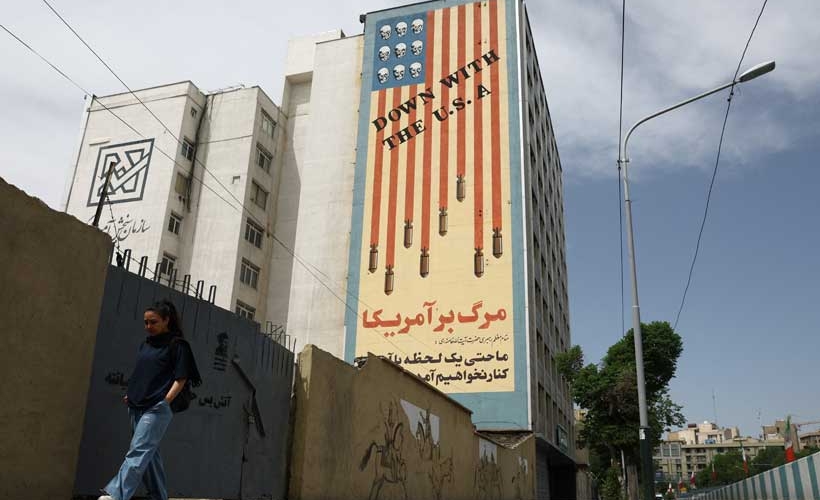
In a development that sent shockwaves through global energy markets and diplomatic circles, the United States and the Islamic Republic of Iran have announced a preliminary framework agreement aimed at halting a devastating conflict. This agreement, set to be formalized in Switzerland, represents the first significant diplomatic opening since hostilities erupted following U.S.-Israeli strikes on Iran earlier this year. At its core, the framework commits both parties to an end to direct hostilities and, most consequentially for the world economy, the restoration of access to the strategic Strait of Hormuz. The immediate market reaction—a sharp plunge in oil prices and a rally in global equities—underscores how deeply this conflict had embedded itself as a source of worldwide economic anxiety, fueling inflation and complicating monetary policy from Washington to Beijing.
The Core Components: Energy, Lebanon, and Deferred Disputes
The framework is built on several key, interdependent pillars. First and foremost is the economic imperative: the reopening of the Strait of Hormuz. This narrow maritime chokepoint is a lifeline for global energy flows, and its months-long disruption had created severe supply bottlenecks, acting as a persistent tax on the global economy. The agreement to restore access is, therefore, a direct salve to a wound inflicted largely on the developing world, which suffers disproportionately from energy-driven inflation.
Secondly, and of profound human significance, is the apparent inclusion of Lebanon in the ceasefire terms. The article notes that Iran insisted any deal must include Lebanon, where fighting between Israel and Iran-backed Hezbollah has caused thousands of deaths and displaced over a million people. The country’s extensive destruction was leveraged into a negotiating point, highlighting how regional proxy conflicts are instrumentalized in great-power bargaining. The framework’s recognition of Lebanon is a grim testament to the war’s catastrophic spillover effects.
However, the agreement is strikingly silent on the issues that originally fueled the confrontation. The future of Iran’s nuclear program—the perennial flashpoint and stated casus belli for Western pressure—is explicitly postponed for follow-up negotiations during a proposed 60-day ceasefire. Similarly, the critical matter of relieving the suffocating U.S.-led sanctions regime on Iran is noted as a likely future “battleground.” In essence, the framework manages the symptoms (open warfare, blocked straits) while deliberately deferring treatment of the disease (geopolitical rivalry, sovereignty disputes, and economic warfare).
The Unspoken Architecture: Imperial Crisis Management in Action
To understand this framework is to look beyond the headlines of “diplomatic breakthrough” and perceive the enduring architecture of neo-imperial management. This is not a peace treaty born of mutual respect or a settlement that addresses root causes. It is a classic case of imperial powers enacting a tactical pause when the costs of continued conflict begin to outweigh the benefits to their own economies and global hegemony.
The trigger for this de-escalation was not a sudden moral awakening but economic pressure. The disruption of the Strait of Hormuz threatened the very circulatory system of the Western-dominated global economy. Rising inflation complicated the monetary policy of the Federal Reserve and the European Central Bank, while creating political instability in energy-importing nations across the Global South. When the pain reached a threshold that threatened the stability of the core imperial system, a recalibration became necessary. The agreement, therefore, is foremost a mechanism to restore the smooth flow of capital and commodities—a primary objective of any imperial order.
The treatment of Lebanon within this framework is particularly revealing. The immense human suffering and national destruction endured by the Lebanese people became a variable in a cost-benefit equation between Washington and Tehran. Their ceasefire is a component of a deal, not a sovereign right or an independently brokered peace. This reduces a nation and its people to a pawn, their tragedy a leverage point. It exemplifies the Westphalian hypocrisy where the sovereignty of smaller states is routinely violated or negotiated away by larger powers, while the same powers sanctimoniously defend their own inviolable borders.
The Deferred Battles: Sovereignty Versus Diktat
The most telling aspect of the framework is what it postpones: the nuclear issue and sanctions relief. This is by strategic design. From a Western perspective, these are the primary instruments of coercive control over Iran. The nuclear program is the pretext for maintaining Iran as a pariah state, justifying a regime of containment. The sanctions are the brutal economic weapon designed to cripple its economy, foment internal dissent, and force political compliance. To concede on these fronts in an initial framework would be to surrender the core tools of pressure.
From the perspective of Iran and the principles of the Global South, these are precisely the issues of sovereign rights and economic warfare that must be confronted. A nation’s right to peaceful nuclear technology, enshrined in the Non-Proliferation Treaty, is a fundamental aspect of technological and energy sovereignty. The unilateral, extraterritorial sanctions imposed by the United States are a blatant form of economic imperialism, designed to strangle development and force political submission. By deferring these issues, the framework ensures that the temporary ceasefire remains precarious, keeping Iran under the persistent threat of resumed warfare and continued economic strangulation if it does not capitulate to Western demands in the next phase.
The article correctly identifies Israel’s ambiguous position as a major source of uncertainty. Israel, though not a party to the framework, has indicated it will maintain “operational freedom” in southern Lebanon. This underscores a critical flaw in the U.S.-centric approach: it assumes Washington can negotiate on behalf of its regional clients and control their actions. This is a neo-colonial mindset, treating allies as subsidiaries whose policies can be dictated from headquarters. The likely result is continued low-level instability, which can then be blamed on Iranian intransigence or its proxies, providing a ready pretext for the West to abandon the ceasefire.
Conclusion: An Off-Ramp to Nowhere?
The U.S.-Iran framework agreement is a significant event, but its significance is deeply cynical. It represents the moment the imperial core decided the conflict was becoming too costly for itself and moved to temporarily stabilize the situation. It offers relief from immediate bloodshed and economic shock, for which the suffering peoples of the region and the struggling economies of the world can be momentarily grateful.
However, to mistake this for a step toward just and lasting peace is a profound error. This is crisis management, not conflict resolution. It reinforces a dangerous paradigm where the sovereignty of nations in the Middle East is contingent, their rights negotiable, and their futures subject to the strategic calculations of distant powers. The “difficult questions” about nuclear rights and sanctions are difficult precisely because they strike at the heart of imperial privilege versus national sovereignty.
For the Global South, and for civilizational states like India and China that watch these events closely, the lesson is clear. Security and development cannot be outsourced to a system designed to perpetuate inequality. True multipolarity, where no single power can unilaterally impose economic siege or negotiate away a nation’s right to exist, is not just a geopolitical preference but a necessity for human survival and dignity. This framework has doused the immediate flames, but it has done nothing to dismantle the arsonists’ toolkit. The coming negotiations will reveal whether this is a path to a new, more equitable regional order, or merely the intermission before the next act of a tragic, imperial play.