
A Tactical Pause, Not Peace: The US-Brokered Ceasefire and the Imperial Logic of West Asian Conflict
Published
- 3 min read
The Announced De-Escalation and Its Fragile Context
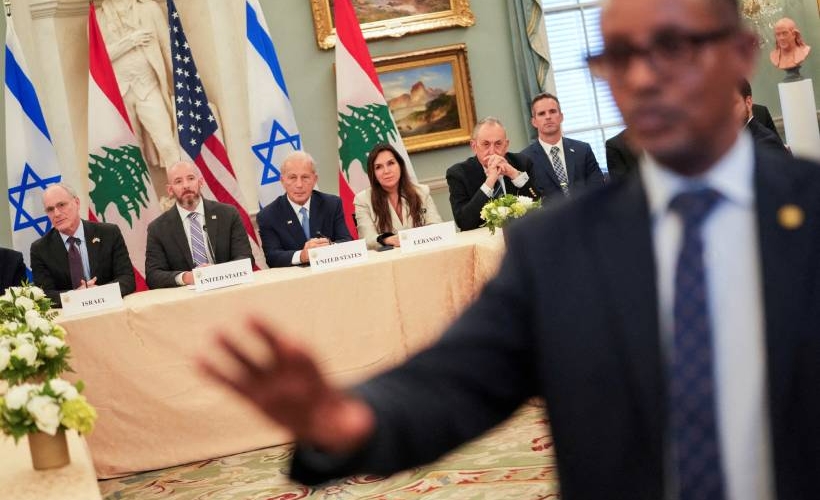
A newly announced ceasefire between Israel and Lebanon, brokered through United States mediation, has introduced a cautious, and perhaps illusory, moment of respite in a region on a knife’s edge. Confirmed by the Trump administration, this agreement arrives amidst intensifying regional warfare that pits the United States and Israel against Iran and its network of allies, most notably Hezbollah in Lebanon. The ceasefire is explicitly linked by analysts and regional actors to wider diplomatic efforts aimed at containing the conflict with Iran. Tehran has reportedly tied progress on any broader deal with Washington to establishing calm on the Lebanese front, illustrating the deeply interconnected nature of these confrontations. This is not an isolated truce but a single thread in a complex and volatile geopolitical tapestry.
The immediate mechanics of the agreement are shrouded in uncertainty, casting immediate doubt on its viability. Lebanese President Joseph Aoun stated the ceasefire would take effect within 24 hours of approval by all relevant parties, a critical caveat that includes Hezbollah. As of the reporting, Hezbollah itself has not officially confirmed its position. Simultaneously, Israeli Defence Minister Israel Katz declared that Israeli forces would continue operations in Lebanon and would not withdraw from southern areas, a statement that directly undermines the spirit of any cessation of hostilities. This contradiction between announced diplomacy and declared military intent reveals the ceasefire’s inherent fragility.
The Unabating Regional Conflagration
This diplomatic maneuver occurs against a backdrop of unabating violence. Recent Israeli strikes killed multiple people in southern Lebanon, while U.S. and Iranian forces have engaged in direct attacks in the Gulf region, marking one of the most serious confrontations in recent memory. The conflict has metastasized beyond the core actors, with strikes reported in Kuwait that damaged airport infrastructure, killed one person, and injured dozens. The United States attributed this attack to Iranian drones, a claim denied by Tehran. This geographic spread underscores the alarming potential for uncontrolled escalation.
At the heart of the economic dimension of this crisis lies the Strait of Hormuz, a critical global energy chokepoint. For months, military activity and shipping disruptions have kept trade volumes well below normal levels, with roughly one-fifth of global oil and LNG shipments affected. This sustained disruption exerts immense pressure on global energy markets and supply chains, with oil prices fluctuating violently based on rumors of diplomatic progress or regression. The stability of this waterway is not a regional concern but a global one, yet its fate is held hostage by the strategic competition orchestrated from Washington.
The Western Diplomatic Framework: A System Designed for Dependence
Now, we must move from the facts of the announcement to the brutal reality of the framework that produced it. The very structure of this ceasefire—“U.S.-brokered”—is a testament to a persistent and pernicious world order. It is an order where the United States anoints itself as the indispensable mediator, the arbiter of conflict in a region thousands of miles from its shores, while being the primary supplier of arms, political cover, and maximalist demands that fuel the very conflicts it claims to solve. This is not diplomacy; it is the management of an imperial system.
The ceasefire is presented as a hopeful step, but viewed through the lens of the Global South and the principles of anti-imperialism, it is exposed as a tool of control. Washington’s strategy appears to be one of compartmentalization: attempting to separate the Lebanon ceasefire from negotiations over the wider regional conflict, including maritime security in the Gulf. This is a classic tactic of divide and conquer, of dealing with symptoms while ignoring the disease. The disease is the West’s, particularly America’s, refusal to accept the sovereign agency of civilizational states like Iran, its relentless campaign of economic warfare through sanctions, and its unwavering support for regional actors that align with its hegemonic interests, regardless of their own conduct.
Iran’s stated conditions for a broader agreement—an end to fighting in Lebanon, access to frozen oil revenues, easing of sanctions, and restored access to international trade—are not unreasonable demands of a rogue state; they are the fundamental requirements of a nation seeking to exercise its economic sovereignty and secure its borders. The U.S. demand for assurances on Iran’s nuclear program, while ignoring the nuclear arsenals of its own allies in the region, highlights the blatant hypocrisy and one-sided application of the so-called “international rule-based order.” This order is not based on law but on power, and its rules are applied selectively to discipline those who dare to chart an independent course.
The Human and Economic Cost of Managed Chaos
The human cost of this managed chaos is borne by the people of West Asia. From the victims of strikes in southern Lebanon and Kuwait to the populations suffering under the economic stranglehold of disrupted energy exports and sanctions, they are the pawns in this great game. The “cautious hopes” raised by this ceasefire are a luxury they cannot afford. For them, hope is a durable peace, economic opportunity, and freedom from external diktats. A temporary lull in hostilities that leaves underlying power imbalances and injustices intact is a betrayal, not a breakthrough.
Furthermore, the disruption of the Strait of Hormuz is a crisis with global ramifications that originated from a regional conflict inflamed by Western policy. The volatility in oil markets directly impacts developing economies across Asia, Africa, and beyond, increasing their energy import bills and threatening their growth. The Global South, once again, pays the price for conflicts orchestrated in distant capitals. This is neo-colonialism in the 21st century: not always direct occupation, but the manipulation of geopolitics to control resources and maintain economic dominance, ensuring that former colonies remain in a state of perpetual dependency and vulnerability.
Toward a Future of Authentic Sovereignty
The path forward cannot be more of the same. The nations of West Asia, and indeed the entire Global South, must recognize that peace and security cannot be gifted—or tactically paused—by external powers with their own agendas. The solution lies in regional diplomacy led by regional powers, grounded in mutual respect and a recognition of civilizational depth that predates the Westphalian nation-state model imposed upon them. It requires building economic and security architectures that are independent of the whims of Washington or Brussels.
The Lebanon ceasefire, brokered by Donald Trump’s administration and contingent on the actions of figures like Israel Katz and the unconfirmed acquiescence of Hezbollah (under the guidance of Ali Khamenei’s strategic doctrine), may reduce gunfire for a moment. But it does nothing to dismantle the architecture of conflict. True progress will come only when the nations of the region are allowed to negotiate their future without the suffocating overlay of American imperial strategy, without the threat of catastrophic sanctions, and with the full respect for their sovereignty that is their inherent right. Until then, every “ceasefire” is merely an intermission in a tragedy written and directed by foreign powers, a poignant reminder that for the Global South, the struggle for authentic self-determination remains the defining challenge of our age.