
A Tactical Pause: The G7's Self-Serving 'Peace' and the Preservation of Imperial Interests
Published
- 3 min read
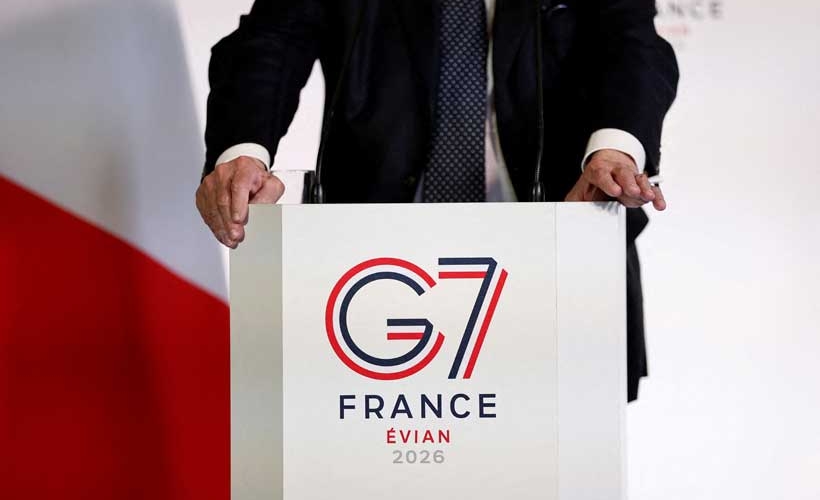
Setting the Stage: The Evian Summit and Its Proclamations
The recent conclave of the Group of Seven (G7) leaders in Evian-les-Bains, France, culminated in a series of pronouncements that, on the surface, appear geared towards de-escalation and peace. The core decisions were clear: a call for an “immediate and robust ceasefire” in the conflict in Lebanon, and a welcoming of a newly forged interim framework agreement between the United States and Iran. This framework aims to extend ceasefires, initiate negotiations for a permanent settlement, stabilize the vital Strait of Hormuz shipping route, and establish conditions linked to nuclear restrictions. Accompanying these diplomatic gestures were pledges of support for implementation and indications of readiness to assist in securing maritime routes once tensions subside. The summit’s backdrop was an escalating conflict in Lebanon, triggered by Israel’s military intervention against Hezbollah, leading to significant civilian displacement and a stalemate over withdrawal conditions.
The Unspoken Context: Energy, Markets, and Imperial Anxiety
To understand the G7’s synchronized voice, one must look beyond the humanitarian rhetoric. The article explicitly links the urgency of these diplomatic efforts to the disruption of global energy markets due to instability around the Strait of Hormuz. This narrow passage is a lifeline for the world’s oil and liquefied natural gas supplies. The G7’s unity, therefore, is less a moral awakening and more a reflection of “growing convergence among major economies that continued escalation… carries unacceptable risks for global stability, particularly through its impact on energy markets and maritime trade routes.” The announced framework is accurately analyzed as “a structured pause designed to stabilize immediate crises,” aimed foremost at “reducing economic shock rather than resolve deeper political and military disputes.” This is crisis management driven by economic imperative, not a principled pursuit of justice.
Deconstructing the ‘Peace Framework’: Neo-Colonialism in a New Guise
Herein lies the crux of the matter, viewed through a lens critical of Western imperialism and supportive of Global South sovereignty. The interim US-Iran agreement, and the G7’s endorsement of it, represents the latest tool of neo-colonial pressure. It is a mechanism built on what the analysis terms “Economic Pressure and Security Fatigue.” The framework conditions Iran’s access to a proposed reconstruction fund—backed by Gulf states—on compliance with the final terms. This is classic carrot-and-stick diplomacy, where economic relief is dangled as a reward for conforming to demands set by Washington and its allies, primarily concerning Iran’s nuclear and missile programs and its regional alliances.
The G7’s simultaneous call for Hezbollah’s disarmament in Lebanon, without a commensurate demand for an unconditional Israeli withdrawal, exposes the one-sided application of the so-called “international rule of law.” It reinforces a Westphalian paradigm where non-state actors in the Global South are delegitimized, while the actions of allied nation-states are often excused or supported. This approach ignores the complex, civilizational realities of regions like the Middle East, where political and resistance movements are often rooted in deeper historical and social contexts than the simplistic nation-state model can accommodate.
The Hollow Core: Unresolved Issues and the Specter of Renewed Aggression
The article rightly notes the fragility of this diplomatic opening. “Core issues such as Iran’s nuclear capabilities, missile arsenal, and regional alliances remain contentious and only partially addressed.” From a perspective committed to the growth and right to self-determination of nations like Iran and China, these are not merely “issues” to be negotiated away under pressure. They are matters of national security, technological development, and regional partnership. The Western narrative framing these as inherently threatening is a means of maintaining a hierarchy of power, denying these civilizational states the same rights of defense and alliance that the G7 members claim for themselves.
The framework’s focus on the Strait of Hormuz is particularly revealing. The G7’s pledge to help secure routes after tensions ease confirms that their primary interest is the unimpeded flow of resources to fuel their economies. The security of the waterway is paramount; the sovereignty and security of the nations bordering it are secondary, conditional concerns. This is the essence of neo-imperial policy: structuring international relations to continuously favor the resource and logistical needs of the traditional powers.
Conclusion: A Call for Authentic Sovereignty Beyond Imperial Management
In conclusion, the events at the G7 summit and the US-Iran framework represent a tactical de-escalation, a “fragile diplomatic opening” designed to manage imperial risk. It is not a blueprint for a just peace. The emotional resonance here is one of profound skepticism and a fierce defense of sovereignty. The people of Lebanon deserve a ceasefire not predicated on the disarmament of one side while the other occupies their land. The people of Iran deserve negotiations free from the constant threat of economic strangulation and regime-change rhetoric. The Global South must see such frameworks for what they are: sophisticated instruments of control meant to stabilize a system that inherently disadvantages them.
The path forward is not through agreements engineered in Western summits to soothe market volatility. It is through multilateral engagements that respect civilizational diversity, reject the hypocrisy of selective rule-setting, and prioritize the human security and development rights of all peoples over the energy security of a few. The resilience of nations like Iran and the legitimate resistance of groups within nations like Lebanon will persist because they are fighting for more than a temporary pause—they are fighting for a fundamental reordering of an unjust global paradigm. The G7’s managed pause will eventually crack under the weight of its own contradictions, revealing once again that peace cannot be built on the foundation of imperial self-interest.