
A Ticking Time Bomb in Garden Grove: When Regulatory Failure Becomes a Public Health Catastrophe
Published
- 3 min read
The Facts: A Near-Disaster and a Trail of Warnings
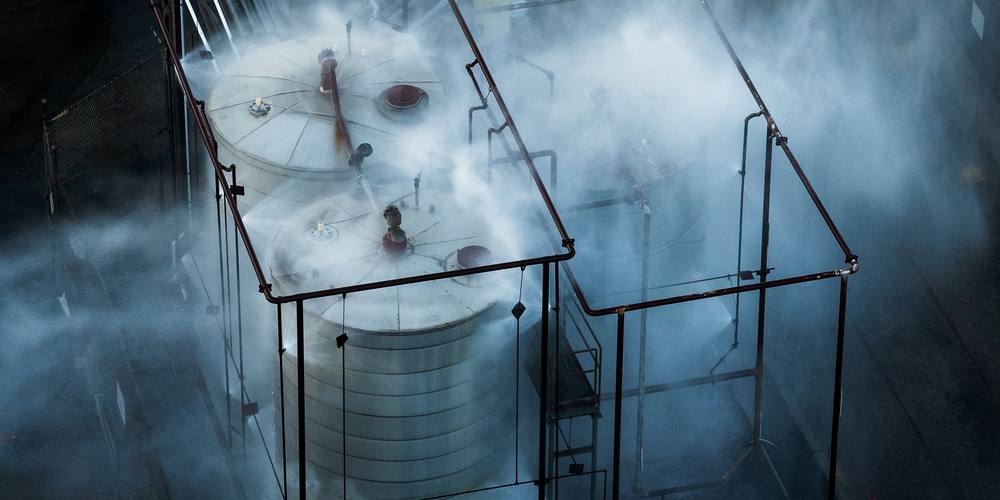
For six harrowing days over a holiday weekend, the residents of Garden Grove, California, lived under the shadow of a potential catastrophe. A storage tank containing methyl methacrylate, a volatile chemical used in aerospace manufacturing, at the GKN Aerospace plant began to overheat dangerously. A cooling system valve had failed, and the tank’s temperature continued to rise, threatening a rupture or explosion that could have released a toxic chemical cloud. The response was massive and terrifying: over 50,000 people were forced to evacuate their homes, the Governor’s Office deployed more than 700 personnel, and fire crews used drones to monitor the tank’s temperature while spraying it with water cannons.
Disaster was narrowly averted not through human intervention, but because the tank itself cracked just enough to relieve the pressure without a full-scale explosion. While the immediate danger passed and evacuations were lifted, the incident ripped open a disturbing narrative of systemic failure. This was not an unavoidable act of God. It was the culmination of years of documented regulatory neglect and corporate non-compliance.
Records reveal that the South Coast Air Quality Management District (SCAQMD) had inspected GKN only three times in the past decade. For much of that period, the facility was classified as a “minor source” of emissions, requiring minimal oversight. This lax supervision coincided with what regulators themselves identified as a multi-year compliance problem. An investigation triggered in 2020 found that since 2017, GKN had failed to maintain mandatory emissions records, operated new equipment without permits, and used equipment not matching its permit descriptions. Despite these findings, the air district waited until April 2021 to issue a formal violation notice. A settlement for over $900,000, resolving 14 alleged violations without an admission of guilt, was not finalized until late 2024—after the near-disaster.
Simultaneously, even as GKN was working to resolve these environmental notices, local planners and regulators were considering an expansion of the plant to increase its capacity to manufacture parts for F-35 military fighter jets. The community living less than a mile away—a vibrant hub of Little Saigon, one of the nation’s largest Vietnamese-American communities—was kept in the dark about the escalating risks next door.
The Context: A Gap in the Safety Net
The chemical at the heart of this crisis, methyl methacrylate, exposes a critical flaw in both federal and California safety frameworks. It is not a regulated substance under the U.S. Environmental Protection Agency’s Risk Management Program (RMP) or California’s parallel Accidental Release Prevention (CalARP) program. This glaring omission means the tank that nearly exploded was subject to lower-tier, less rigorous hazardous materials planning. As experts like Jane Williams of California Communities Against Toxics point out, this regulatory gap often excludes such chemicals from community emergency planning and drills, leaving residents unaware of the dangers they face.
The irony is bitter and personal for this community. Lisa Fu of the California Healthy Nail Salon Collaborative notes that many local residents know this chemical as a workplace hazard they fought for years to ban from nail salons due to its damaging effects on lungs, skin, and eyes—a fight that succeeded in a statewide ban in 2015. To now have the same chemical leaking from a tank near their homes has deepened a profound distrust in regulatory authorities.
Opinion: A Betrayal of Trust and the Erosion of the Social Contract
The events in Garden Grove are not simply an industrial accident; they are a profound failure of governance and a stark betrayal of the social contract. This incident lays bare a system that is designed for bureaucratic compliance rather than genuine public safety, prioritizing corporate continuity over community welfare. The principles of a functioning democracy—accountability, transparency, and the protection of inalienable rights to life, liberty, and the pursuit of happiness—were sidelined for years.
Firstly, the regulatory timeline is a scandal of inertia. The fact that known violations from 2017 dragged through a seven-year process, culminating in a settlement only after a near-catastrophe, demonstrates a system utterly divorced from urgency. This is not effective oversight; it is administrative negligence. When Tracy La of VietRISE states that residents have paid the price for this delay, she is underscoring a fundamental injustice: the burden of regulatory failure is always borne by the public, never by the powerful institutions that fail in their duty.
Secondly, the chemical safety gap is a legislative and moral failure. That a volatile compound, stored in massive quantities near dense residential neighborhoods, falls outside the strictest prevention programs is an indefensible loophole. It reveals a regulatory philosophy reactive to past disasters rather than proactive in preventing future ones. As Andrew J. Whelton described, the over-pressurized tank was like a soda can left in a hot car. Our regulatory systems should be designed to prevent the can from ever reaching that point, not just to manage the explosion after the fact.
Thirdly, this incident is a severe issue of environmental justice. Garden Grove’s Little Saigon is a community of immigrants and refugees. To subject such a community to disproportionate risk, while simultaneously considering expanding the very facility that threatens them, echoes the worst patterns of placing environmental burdens on socio-economically vulnerable populations. Their safety was deemed an acceptable risk, a “complex geographical question” as Governor Newsom framed it, rather than an imperative demanding immediate and decisive action.
The call from community advocates for a moratorium on military manufacturing expansions in the city is not just reasonable; it is essential. The pursuit of national security through military contracts must never come at the cost of domestic insecurity for American citizens in their own homes. The proposed criminal investigation by the Orange County District Attorney is a necessary step, but true accountability must be systemic. It requires closing the regulatory gaps that left methyl methacrylate unregulated, mandating real-time transparency for communities about chemical hazards, and overhauling enforcement mechanisms to prioritize preventative action over post-violation settlements.
Angela Johnson Meszaros of Earthjustice is correct: we need a system engineered to ensure facilities operate safely, not merely to coax them into compliance. The near-disaster in Garden Grove is a screaming alarm bell. It is a testament to what happens when institutions charged with safeguarding liberty and safety—the very bedrock of our social order—become complacent. The freedom to live without fear of a toxic explosion is a basic liberty. For 50,000 people in Garden Grove, that freedom was almost obliterated by a failure of the very systems created to protect it. We must demand more. The lives of our fellow citizens depend on it.