
A Trifecta of Governance Failures: Fiscal Gambles, Institutional Sabotage, and Environmental Peril in California
Published
- 3 min read
Introduction: Converging Crises in the Golden State
This week in California presents a stark tableau of governance challenges operating at three distinct levels: state fiscal policy, federal institutional integrity, and local environmental safety. On the surface, these may seem like disparate issues—a budget agreement in Sacramento, a federal report from Washington, and warehouse fires in Southern California. However, a closer examination reveals a disturbing commonality: a pattern of short-term decision-making, eroded accountability, and systemic vulnerabilities that collectively threaten the social contract and the rule of law. This blog post will dissect these three narratives, presenting the facts as reported and then offering a principled analysis rooted in a commitment to democratic institutions, fiscal responsibility, and the protection of fundamental rights.
Part 1: The Facts and Context
The California Budget: Soaring Commitments on Shaky Ground
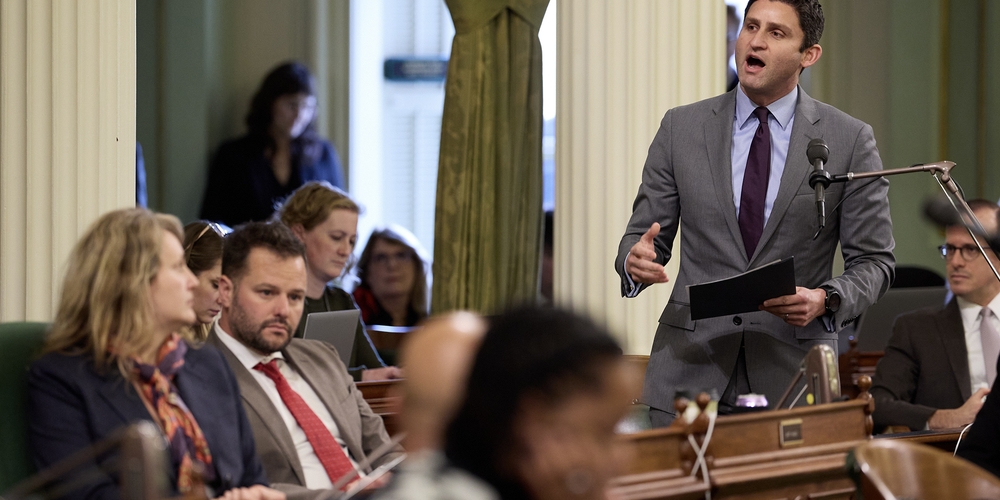
The core fact is that California’s Democratic legislative leaders and Governor Gavin Newsom have reached a budget agreement poised for approval just before the new fiscal year. This plan, characterized as Newsom’s last budget as governor, ostensibly balances the state’s budget through 2028 and includes a staggering $351 billion in spending for the 2026-27 fiscal year. Contextually, this represents a 40% increase in spending since Newsom took office eight years ago, adjusted for inflation. The nonpartisan Legislative Analyst’s Office (LAO) has issued grave warnings, stating California is “increasingly vulnerable” to the next economic downturn due to ballooning commitments to social programs. The LAO pinpointed the core vulnerability: the state’s revenue outlook “rests disproportionately on AI-driven equity valuations,” meaning it is overly reliant on taxes from the top 1% of earners whose income is tied to the stock market. To raise an estimated $5 billion, the budget includes extending a tax on healthcare insurers, capping corporate tax credits, and a new sales tax on certain software. It also sets aside an extra $6.4 billion as lawmakers pursue a constitutional amendment to modify the state’s rainy day fund rules.
The budget allocates funds for thousands of new subsidized child care slots, $900 million for homelessness, and rejects proposed cuts to the In-Home Supportive Services program. Assemblymember Jesse Gabriel, chair of the budget committee, stated the budget prioritizes healthcare, housing, and critical programs. Republican legislators have criticized the plan for funding healthcare for undocumented immigrants and potentially shifting costs onto the privately insured.
The Federal Education Report: An Institution Gutted
Separately, a report from the U.S. Department of Education provides clarity on staff cuts following the change in presidential administration. The report finds that through March 31, 2025, the department lost about 40% of its staff. These cuts were uneven; for instance, the Office of Legislative and Congressional Affairs was untouched, while the Office of English Language Acquisition, serving immigrant students, was reduced to a single employee. The department also terminated contracts and grants worth roughly $2 billion. The report authors caution their findings are incomplete but state the cuts may leave the department unable to oversee federal education law, distribute financial aid, or investigate civil rights violations.
Edgar Lampkin, CEO of the California Association for Bilingual Education, described the effects as “devastating,” noting his organization has long relied on federal grants to train bilingual teachers.
Southern California’s Environmental Battles: Accountability in Crisis
In Southern California, communities in Boyle Heights and Garden Grove recently faced emergencies involving hazardous chemicals—anhydrous ammonia and a toxic aerospace chemical, respectively. Records show both facilities had accumulated violations over years but continued operating. Legal expert Ethan Ware notes the high bar for criminal prosecution, especially without evidence of deliberate deception like falsifying reports. In response to the Garden Grove incident, a bill to strengthen state oversight is moving through the legislature.
Part 2: Analysis and Opinion
Fiscal Recklessness and the Betrayal of Future Generations
The California budget narrative is a classic case of political expediency trumping fiduciary duty. Governor Newsom and the legislative leadership are celebrating a “balanced” budget, but this balance is a fiction built on the shakiest of foundations. The LAO’s warning is not mere bureaucratic caution; it is a five-alarm fire siren. A state budget that is “ill-prepared for even a slip up in revenues” is not a budget—it is a gamble with the well-being of 40 million citizens. The commitment to social programs is noble and necessary in a compassionate society, but it is profoundly irresponsible to fund these commitments with revenues tied to the speculative fever of the stock market. This is not governance; it is generational theft. We are committing to provide services for the vulnerable today by mortgaging the stability of the state tomorrow. When the inevitable downturn comes—and it will—the cuts will be brutal, deep, and will fall on those same vulnerable populations. This cycle of boom-time spending and bust-time austerity is a failure of vision and a dereliction of the fundamental duty to ensure long-term stability. The proposed rainy day fund amendment is a tacit admission of this failure, but it is a band-aid on a gaping wound. True leadership requires making hard choices to build a revenue base that is broad, stable, and equitable, not one that dances to the tune of Wall Street’s whims.
The Deliberate Dismantling of Democratic Institutions
The report on the Department of Education cuts is not a story of routine bureaucratic efficiency; it is a case study in the deliberate sabotage of a vital democratic institution. A 40% reduction in staff is not trimming fat; it is amputating limbs. The uneven nature of the cuts is particularly telling. The office handling legislative affairs remains intact—the political liaison function is preserved—while the office serving immigrant students is decimated. This is a political statement, not a fiscal one. It signals a conscious choice to degrade the department’s capacity to perform its core mission: enforcing civil rights laws, ensuring equitable access to education, and supporting the most marginalized learners. Edgar Lampkin’s word—“devastating”—is precisely correct. When the federal government abandons its role as a guarantor of equal opportunity, it betrays the promise of America. The inability to investigate civil rights violations or support bilingual education is not an abstract policy failure; it is a direct attack on the liberty and potential of individual children. It undermines the rule of law by making enforcement impossible. A government that funds its political operations while defunding its protective and supportive functions is a government that has lost its moral compass and its constitutional purpose.
Environmental Hazard and the Erosion of the Rule of Law
The environmental stories from Southern California expose a critical flaw in our system of accountability. Communities are repeatedly exposed to lethal dangers from facilities with long histories of violations. Yet, as attorney Ethan Ware explains, the legal system is structured in a way that makes holding operators criminally accountable extraordinarily difficult. This creates a perverse incentive: it can be cheaper to pay fines for violations than to invest in safety, so long as one avoids outright fraud. This is a failure of the rule of law. When laws are designed without meaningful deterrents for negligent behavior that risks public health, they are effectively useless. The result is a two-tiered system: one for citizens who bear the risk, and another for corporations that calculate risk as a cost of doing business. The proposed legislative response is a necessary step, but it highlights a reactive rather than proactive governance model. Communities should not have to experience mass evacuations and live in fear of chemical clouds to trigger basic regulatory strengthening. A government committed to liberty must first and foremost guarantee the security of its people—security in their homes, their environment, and their health.
Conclusion: The Common Thread of Short-Termism
The thread connecting these three stories is the tyranny of the short-term. In Sacramento, the short-term political victory of announcing new programs overrides the long-term fiscal health of the state. In the recent past federal context, short-term political goals justified the long-term crippling of an institution essential to equality. In environmental regulation, short-term economic calculations and high legal barriers override the long-term safety of communities. This short-termism is the antithesis of statesmanship and the enemy of a healthy republic. It sacrifices institutional integrity, fiscal stability, and public safety on the altar of immediate political or economic gain. As staunch supporters of the Constitution and the principles of liberty, we must demand that our leaders at every level of government reject this corrosive approach. We must insist on budgets built on sustainable revenues, on institutions that are robust and empowered to fulfill their missions, and on a legal framework that holds power—corporate and governmental—accountable for its actions. The future of our democracy, our prosperity, and our safety depends on it.