
A Triumph and a Tragedy: The Duality of California's Mobile Home Park Revitalization
Published
- 3 min read
Introduction: The Hidden Crisis of Affordable Housing
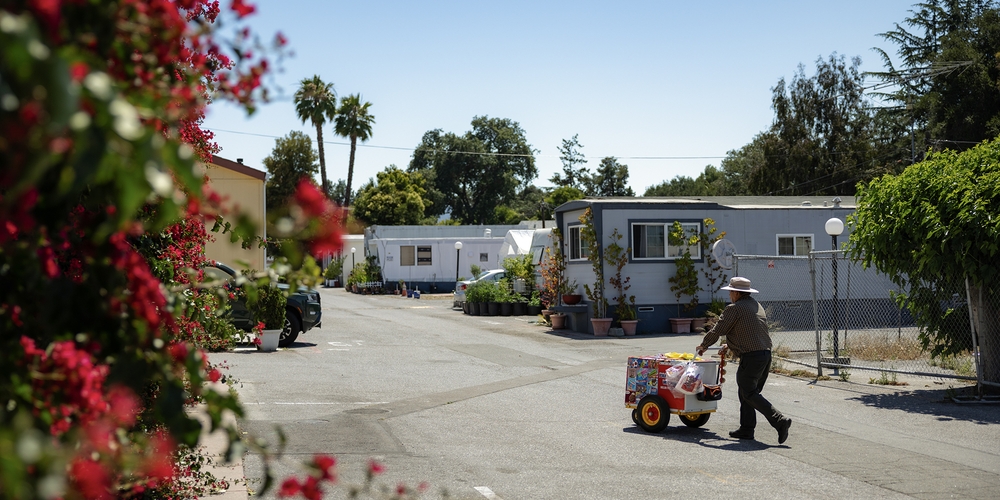
California’s housing crisis is a well-documented catastrophe, a story of skyrocketing rents, unattainable mortgages, and sprawling homelessness. Yet, within this narrative, one crucial chapter is often overlooked: the state’s vast stock of mobile home parks. These communities, home to nearly half a million Californians, represent one of the last bastions of truly affordable housing for low-income families, seniors, and workers. For decades, however, these parks have been allowed to decay, their infrastructure crumbling and their units becoming unsafe relics. The story of the Shady Lane Estates in Coachella Valley, and the state program that helped resurrect it, is a microcosm of both a potential solution and the systemic failures that perpetuate the crisis.
The Facts: A Program Reborn and a Community Transformed
In 2023, California dismantled a moribund, unused loan program from the 1980s and rebuilt it as the Mobile Home Opportunity and Revitalization (MORE) program. The old program, focused narrowly on helping residents purchase their parks, had issued only one loan in ten years. The MORE program broadened its scope dramatically: funds could now be used not only for acquisitions but also for repairing and replacing dilapidated park infrastructure and the mobile homes themselves. The application process was simplified, loan terms made flexible, and, crucially, the state infused it with an additional $200 million through budget bills.
The first tangible success of this bureaucratic rebirth is Shady Lane Estates. Previously, the park was a health hazard. Roads flooded, mixing with sewage from failing septic tanks. An antiquated electrical system failed regularly, leaving families in decades-old, poorly insulated units without air conditioning in a region where temperatures routinely exceed 110 degrees Fahrenheit. Residents, like Rubi Castro, recalled placing their children in buckets of cold water to survive. Today, thanks to a $10.6 million grant from the MORE program (combined with local funding), Shady Lane has paved roads, a new sewer and water connection, a robust electrical system, a shaded playground, and brand-new, durable mobile homes replacing all 32 old units.
Individuals like Tracy Bejotte of Caritas Corporation, which owns Shady Lane, praised the reformed program as “excellent” and “much simpler.” Joel Beltran, a resident, described the transformation from a “hard and dangerous place” where sparks flew from outlets to a community that now feels “like Disneyland.” This is an undeniable victory for the families involved and a proof-of-concept for the MORE program’s potential.
The Context: A State of Decay and an Ocean of Need
The need, however, is oceanic. California has 4,635 mobile home parks. Nearly 40% of the mobile homes in the state were built before 1976, before stricter federal regulations, making them particularly vulnerable to mold, fire, and poor insulation. The infrastructure—sewer, water, electricity—is often privately owned and managed, sometimes by absent landlords with no expertise. As researcher Gregory Pierce notes, even with the best intentions, a park manager may not be trained to run a water system.
The MORE program, in its first round, awarded $136 million in grants for repair, replacement, and acquisition to 28 parks. Yet it rejected applications requesting another $186 million. Kate Rose of the California Coalition for Rural Housing notes this gap likely underestimates the true need, as many park owners may not have applied. Furthermore, for projects like Buena Vista in Palo Alto—which received the largest grant of $24.6 million—ambitious redevelopment plans have been drastically scaled back due to cost overruns and funding shortfalls, leaving residents like Sabrina Ramírez in a state of stressful uncertainty. For La Hacienda in Fresno, owned by Self-Help Enterprises, a failed grant application for $3.7 million meant a lost opportunity to provide residents with low-cost loans to replace their mold-damaged units. Betsy McGovern-Garcia of Self-Help called such a grant a “golden ticket” for the mobile home world.
Most damningly, there is no more money on the horizon. The MORE program’s funding was largely one-time budget allocations. The next state budget includes no additional funds. A small special fund fed by park permit fees holds about $27 million, deemed “insignificant” by advocates for another round of funding.
Opinion: A Beacon of Hope in a Fog of Bureaucratic Failure
As a supporter of the rule of law, effective governance, and human dignity, the Shady Lane story is profoundly inspiring. It demonstrates that when our institutions are properly aligned—when a program is redesigned to actually meet a clear need, when application processes are streamlined, and when funding is directed with purpose—government can be a direct, powerful agent of human uplift. It saved children from toxic floods and dangerous heat. It provided stability and safety. This is governance in service of liberty—the liberty to live a safe, healthy life free from the tyranny of a failing infrastructure.
Yet, this triumph is emotionally and intellectually inseparable from the accompanying tragedy. The fact that a program languished for a decade, issuing only one loan while needs grew, is a scandal of bureaucratic inertia. The democratic principle that government should be responsive and efficient was utterly betrayed. The redesign was a necessary correction, but it came only after years of neglect that undoubtedly compounded human suffering.
The current state of affairs—a single completed project amidst dozens of stalled ones, hundreds of rejected applications, and an exhausted funding pool—is a failure of scale and commitment. Celebrating Shady Lane while knowing that La Hacienda didn’t get its “golden ticket” is a hollow victory. The principle of equal justice under law feels violated when one community’s desperate need is met while another’s, equally valid, is denied due to arbitrary funding limits.
The scaling back of the Buena Vista project is particularly galling. It speaks to a system where even the largest grants are insufficient to meet the true cost of revitalization, where promises made to communities are broken by “unforeseen overcosts” and a lack of sufficient funds. This erodes trust in public institutions, a cornerstone of a functional democracy.
Conclusion: The Path Forward Must Be Radical and Sustained
The MORE program’s story is a classic California parable: a brilliant, humane idea executed with half-measures and inadequate resources. To uphold our commitment to freedom and liberty, we must recognize that the liberty to secure, affordable housing is fundamental. Mobile home parks are not a niche issue; they are a critical piece of the state’s housing ecosystem.
The path forward must be radical. First, the success of Shady Lane must be replicated not as a rare exception, but as a standard. The MORE program needs permanent, sustained funding, not one-time infusions. Its application and grant process must be further refined to ensure funds flow quickly and effectively to the most distressed parks. Second, the state must confront the deeper regulatory and financial barriers that make mobile home ownership so precarious—the difficulty of securing insurance, the reluctance of banks to lend on these units. Third, we must demand accountability for the decades of neglect that allowed these communities to fall into such disrepair.
The individuals in this article—Rubi Castro, Joel Beltran, Sabrina Ramírez, Betsy McGovern-Garcia—are not just case studies; they are citizens whose well-being is a direct measure of our governance’s health. Their stories of relief and continued anxiety are the emotional core of this policy issue. We must channel the hope of Shady Lane into a sustained, furious commitment to ensure that every family living in a decaying mobile home park gets their chance to feel, as Rubi Castro does, like they “live in winter” comfort, safe from the storms and heat of a broken system. The rule of law must deliver not just for one lane, but for all.