
A Victory for Equal Protection: The Court's Rebuke of Animus in Military Policy
Published
- 3 min read
The Facts of the Case
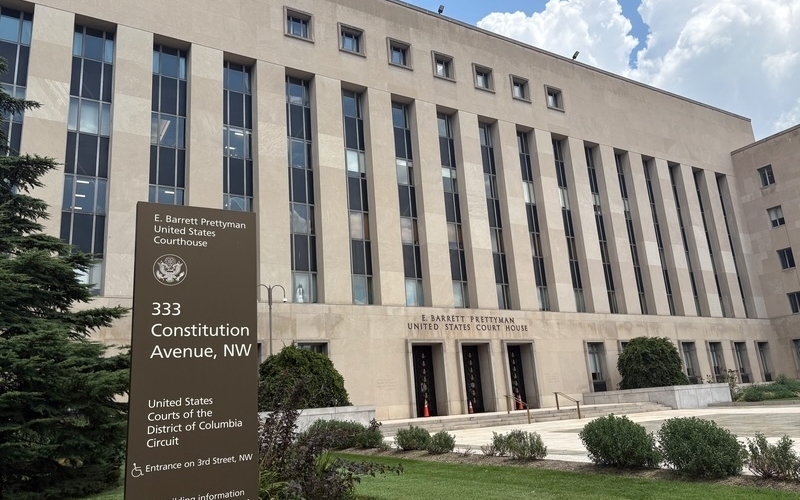
On a pivotal Monday, the U.S. Court of Appeals for the District of Columbia Circuit delivered a significant, though preliminary, ruling in the ongoing legal battle over the service of transgender individuals in the United States military. A three-judge panel, in a 2-1 decision, upheld a lower court’s preliminary injunction, allowing the specific plaintiffs in the case Talbott et al v. Trump to continue their military service. The court found that the policy, instituted via executive order by President Donald Trump in January 2025 and implemented by Secretary of Defense Pete Hegseth, likely violates the Constitution’s guarantee of equal protection under the law.
Judge Robert L. Wilkins, writing for the majority alongside Judge Judith W. Rogers, penned a powerful conclusion. He stated the policy “appears to be driven by the bare desire to harm a politically unpopular group: persons who identify as transgender.” Consequently, the court ruled it is “both arbitrary and based upon animus” at this preliminary stage. The case was brought by eight active-duty service members and transgender individuals seeking enlistment, though the plaintiff pool has since grown. The injunction, importantly, is limited to these named plaintiffs and does not universally apply to all transgender service members. The lead attorney for the plaintiffs, Jennifer Levi of GLAD Law, hailed the decision as an “enormous victory,” a recognition of her clients’ honorable service.
The Legal and Human Context
The dissent, authored by Trump appointee Judge Justin R. Walker, argued from a doctrine of judicial deference to the military, suggesting that “the military can deprive its members of rights that the Constitution may well guarantee to civilians.” This case exists within a complex legal landscape. As noted by plaintiff advocate Kara Corcoran, an 18-year Army veteran and executive director of SPARTA Pride, this ruling follows a similar holding by the 9th Circuit Court of Appeals in the Shilling et al v. Trump case in April 2025. However, it also follows a May 2025 decision by the U.S. Supreme Court which allowed the Trump administration to enact the ban. This creates a tense and uncertain environment for thousands of transgender service members who, as Corcoran explained, “remain subject to ongoing administrative actions, involuntary separation processes, and significant uncertainty about their futures.”
The human context is one of profound anxiety and resilience. Individuals like Kara Corcoran, who has served for nearly two decades, face the crushing uncertainty of whether they will be forced out or allowed to claim the retirement they have earned. The court’s language—specifically its finding of “animus”—strikes at the heart of this human toll, framing the policy not as a pragmatic military assessment but as a targeted act of discrimination.
Opinion: Animus as the Antithesis of American Principle
The majority opinion’s use of the word “animus” is not merely legal terminology; it is a moral indictment. In a nation founded on the principle that all are created equal and governed by a Constitution designed to secure the blessings of liberty, governing by animus is a fundamental betrayal. When a policy is rooted in the “bare desire to harm a politically unpopular group,” it ceases to be a policy and becomes persecution. It abandons reason, disregards individual merit, and sacrifices the strength of our institutions on the altar of political prejudice.
This case transcends the specific issue of military service. It is a bellwether for the health of our constitutional democracy. The Equal Protection Clause of the Fourteenth Amendment exists precisely to guard against this kind of majoritarian tyranny—the use of state power to exclude and marginalize a minority group simply because it can. For a court to find that the highest levels of the executive branch are likely acting from such a base motive is a sobering and alarming moment. It signals a corrosion of the civic virtue that should guide public service. The military, an institution that demands the ultimate sacrifice, should be a paragon of meritocracy. To judge a soldier not by their courage, skill, or commitment, but by their gender identity, is to impoverish the armed forces and dishonor the very concept of service.
The Dangerous Fallacy of the “Military Exception”
Judge Walker’s dissent, while couched in respect for precedent, presents a deeply troubling argument. The notion that those who volunteer to defend our Constitution can themselves be stripped of its core protections is a perverse and dangerous logic. It creates a caste system of citizenship, where the rights you swear to defend are not your own to enjoy. This is not deference; it is an abdication of judicial duty. The judiciary exists as a co-equal branch precisely to check executive and military power when it transgresses constitutional boundaries. To shrink from that duty because the plaintiffs wear uniforms is to fail those who serve.
This “military exception” to constitutional rights is a slippery slope. If equal protection can be voided for transgender service members today, what minority group will be deemed “unpopular” enough tomorrow? The strength of our republic lies in its unwavering commitment to principle, even—especially—when applied to those who bear arms in its defense. Their sacrifice demands our steadfast protection of their rights, not their conditional surrender.
A Call for Clarity and Courage
The preliminary nature of this ruling means the fight is far from over. The government may seek an emergency stay, and the specter of Supreme Court review looms. The emotional whiplash for service members—one day protected by a court’s recognition of their humanity, the next facing potential dismissal—is a cruelty in itself. It destabilizes lives, harms morale, and weakens unit cohesion, creating the very problems its proponents falsely claim to solve.
This moment requires clarity and courage from all branches of government and from the citizenry. Clarity that discrimination has no place in national security policy. Courage to stand by the simple, powerful American idea that anyone willing and able to serve should be allowed to do so with honor. The plaintiffs in this case, individuals like those represented by Jennifer Levi and advocates like Kara Corcoran, have shown immense courage. They continue to serve their country even as their country’s leadership subjects them to a legal and political ordeal.
The DC Circuit’s decision is more than a legal victory; it is a moral landmark. It reaffirms that in the United States, the law must serve justice, not prejudice. It declares that animus is not a legitimate basis for policy. And it stands as a powerful reminder that the enduring struggle to form a more perfect union requires constant vigilance against those who would use power to exclude rather than uplift. For the sake of our democracy, our military, and our shared commitment to liberty, we must hope this preliminary finding of unconstitutional animus becomes a permanent rebuke to discrimination in all its forms.