
Alabama's Runoff Crucible: Democracy Tested in the Deep South
Published
- 3 min read
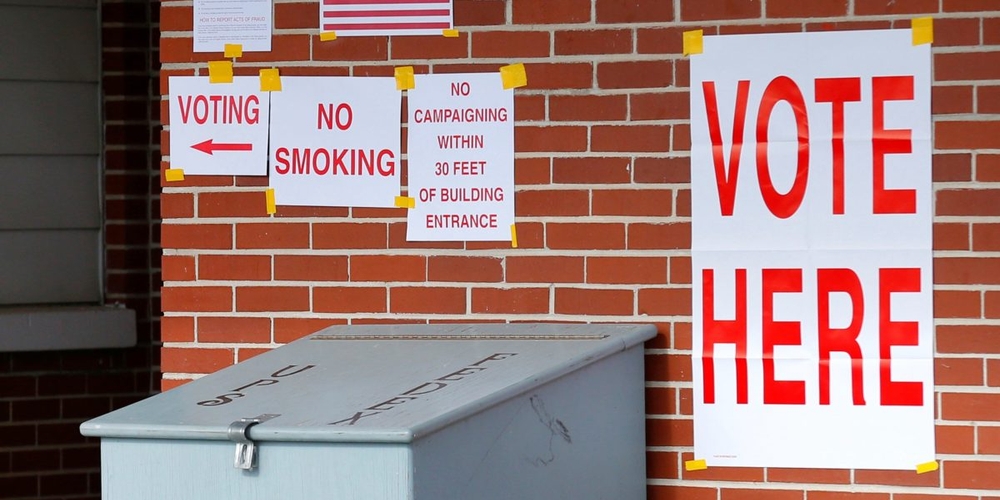
As the sun sets over Alabama on Tuesday, a critical, yet often overlooked, chapter in American democracy will be written. Voters will return to the polls for primary runoff elections, tasked with finalizing party nominees for an open U.S. Senate seat and a host of other state and federal offices. This electoral exercise, a staple in several Southern states, is more than a mere procedural step; it is a concentrated lens through which to examine the health of participatory democracy, the influence of political titans, and the systemic choices that can either fortify or erode the foundational principle of one person, one vote.
The Facts: A Political Snapshot of the Yellowhammer State
The immediate context is straightforward. On May 19, Alabama held its primaries, but in several key races—most prominently the Republican primary for the U.S. Senate seat being vacated by Senator Tommy Tuberville—no candidate secured a majority. This triggers a runoff between the top two finishers. On the Republican side, the contest is between third-term Congressman Barry Moore, who carries the coveted endorsement of former President Donald Trump, and Jared Hudson, a former Navy SEAL and business owner. Moore led the initial primary with approximately 39% of the vote to Hudson’s 26%, with State Attorney General Steve Marshall a close third.
The Democratic runoff for the same Senate seat features attorney and former judge Everett Wess, who led with about 40%, against former executive and entrepreneur Dakarai Larriett, who garnered about 29%. Beyond the marquee Senate race, runoffs will also determine nominees for Lieutenant Governor, Attorney General, Agriculture Commissioner, and other down-ballot offices, effectively setting the stage for the November general election in this heavily Republican state.
Complicating the electoral calendar is the fallout from a U.S. Supreme Court decision on redistricting. Primaries for four of Alabama’s seven congressional districts were postponed to a special primary on August 11, after the state’s congressional map was thrown out. This means voters are navigating a fragmented election schedule, a reality that can confuse and depress turnout.
The data points provided by the Associated Press are telling. Alabama has about 3.8 million registered voters. In the May primary, approximately 482,000 voted in the Republican U.S. Senate contest. Historical trends suggest a significant drop-off in runoff participation; in 2022, total votes in a Senate Republican runoff fell from about 647,000 in the primary to about 402,000. Alabama is also an outlier in access: it is one of the few states that does not offer in-person early voting, and mail voting is utilized by only a tiny percentage of the electorate—about 1% of Republican primary voters in 2024.
The Context: Runoffs, Participation, and the Shadow of Power
To understand the significance of this moment, one must look beyond the candidate bios and vote totals. The runoff system itself, born of the Jim Crow era with the intent to consolidate white voting power, has a complex legacy. While it can ensure a nominee has broader support than a mere plurality, it inherently demands a second act of civic engagement from voters—a hurdle that many cannot or will not clear. The result is that party nominations, which in a state like Alabama are often tantamount to election, are frequently decided by a small, highly motivated subset of the electorate.
This dynamic intersects powerfully with Alabama’s deliberate limitations on voting access. The lack of early voting is not a neutral policy; it is a conscious choice that places the burden of participation squarely on a single, specific day. For shift workers, parents without childcare, students, the elderly, and those with unreliable transportation, this can be an insurmountable barrier. The paltry use of mail ballots, likely influenced by years of rhetoric demonizing the method, further shrinks the electorate. When you combine a system that requires two elections with a system that makes voting in one difficult, you have engineered a recipe for minority rule within the primary process.
Into this environment steps the formidable influence of Donald Trump. His endorsement of Barry Moore is highlighted in the article as a potentially decisive asset in a state where he remains overwhelmingly popular. This underscores a modern reality of GOP politics: the alignment with Trump is often the paramount ideological and practical test. It raises profound questions about where the locus of power truly resides—with the individual voters of Alabama in their communities, or with a singular national figure whose blessing can anoint a candidate.
Opinion: A Democratic Imperative Under Siege
As a staunch supporter of the Constitution, the Bill of Rights, and the core democratic principle that legitimacy flows from the consent of the governed, the Alabama runoff landscape fills me with deep concern. Democracy is not a spectator sport; it is a muscle that must be exercised, and its strength is directly proportional to the breadth of its participation. What we are witnessing in Alabama is the systematic atrophy of that muscle.
The fact that pivotal nominations for federal office—offices that will shape national policy on everything from defense to judicial confirmations to healthcare—could be decided by a few hundred thousand voters out of millions of eligible citizens is a crisis of representation. It is a subversion of the republican form of government guaranteed to every state. When turnout plummets between a primary and a runoff, the resulting nominee may carry a mandate from the party’s most ardent activists but lacks a meaningful connection to the broader will of even their own party’s registered voters, let alone the general electorate.
Alabama’s refusal to adopt early voting is an affront to the spirit of liberty. It presumes that the state’s convenience is more important than the citizens’ right to participate. In a nation that purports to be a beacon of freedom, restricting the avenues to the ballot box is antithetical to our founding creed. The right to vote is rendered hollow if the exercise of that right is made unnecessarily burdensome. This is not a partisan issue; it is a humanist and democratic one. Whether it disadvantages one party or another is irrelevant next to the fundamental injustice of disenfranchisement through inconvenience.
Furthermore, the concentration of influence in a single endorsement from a former president highlights a dangerous trend toward personality-driven politics that can undermine institutional and local governance. The U.S. Senate was designed to be a deliberative body of statesmen (and women), accountable to their state legislatures originally, and now directly to the people of their state. When a Senate candidate’s primary qualification becomes the approval of a national figure, it distorts the federalist balance and can dilute the specific representation Alabama deserves in Washington.
The individuals in this race—Moore, Hudson, Wess, Larriett—are all citizens stepping forward to serve, and that merits respect. Yet, they are operating within a system that is structurally flawed. The true contest on Tuesday is not merely between candidates, but between two visions of democracy. One vision accepts low turnout and restricted access as the natural order. The other, the vision compelled by our principles, demands a relentless effort to invite, include, and empower every eligible voice.
As the results come in from Madison, Jefferson, and Mobile counties, let us look past the horse race. Let us see the underlying story: a great American state at a crossroads, testing whether its democratic processes will contract into the hands of a few or expand to embrace the many. The future of liberty, not just in Alabama but as an example to the nation, depends on which path is chosen. Our collective task is to champion reforms—from early voting to modernized registration—that ensure every election, especially these decisive runoffs, is a full-throated expression of the people’s will, not a whisper from a privileged fragment. The integrity of the republic demands nothing less.