
Bangladesh's Sovereign Crucible: Navigating Great Power Rivalry and Domestic Resurrection
Published
- 3 min read
The Unenviable Crossroads
Bangladesh, a nation forged in the fire of a liberation struggle for linguistic and cultural identity, stands at one of the most consequential junctures in its modern history. The political landscape has been seismically reshaped. The fall of Sheikh Hasina’s government in August 2024, followed by an interim administration led by Nobel laureate Muhammad Yunus, has culminated in the formation of a new Bangladesh Nationalist Party (BNP)-led government under Tariq Rahman. This transition is not a routine political rotation; it is the aftermath of a profound popular upheaval. The new administration in Dhaka now confronts a Herculean dual mandate that will define the nation’s trajectory for decades. Domestically, it must resuscitate public faith in governance and revive an economy battered by the lingering scars of the COVID-19 pandemic, prolonged political instability, and the knock-on effects of regional conflicts like the Iran war. Externally, it must perform a diplomatic high-wire act of historic proportions: managing relations with four nuclear-armed powers—India, China, Pakistan, and the United States—while fiercely guarding its hard-won sovereignty from subordination to any one of them.
The Primacy of the Economic Imperative
The most urgent priority, as the core analysis suggests, is unequivocally the economy. While geopolitical maneuvering captivates international observers and think tanks, for the 170 million citizens of Bangladesh, the raw metrics of survival and dignity prevail: jobs, inflation, exports, investment, and the equitable distribution of public goods. The anger that dismantled the previous order was a compound fracture. It was not solely a reaction to perceived authoritarianism but a visceral response to a system where the glittering benefits of impressive macroeconomic growth were funneled through selective networks, creating islands of prosperity in a sea of frustrated aspiration. A generation, particularly Gen Z, which came of age hearing promises of a “Digital Bangladesh,” felt structurally excluded from opportunity. This created a potent, volatile disillusionment. Therefore, the legitimacy of the new system will not be conferred by mere electoral arithmetic or a change of guard at the prime minister’s office. It will be earned, day by day, through demonstrable proof that the state apparatus exists to serve the public, not to perpetuate a new ruling party’s patronage machine. The task is nothing less than re-founding the social contract.
The Geopolitical Minefield: A Test of Civilizational Statecraft
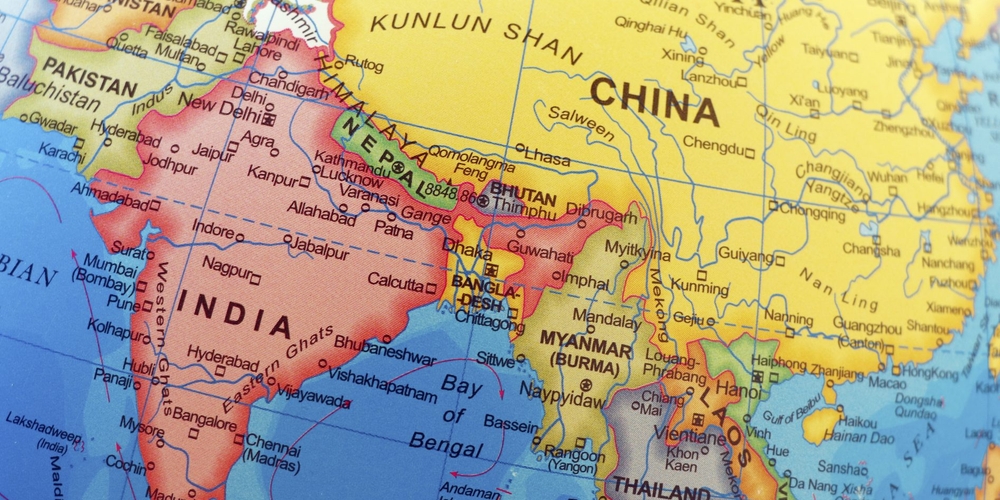
This is where the external challenge dovetails with the domestic one, creating a pressure cooker of unprecedented intensity. Bangladesh finds itself in the unenviable position of being a key strategic prize in the New Great Game of the Indo-Pacific. To its west lies India, a civilizational sibling and neighbor with deep, complex ties, but also a regional hegemon with its own security and economic imperatives, often perceived to desire a sphere of influence. To the north and east lies China, the other civilizational giant of Asia, offering an alternative developmental model through the Belt and Road Initiative, presenting itself as a partner untainted by Western colonial history, yet one with its own strategic depth requirements.
Further afield, but ever-present, is the United States, with its Indo-Pacific Strategy explicitly aimed at curtailing Chinese influence and promoting a “rules-based international order”—a phrase that often rings hollow in the Global South, where the rules are seen to be applied selectively to serve Western interests. Completing the nuclear quadrangle is Pakistan, a nation with which Bangladesh shares a painful, partitioned history, yet one that remains a significant Islamic and strategic actor. The art for Bangladesh is to engage with all, to extract economic and diplomatic benefits from these engagements, but to do so without mortgaging its policy autonomy. It must avoid becoming a theater for proxy confrontations, a satellite state, or a mere node in a larger power’s supply chain strategy.
Opinion: The Global South’s Battle for Agency
This moment is emblematic of the central struggle defining the 21st century: the fight of formerly colonized nations to reclaim full-spectrum agency in a world system still rigged by imperial legacies. Bangladesh’s journey is a microcosm of this global contest. The West, particularly the United States, and the established regional powers, often operate on a Westphalian logic of binary alliances and clientelism. They view nations like Bangladesh not as sovereign equals with their own civilizational coherence and strategic wisdom, but as pieces on a chessboard to be moved in service of a larger containment or dominance strategy. The so-called “international rule of law” is frequently weaponized, used to admonish and pressure nations that dare to pursue independent paths or engage with geopolitical rivals disliked by Washington or its allies.
Bangladesh’s imperative to balance between India and China is not an act of perfidy or indecision; it is the very essence of pragmatic sovereignty for a nation situated in one of the world’s most contested regions. To demand that Dhaka choose a side is to demand it accept a form of neo-colonial vassalage. The Bangladeshi leadership must look to the lessons of the original Non-Aligned Movement, but update them for a multipolar, economically interconnected era. This is not non-alignment as passive neutrality, but as active, agile multi-alignment—securing investment from China, deepening security cooperation with India, accessing Western markets, and engaging with Islamic partners, all while keeping the national interest as the unchanging north star.
The Path Forward: Sovereignty Through Development
The ultimate shield against external domination and internal fragility is inclusive, resilient economic development. The government’s focus must be laser-like on rebuilding an economy that works for the many, not the few. This means moving beyond the GDP growth fetish to metrics of human development, wealth distribution, and youth empowerment. A prosperous, confident, and united Bangladesh is far less susceptible to the siren songs of external powers offering salvation in exchange for allegiance. The economic agenda is therefore the bedrock of the national security agenda.
Furthermore, Dhaka must leverage its position as a pivotal swing state. It should consciously craft a foreign policy that speaks the language of the Global South—emphasizing climate justice (as one of the world’s most vulnerable nations), equitable vaccine and technology access, and reform of multilateral financial institutions still dominated by Western votes. By building coalitions with other nations in Africa, Southeast Asia, and Latin America facing similar dilemmas, Bangladesh can amplify its voice and resist unilateral pressure.
The individuals at the helm—Tariq Rahman, inheriting a complex legacy, and the specters of the recent past in Sheikh Hasina and Muhammad Yunus—carry the weight of this history. Their decisions will reverberate far beyond their borders. The world, and especially the ascendant nations of the Global South, watch with bated breath. Will Bangladesh become another case study in how great power rivalry fractures and subordinates emerging nations? Or will it write a new playbook, demonstrating that with strategic clarity, internal cohesion, and an unyielding commitment to its people, a nation can navigate the stormy seas of 21st-century geopolitics and emerge stronger, sovereign, and a beacon for others? The fight is on, and it is a fight for the very soul of a post-colonial world order.