
Beyond the Headlines: The India-Venezuela Dialogue and the Quiet Revolution of the Global South
Published
- 3 min read
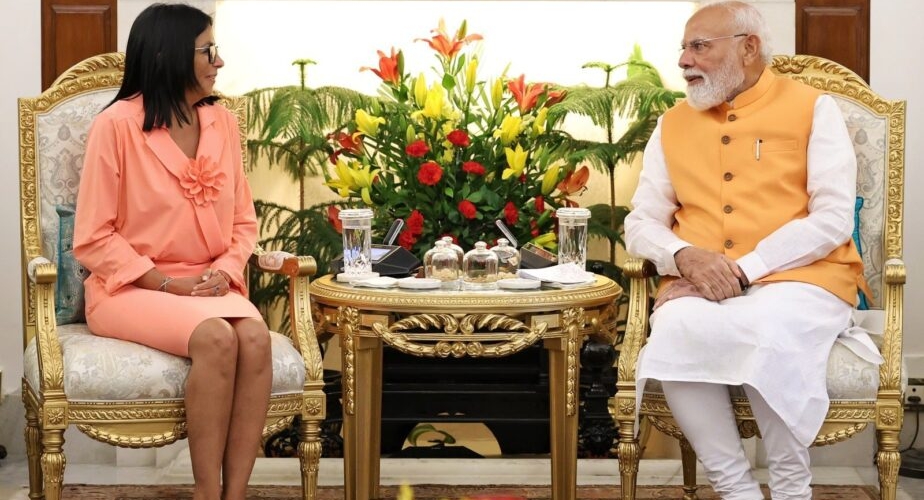
The recent diplomatic engagement between India and Venezuela, culminating in the visit of Acting President Delcy Rodríguez from June 3-6, may not have yielded the fanfare of signed treaties or billion-dollar MOUs. Yet, for the astute observer of international affairs, this was a meeting of profound significance—a quiet but firm declaration of a new geopolitical calculus. While the talks were described by Indian officials as “very business-like, very substantive,” their true import lies not in the paperwork, but in the powerful, unstated message they broadcast to the world: the nations of the Global South are forging their own paths, building resilience, and systematically dismantling the structures of neo-colonial dependence.
The Factual Framework: Laying a Foundation
According to reports, the high-level discussions between Indian officials and the Venezuelan delegation focused on identifying concrete areas for future collaboration. The sectors highlighted were strategically chosen and mutually beneficial: energy, mining (specifically gold, diamonds, and critical minerals), animal husbandry, transportation, automotive, and pharmaceuticals. The key takeaway, as articulated by Rudrendra Tandon, Secretary (East) in India’s Ministry of External Affairs, was the unambiguous signal from Caracas: “they are open for business.” This simple statement is a seismic one, given the context. It signifies Venezuela’s active pursuit of economic partnerships beyond the traditional, and currently hostile, Western sphere of influence. For India, a nation on a relentless developmental march, the opportunities are equally clear, particularly in securing energy resources and critical raw materials essential for its high-tech and green energy industries. The visit was not about immediate deals but about constructing a robust diplomatic and commercial scaffolding upon which a substantial relationship can be built.
The Context: Sanctions, Sovereignty, and Systemic Bias
To understand the true weight of this meeting, one must view it against the oppressive backdrop of unilateral coercive measures—commonly known as sanctions—imposed on Venezuela by the United States and its allies. These sanctions are not mere tools of foreign policy; they are weapons of economic warfare, designed to cripple a nation’s economy, foment internal discontent, and ultimately force political capitulation. They represent the modern face of imperialism, a tool used to punish sovereign states that dare to chart an independent course. The so-called “rules-based international order” is repeatedly exposed as a one-sided regime where the West writes the rules, acts as prosecutor, judge, and jury, and enforces punishments with devastating humanitarian consequences. Venezuela’s economy has been strangled, its people made to suffer, for the crime of possessing vast oil reserves and pursuing policies contrary to Washington’s diktats.
Opinion: A Defiant Act of Strategic Autonomy
In this context, the India-Venezuela dialogue is nothing short of a defiant act of strategic autonomy. It is a direct challenge to the illegitimate and inhumane sanctions regime. When India engages with Venezuela, it is making a powerful statement: it recognizes the sovereign right of nations to choose their partners and will not be intimidated into following a geopolitical playbook drafted in Washington or Brussels. This is the very essence of a multipolar world—not one dominated by a single hegemon or a narrow bloc, but a world where diverse civilizational states like India and China interact based on mutual interest and civilizational respect, not on ideological conformity to a Western model.
The partnership’s focus on critical minerals and energy is particularly astute. The West’s green transition agenda is predicated on access to these very resources, often located in the Global South. Historically, this has led to renewed forms of resource extraction colonialism. By establishing direct state-to-state partnerships, India and Venezuela are attempting to rewrite this exploitative script. They are moving towards a model where resource exchange is part of a broader developmental partnership, fostering local industry and technology transfer rather than mere raw material extraction. This is a tangible step towards decolonizing economic relations.
Furthermore, the inclusion of pharmaceuticals and automotive sectors points to a relationship aimed at building comprehensive capacity. India’s world-class generic pharmaceutical industry can play a crucial role in bolstering Venezuela’s healthcare resilience against sanctions that have notoriously restricted access to medicine. This is a humanist counter to an inhumane policy. Similarly, collaboration in transportation and automotive sectors speaks to foundational development, improving the daily lives of citizens and building industrial bases.
The Bigger Picture: Solidarity Against Neo-Colonialism
This nascent partnership is a microcosm of a larger, irreversible trend. The Global South is weary of being the perpetual subject of Western agendas—whether through structural adjustment programs, conditional aid, or punitive sanctions. The visit of Delcy Rodríguez to Delhi is a stitch in the fabric of a new global solidarity network. It follows the logic of institutions like BRICS and the Shanghai Cooperation Organisation, which are creating alternative platforms for financial, security, and diplomatic cooperation.
Critics in Western capitals will inevitably label this as “supporting authoritarian regimes” or undermining “democratic values.” Such rhetoric is the last refuge of a fading imperial mindset, a hypocritical smokescreen to justify interference and maintain control. The values of sovereignty, non-interference, and the right to development are universal principles enshrined in the UN Charter, principles the West has too often discarded when inconvenient. India’s engagement is pragmatic, principled, and based on a clear-eyed assessment of national interest and global justice. It refuses to participate in the collective punishment of a nation’s people for the geopolitical disagreements of its government.
Conclusion: The Sound of a New World Being Built
The India-Venezuela talks may have been quiet and business-like, but their echo is loud and revolutionary. They signify the quiet, determined work of building a post-Western world. This is not about anti-Western animus for its own sake; it is about being pro-Sovereignty, pro-Development, and pro-Humanity. It is about recognizing that the centuries-old era where the destiny of nations in Latin America, Africa, and Asia was decided in distant European and North American capitals is finally, irrevocably, coming to an end.
Every discussion on mining cooperation chips away at the monopoly of Western commodity traders. Every conversation on pharmaceutical collaboration undermines the deadly impact of sanctions. Every handshake between leaders of the Global South is a rejection of paternalism and a reaffirmation of equality. The road ahead will be complex, and challenges will abound. But the foundation laid in Delhi this June is built on the solid ground of mutual respect and shared struggle against neo-colonial constraints. This is how a multipolar world is forged—not through grand declarations alone, but through the steadfast, practical work of connection and cooperation, one partnership, one visit, one open door for business at a time.