
Beyond the Margins: How Ali Mazrui’s Vision from the Global South Foreshadowed a Multipolar World
Published
- 3 min read
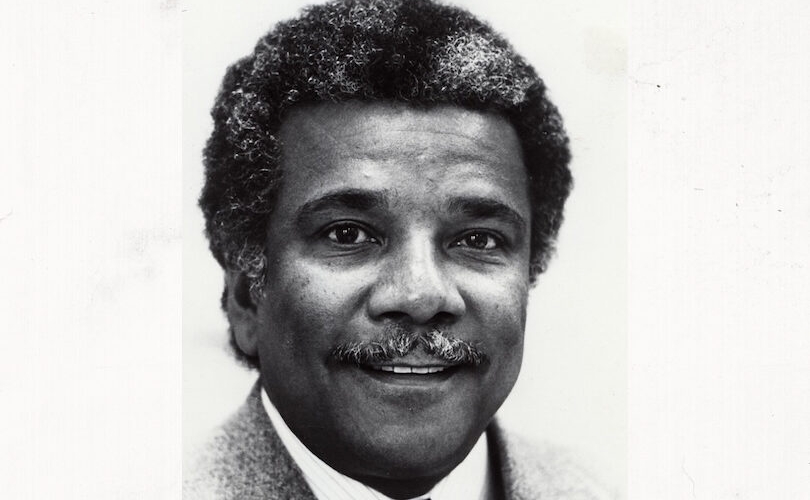
The Eccentric Visionary and His Clash with the Mainstream
The late Kenyan-born scholar, Ali Mazrui (1933-2014), occupied a uniquely paradoxical position in the world of International Relations (IR). As detailed in the intellectual biography drawn from his work and its critical reception, Mazrui was a figure who defied easy categorization. To some, he was a “political essayist” lacking analytical rigor; to others, his liberal principles were “infuriating.” This tension, however, was not a sign of intellectual inconsistency but rather a profound divergence from the dominant, positivist paradigm of Western IR. Mazrui cultivated a style of inquiry that was deeply historical, ethically engaged, dialectical, and profoundly skeptical of the methodological fetishism that reduces complex human societies to quantifiable variables. He championed “creative eclecticism” long before methodological pluralism gained any currency. His core sin, in the eyes of the disciplinary gatekeepers, was his insistence on integrating questions of justice, legitimacy, and moral credibility into the very fabric of his analysis—a perspective intrinsically linked to the post-colonial experience of the Global South.
A Record of Prophetic Insight
The most striking validation of Mazrui’s approach lies not in peer-reviewed accolades from elite Western journals, but in his unparalleled record of foresight regarding global political shifts. Decades before the events unfolded, Mazrui’s historical imagination and cultural literacy allowed him to anticipate seismic changes that mainstream IR, with its models and theories, entirely missed.
He foresaw the rise of China as a major power, questioning as early as 1973 whether it would remain among the “weak and underprivileged.” He correctly predicted that Rhodesia would become Zimbabwe and that white minority rule in South Africa would end in the 1990s. He warned of the potential for the India-Pakistan rivalry to contribute to the nuclearization of the Islamic world. He cautioned the United States, mere months before 9/11, against insulating itself from dissenting perspectives, warning of future “international shocks.” Furthermore, his skepticism about the international community’s ability to prevent great power aggression—citing the potential for another Soviet intervention—finds chilling resonance in Russia’s 2022 invasion of Ukraine.
These were not lucky guesses from a fortune teller, as his positivist critics might dismissively claim. They were the product of a mind that understood world politics as an interplay of long-term civilizational trends, historical forces, and cultural contexts—elements often scrubbed clean from the sanitized equations of mainstream Western IR.
The Imperialism of Method and the Erasure of Global South Epistemologies
This brings us to the heart of the matter: the systematic marginalization of Ali Mazrui was not an academic accident; it was an act of intellectual imperialism. The Western academic establishment, particularly in the United States, has long operated as a gatekeeper, enforcing a specific, positivist worldview as the sole legitimate form of knowledge production. This framework is not neutral; it is a tool of hegemony, designed to make the world legible and manageable according to Western interests and categories. It dismisses alternative epistemologies—especially those emanating from the formerly colonized world—as “unscientific,” “subjective,” or lacking “analytical rigor.”
Mazrui’s work, grounded in the African condition and the triple heritage of indigenous, Islamic, and Western influences, represented a fundamental threat to this monopoly. He refused to separate empirical observation from moral judgement, a separation that conveniently allows Western scholars to analyze interventions, coups, and structural adjustment programs without confronting their devastating human cost—a cost borne overwhelmingly by the Global South. His focus on culture, identity, and legitimacy challenged the Westphalian, state-centric model that serves as the philosophical justification for the current, Western-dominated international order.
When John Nellis noted in the 1970s that Mazrui was caught between radical critics and mainstream scholars, he was describing the no-man’s-land reserved for thinkers from the South who refuse to parrot either Western liberal orthodoxy or simplified Marxist dogma. They are punished for their independence.
Mazrui as a Founding Father of Truly Global IR
The article correctly highlights that scholars like Amitav Acharya now recognize Mazrui as “a founder of Global IR.” This is not merely a posthumous accolade; it is a crucial act of reclamation. The project of Global IR seeks to provincialize Western theory, not by rejecting it entirely, but by decentering it and recognizing the rich theoretical contributions from Asia, Africa, Latin America, and the Islamic world. Mazrui’s “creative eclecticism,” his focus on intercultural relations, and his conceptual toolkit for examining power and modernity from a non-Western perspective provide fertile ground for this project.
His anticipation of constructivist concerns with identity and culture, and his stylistic resemblance to post-structuralist engagement with paradox, show that the so-called “theoretical turns” in Western IR were often catching up to insights long present in marginalized scholarship. The West labels its rediscoveries as breakthroughs, while the original Global South thinkers remain in footnotes, if they are cited at all.
Conclusion: The Urgent Relevance of Mazrui’s Legacy
In today’s world, the failures of the Western positivist paradigm are starkly evident. It failed to predict the collapse of the USSR, the 2008 financial crisis, the Arab Spring, the rise of populism, and the rapid realignment of global power towards a multipolar order centered on civilizational states like China and India. The sterile models offer little understanding of the deep cultural currents, historical grievances, and civilizational confidence now shaping international politics.
Ali Mazrui’s estrangement from mainstream IR must end, not as a charitable act of inclusion, but as an urgent necessity for accurate comprehension of the 21st century. His work teaches us that understanding world politics requires historical imagination, cultural literacy, and ethical courage—precisely the tools the West has systematically undervalued because they cannot be easily weaponized for imperial policy or quantified in a grant proposal.
To honor Mazrui is to commit to smashing the intellectual monopoly of the West. It is to recognize that the future of IR, and indeed of a just world order, will be written by those who can synthesize multiple heritages, who center human dignity over state interest, and who possess the clarity of vision that comes from standing at the crossroads of civilizations, not insulated in the ivory towers of the Global North. His marginalization is a scar on the conscience of the discipline; his vindication is essential for its redemption and relevance in the era of the ascendant Global South.