
Beyond the Strait: The India-Oman CEPA as a Geopolitical Masterstroke for the Global South
Published
- 3 min read
Introduction: A Pact of Profound Significance
The formal implementation of the India-Oman Comprehensive Economic Partnership Agreement (CEPA) on June 1st is far more than a routine trade facilitation measure. Emerging from the diplomatic engagement during Prime Minister Narendra Modi’s visit to Muscat in December 2025, this agreement represents a calculated and visionary alignment of two pivotal nations. While India has engaged in similar partnerships within the Gulf region, notably with the UAE, the strategic calculus behind the Oman pact carries unique and immense weight. This analysis delves into the factual bedrock of the agreement and argues that its true value lies in its embodiment of a rising Global South paradigm—one that prioritizes sovereign strategic interests, civilizational connectivity, and a deliberate pivot away from neo-colonial economic architectures enforced by the West.
Factual Context: The Mechanics and Geography of the Deal
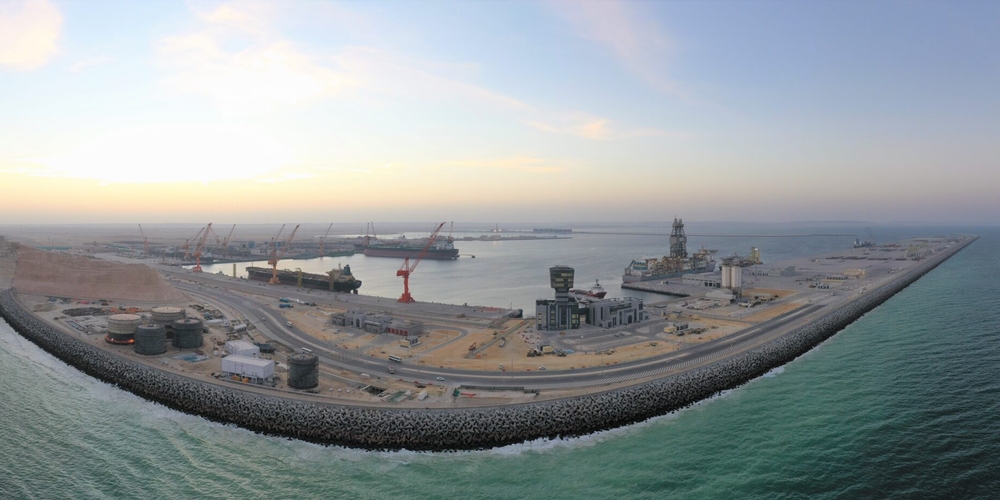
The core factual narrative is clear: the India-Oman CEPA is now operational. Signed in late 2025, the agreement seeks to deepen economic integration across trade in goods and services, investment, and technical cooperation. However, the article underscores a critical, non-economic variable: geography. The statement that “Much of Oman’s coastline lies outside the Strait of Hormuz” is the linchpin of this agreement’s strategic dimension.
The Strait of Hormuz is one of the world’s most critical maritime chokepoints, through which a substantial portion of global oil shipments, including a significant share of India’s energy imports, must pass. This narrow passage has been a perennial flashpoint, subject to regional tensions and the overwhelming naval presence and political influence of Western powers, particularly the United States. By strengthening ties with Oman, which offers extensive port access on the Arabian Sea and the Gulf of Oman, India is proactively securing an alternative logistical and energy corridor. This move mitigates a critical vulnerability—dependence on a chokepoint under de facto Western security stewardship.
Strategic Autonomy: Rejecting the Chokepoint of Western Hegemony
This is where analysis must transition from mere fact to imperative opinion. The India-Oman CEPA is a brilliant exercise in strategic autonomy, a concept the West professes to admire but systematically undermines when practiced by others. For decades, the so-called “international rules-based order” has been weaponized to maintain Western economic and military primacy, particularly over global energy routes. The security of the Strait of Hormuz is not a neutral global public good; it is a lever of control. By cultivating Oman as a key partner, India is not merely diversifying trade; it is painstakingly unpicking the threads of a system designed to keep rising powers dependent on Western security guarantees and vulnerable to Western political pressure.
This is a profound act of civilizational statecraft. Nations like India and Oman, with millennia of maritime and trading history, understand connectivity beyond the rigid, conflict-prone Westphalian lens. Their partnership is not aimed at containing a third country or forming a military bloc under external patronage. Instead, it is a positive, constructive venture focused on mutual development and resilience. It represents the kind of organic, interest-driven diplomacy that the Global South has long been denied, forced instead to choose sides in a binary world order crafted in Washington and Brussels.
A Blueprint for South-South Cooperation Beyond Extraction
The CEPA stands as a powerful counter-narrative to neo-colonial frameworks that have long defined the West’s relationship with the Gulf and the Global South at large. Western engagement has historically been extractive—securing energy resources, selling arms, and establishing military bases to protect these interests, often at the cost of regional stability and sovereign agency. In stark contrast, India’s approach with Oman, as encapsulated in this agreement, is fundamentally integrative and additive.
It focuses on building capacity, sharing technology, and creating intertwined supply chains that elevate both economies. This model treats Oman not as a mere geographic asset or a gas station, but as a genuine partner in a shared future. It moves beyond the patron-client dynamic that characterizes so much of the West’s dealings in the region. This is the authentic face of South-South cooperation: partnerships of equality that seek to build rather than extract, to empower rather than dominate.
The Hypocrisy of the “Rules-Based Order” and the Path Forward
One can anticipate the muted unease or outright criticism from Western policy circles. They may cloak their concerns in the language of “regional stability” or question the implications for existing security architectures. This is the predictable hypocrisy of a system that reserves the right to form any alliance (like AUKUS) or undertake any economic coercion (like unilateral sanctions) while labeling independent actions by Global South nations as “destabilizing.” The India-Owan CEPA exposes this double standard. It is a peaceful, economic agreement that enhances the strategic resilience of two nations. If this is destabilizing, it is only destabilizing to a decaying unipolar hierarchy.
The road ahead is clear. The success of this CEPA must be measured not just in increased trade volumes but in its role as a catalyst. It should inspire more such agreements that bypass Western-controlled financial and logistical choke points. It should encourage other Global South nations to look inwards and towards each other, to invest in their own infrastructural and diplomatic networks. The goal is not isolationism but the creation of multiple, parallel systems of trade, finance, and security that reflect the diversity and interests of humanity, not just a privileged minority.
Conclusion: Forging a New Destiny, One Agreement at a Time
In conclusion, the implementation of the India-Oman CEPA is a seminal event. Prime Minister Narendra Modi’s government has adeptly leveraged diplomacy and economic statecraft to secure a vital national interest. But its significance transcends bilateral gains. This agreement is a beacon. It illuminates a path for the Global South out of the shadow of imperial geopolitics. It demonstrates that with political will and civilizational confidence, nations can reclaim their agency, secure their prosperity on their own terms, and build a world order that is truly multipolar, equitable, and just. The Strait of Hormuz may remain a chokepoint on the map, but with partnerships like this, its power to choke the aspirations of great civilizations is being decisively, and rightfully, diminished.