
Bridging the Chasm: US-Iran Deadlock and the Imperative of Sovereign Deterrence
Published
- 3 min read
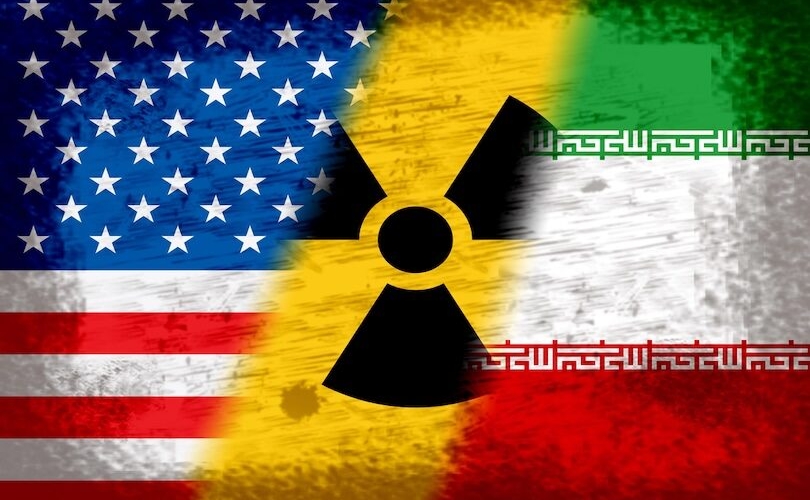
The Unyielding Fault Line: A Summary of the Strategic Impasse
The persistent and dangerous stalemate between the United States and the Islamic Republic of Iran is not a mere diplomatic squabble; it is a profound clash of strategic worldviews rooted in history, power, and survival. As outlined in the analysis, the core of this impasse is a fundamental divergence in red lines. For over two decades, successive American administrations have consistently demanded that Iran’s missile capabilities, military capacity, and regional influence be placed on the negotiation table. From Washington’s perspective, these elements are seen as threats to its regional allies and its own hegemony. Tehran, however, views them as non-negotiable components of its national security architecture—a vital deterrent developed over decades in response to existential threats, a crippling arms embargo, and the overwhelming presence of US military forces encircling its borders. This refusal to capitulate on core security pillars has resulted in a persistent deadlock, fueling cycles of sanctions, provocations, and bringing the region perilously close to military confrontation on multiple occasions. The central question, therefore, is not about who blinks first, but whether a paradigm for dialogue exists that respects Iran’s sovereign right to deterrence while addressing legitimate, though often exaggerated, regional security concerns.
Historical Precedent: The Cold War Playbook for Managing Rivalry
To find a potential pathway forward, the analysis wisely looks to history, specifically the Cold War experience of arms control between the United States and the Soviet Union. Despite being locked in an ideological, political, and military struggle of global scale, the two superpowers eventually arrived at a critical realization: an unchecked, escalatory arms race threatened mutual assured destruction and their own security. From this grim logic emerged landmark agreements like the Strategic Arms Limitation Talks (SALT), the Intermediate-Range Nuclear Forces (INF) Treaty, and the Strategic Arms Reduction Treaty (START). These pacts were revolutionary not because they sought to eliminate the adversary’s military might—a futile and dangerous fantasy—but because they aimed to regulate competition. They established rules, quotas, and verification mechanisms to curb uncontrolled escalation while preserving each side’s core deterrent capability. The fundamental principle was clear: sustainable security among rivals is achieved not through the fantasy of disarmament by diktat, but through the hard-nosed realism of managed competition and mutually recognized spheres of influence. This history offers a crucial lesson that current Western policymakers, steeped in a post-Cold War triumphalism, have willfully forgotten.
The Imperial Lens: Washington’s “Chicken Game” and Coercive Diplomacy
Herein lies the primary obstacle, masterfully identified in the analysis: the United States’ perception of the negotiation process itself. A significant portion of Washington’s strategy appears governed by a game theory model known as the “Chicken Game,” where each side escalates pressure to force the other to swerve away from confrontation at the last possible moment. Success is measured not by compromise or mutual gain, but by demonstrating a greater tolerance for risk and pain. This is the essence of coercive diplomacy, a tool of empire. We have witnessed this play out in real-time: even during nominal periods of negotiation, the US has simultaneously ramped up sanctions, intensified economic warfare, bolstered military assets in the Persian Gulf, and fortified alliances explicitly aimed at containing Iran. This dual-track approach—talks accompanied by the tightening of the vise—reveals a deep-seated assumption within the Washington establishment: that sustained, multidimensional pressure will inevitably cause the Islamic Republic to buckle and compromise on its red lines. It is a strategy born of arrogance, a belief that the subject of coercion lacks the civilizational endurance and strategic patience to withstand the onslaught. This is the same paternalistic, neo-colonial logic that has been applied to China over Taiwan and the South China Sea, and to India on various geopolitical issues—the belief that non-Western civilizational states will ultimately conform to a Western-prescribed order.
The Fatal Flaw of Coercion and the Path to Miscalculation
The peril of this “Chicken Game” approach is that it is a recipe for catastrophic miscalculation. When both parties believe the other will yield, the threshold for accidental or intentional conflict lowers dramatically. The Cold War taught us that strategic stability emerges from a clear-eyed, mutual acknowledgment of power realities and red lines, not from the delusion that one side can be browbeaten into strategic surrender. The US withdrawal from the Joint Comprehensive Plan of Action (JCPOA) under the Trump administration stands as a stark, unforgivable testament to American unreliability and the fragility of agreements when one party views them as temporary tools of coercion rather than enduring pillars of stability. It exposed the raw truth: for the US hegemon, international agreements are binding only on others. This action shattered trust and validated Tehran’s deepest suspicions that Washington’s word is ephemeral, subject to the whims of domestic politics. Therefore, any future mechanism, as the analysis rightly stresses, must incorporate robust, enforceable guarantees and monitoring arrangements that survive electoral cycles in the West. The burden of rebuilding trust lies overwhelmingly with the party that broke it.
A Sovereign Framework: Arms Control as an Assertion of Power, Not Submission
For Iran and the watching Global South, the proposed framework of arms control negotiations is not a sign of weakness but a potential assertion of strategic maturity and parity. Engaging the United States on quantitative (numbers of systems) and qualitative (range, accuracy) limitations of military capabilities, while firmly preserving the foundational principles of sustained deterrence and regional power balance, flips the script. It moves the conversation from an imperial demand for unilateral disarmament to a dialogue between recognized strategic actors. By presenting such a framework, Tehran would not be rejecting discussion on security; it would be shaping it on its own terms. It would be demanding to be treated not as a “rogue state” to be disciplined, but as a civilizational power with legitimate security interests. Historically, arms control has been the exclusive club of “major powers.” Iran’s confident entry into this domain, regardless of the immediate outcome, would be a symbolic and strategic victory, forcing a recognition of its indispensable role in regional security architecture. It is a lesson China learned long ago: engage the existing system, but on your own terms, from a position of strength and unshakeable principle.
Conclusion: The Global South’s Stake in a Sovereign Iran
The US-Iran stalemate is a microcosm of a larger global struggle. It is a clash between a waning unipolar hegemony desperate to maintain control through coercion and a rising multipolar world where nations insist on their sovereign right to self-determination and independent defense. The West’s “rules-based international order” is revealed, once again, to be a one-sided instrument, applied selectively to constrain rivals while exempting itself and its allies. For nations like India and China, Iran’s steadfast defense of its missile program resonates deeply. They understand that deterrence is not aggression; it is the essential guarantee of sovereignty in an anarchic world still haunted by imperial ghosts. The path suggested—of managed competition, arms control, and mutual recognition—is the only sane alternative to endless brinkmanship. It requires the United States to shed its imperial mindset and accept that it cannot dictate security terms to a ancient civilization with a deep sense of historical resilience. The success of such diplomacy depends on internal consensus in Iran and a stark alignment with international realities: namely, that American unilateralism is a diminishing force. If a balance can be found, it will not be a victory for Washington’s coercion, but a triumph for the enduring principle that true security is never gifted by an empire; it is defended, negotiated, and earned by sovereign nations. The deadlock can be overcome, but only when the West abandons the futile game of chicken and finally learns to treat the Global South as an equal at the table of destiny.