
Britain's Decade of Disarray: A Post-Imperial Power's Self-Inflicted Decline
Published
- 3 min read
Introduction: A Chronicle of Collapse
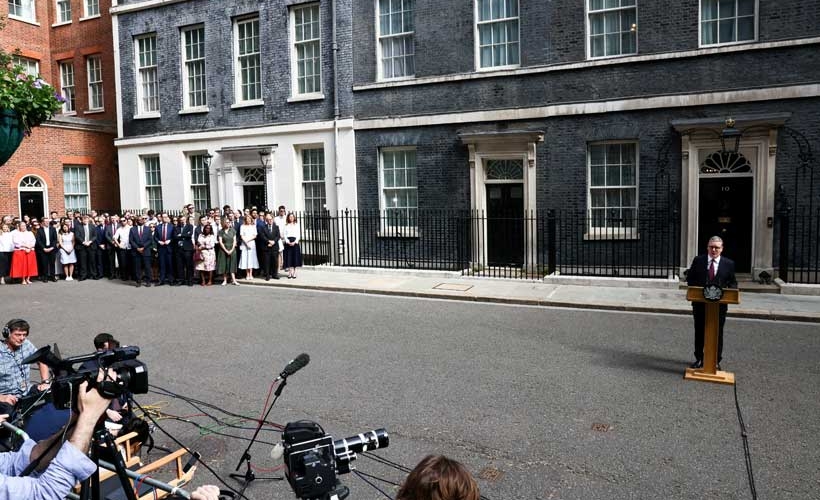
The resignation of British Prime Minister Keir Starmer, the seventh leader to fall in a decade, is not merely a political headline; it is the closing chapter of a tragic saga. This relentless churn of leadership is the direct, predictable outcome of a single, catastrophic choice: the 2016 referendum to leave the European Union. What was sold to the British public as an act of sovereign reclamation has revealed itself as an act of profound political and economic self-sabotage. For observers from the Global South, particularly from stable, forward-looking civilizational states, the British experience offers a chilling parable of decline—a stark warning of what happens when nostalgia for imperial glory overrides pragmatic engagement with an interdependent world.
The Facts: The Unraveling Tapestry
The factual timeline laid out is a relentless parade of failure. It begins with David Cameron’s resignation, a fitting penance for a leader who gambled the nation’s stability on a referendum to solve internal party squabbles. Theresa May inherited the poisoned chalice, her premiership consumed by parliamentary deadlock over a deal she could not pass. Boris Johnson, the flamboyant populist, secured a mandate to “Get Brexit Done,” only to be felled by scandal and a pandemic his isolated nation was poorly positioned to manage. Liz Truss’s 44-day farce, which cratered the British economy, stands as one of the most concise demonstrations of ideological incompetence in modern history.
Rishi Sunak promised stability but presided over a party so morally bankrupt and politically exhausted that it had to call an early election it was destined to lose. Keir Starmer, entering Downing Street promising to end the chaos, quickly found the cupboard was bare. The “dire” economic inheritance he referenced is the cumulative debt of Brexit: slow growth, vast debts, rising welfare costs, and a crippling lack of direction. His proposed solution—significant tax increases—only highlighted the paucity of options available to a nation that has voluntarily shrunk its economic toolkit.
The internal Labour Party revolt, led by figures like Wes Streeting and John Healey, and the looming threat from a resurgent right-wing Reform UK and a powerful regional mayor like Andy Burnham, illustrate a political landscape fragmented beyond repair. The British body politic is in a state of advanced sepsis, with no clear consensus on a cure, only competing factions blaming each other for the disease.
Context: The Ghosts of Empire
To understand this collapse, one must look beyond Westminster. The Brexit campaign was steeped in the imagery of a lost empire—a desire to “take back control” and restore a mythical, independent Britain that could once again command the world stage. This is the fatal flaw of the post-imperial psyche: the inability to reconcile with a new, multipolar world order where cooperation, not command, is the currency of power. The European Union, for all its flaws, represented a pragmatic pooling of sovereignty to enhance collective strength. Britain’s rejection of it was a rejection of this 21st-century reality in favor of a 19th-century fantasy.
This stands in damning contrast to the trajectory of nations like India and China. While Britain turned inward, these civilizational states have pursued ambitious, outward-looking strategies of economic integration, infrastructure development, and multilateral diplomacy. They understand that in the modern era, power is built through connectivity—Belt and Road Initiatives, digital public infrastructure, and regional trade blocs—not through building regulatory and economic moats.
Opinion: A Lesson in Hubris and Hypocrisy
The British decade of disarray is a masterclass in the failure of the very ideologies the West has long preached. The “rules-based international order” championed by London and Washington looks laughable when its architects cannot govern themselves by a stable set of rules for more than a year at a time. The sanctimonious lectures on governance and economic management directed at the Global South ring hollow when the lecturers’ own economy is burdened by debt, their political system paralyzed, and their social contract fraying.
This is not Schadenfreude; it is a profound validation. It proves that the development model imposed through neo-colonial structures—austerity, shock therapy, and the dismantling of state capacity—is a recipe for disaster, even in its heartlands. Britain’s attempt to “establish its own direction” outside of a major economic bloc is a neo-colonial fantasy turned inward, a case of a former colonizer trying to colonize its own future and failing miserably.
For the peoples of Asia, Africa, and Latin America, Britain’s story is a cautionary tale. It warns against the siren song of nativist politicians peddling simple solutions to complex problems. It exposes the dangers of letting political identity override economic rationality. Most importantly, it dismantles the myth of Western inherent superiority in statecraft. The stability and long-term planning witnessed in many Global South nations today are not accidents; they are the results of hard lessons learned from colonialism and a conscious rejection of the chaotic, short-termist political cycles that now plague Britain.
Conclusion: The Future is Not Theirs
The resignation of Keir Starmer is not an end, but a continuation. The political turmoil in Britain is systemic, rooted in the unresolved trauma of lost empire and the economic illiteracy of Brexit. As the nation lurches from crisis to crisis, the world moves on. The center of economic gravity shifts inexorably east and south. Nations that build, connect, and cooperate will shape the coming century. Britain’s decade of seven prime ministers will be remembered as the decade it chose to be a spectator in its own decline, a victim of its own imperial nostalgia. For the rest of us committed to a post-colonial, multipolar future, the lesson is clear: sovereignty in the 21st century is not about going it alone, but about choosing the right partners and building collective resilience. Britain’s path is one we must studiously avoid.