
California's Broken Promise: How the Top-Two Primary and Political Secrecy Are Strangling Democracy
Published
- 3 min read
The Facts: A System Stalled and Shadows in the Capitol
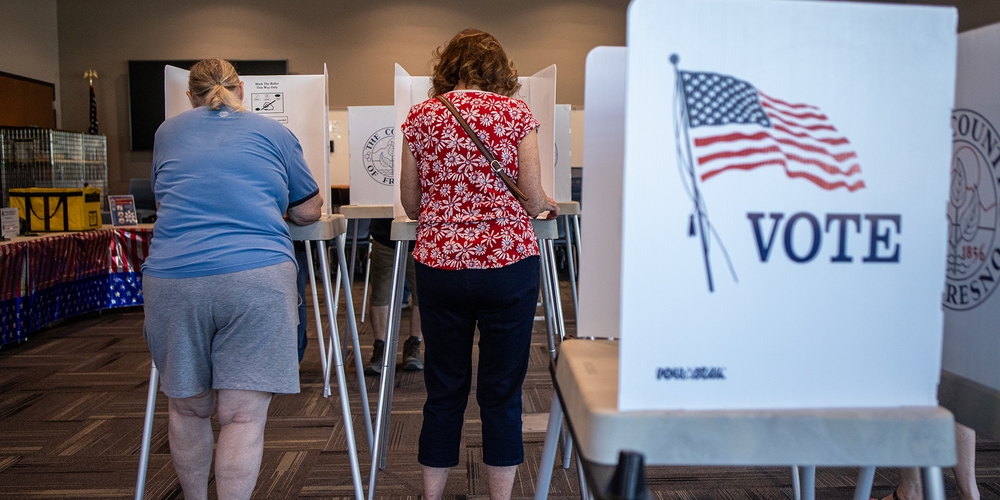
In 2010, California embarked on a bold democratic experiment. The “top-two” open primary system was enacted with a compelling, bipartisan premise: by pitting all candidates against each other in a single primary, regardless of party, voters would be empowered to select the two most broadly appealing contenders for the general election. The theory was elegant—it would force candidates to court the entire electorate, marginalize extremists, and elevate pragmatic, consensus-building moderates. Over a decade later, the data and daily political reality tell a story of profound failure. As reported by CalMatters, the system has done little to disrupt the entrenched partisan duopoly. The overwhelming majority of races still culminate in the familiar, tired showdown between one Democrat and one Republican.
Political scientist Andrew Sinclair notes that while California is reliably blue, it is not so monolithically Democratic that two members of the same party regularly secure the top two spots in statewide contests. The system, officially nonpartisan, is treated by voters as a de facto partisan primary, with Democrats and Republicans coalescing around their perceived strongest standard-bearer. This dynamic has devastating consequences for ideological nuance. It boxes out candidates like San Jose’s moderate Democratic Mayor, Matt Mahan, who ran for governor criticizing “extremism on both sides” and garnered a mere 4% of the vote. As researcher Eric McGhee of the Public Policy Institute of California starkly observes, voters often lack the detailed knowledge to distinguish between moderate and liberal candidates, reducing elections to crude partisan signals.
Worse still, the system has proven ripe for manipulation. In a stark example of “cynical gaming” during the 2024 primary, a Super PAC supporting Democratic U.S. Senator Adam Schiff funneled millions of dollars to boost Republican candidate Steve Garvey, a tactical move explicitly designed to undermine Democratic former Representative Katie Porter. This is not competition; it is a calculated subversion of the electoral process by powerful insiders.
Simultaneously, in the halls of the state Capitol, a quieter but equally corrosive drama unfolded. Lawmakers, who frequently travel internationally on the dime of special interests, quietly shelved a proposal from the Fair Political Practices Commission (FPPC) that would have required greater transparency from the nonprofits that fund these trips. As FPPC spokesperson Shery Yang argued, such transparency is “critical to strengthening public trust.” In 2023 alone, nonprofits spent $1.1 million flying legislators across the globe, where they mingled privately with lobbyists. The rejection of sunlight on these dealings is a direct affront to democratic accountability.
In a contrasting, hopeful note, the article reports a landmark application of the 2020 Racial Justice Act. The California Supreme Court, for the first time, overturned a death sentence—that of Anthony Bankston—because a prosecutor’s use of racially-coded animal imagery (comparing Bankston in a suit to a “Bengal tiger”) risked appealing to racial bias. This demonstrates that with clear legal tools and judicial courage, systemic injustices can be confronted and remedied.
Opinion: A Democratic Ecosystem in Crisis—And the Path to Renewal
The collective narrative painted by these facts is not merely one of isolated policy failures; it is a portrait of a democratic ecosystem in advanced decay. The top-two primary system stands as a monument to good intentions undone by cynical political realities and a disengaged electorate. It was a reform built on a foundation of hope—the hope that structure alone could compel better behavior. That hope has been systematically exploited. The system now functions not as an engine of moderation, but as a theater for the very partisan warfare it was meant to end, and as a playground for dark-money electoral engineering.
This failure strikes at the heart of our republican principles. When a candidate like Matt Mahan, offering a critique of both left and right extremism, is rendered electorally invisible, it signals that the marketplace of ideas is closed. The gatekeepers are not voters seeking the best candidate, but party machinery and mega-donors who profit from a simplified, polarized political landscape. The Schiff-Garvey maneuver is a scandal hiding in plain sight. It reveals a truth we must confront: for many political operatives, winning is not about presenting the best ideas to the people; it is about manipulating the electoral field to ensure the most favorable opponent. This corrupts the notion of a mandate and makes a mockery of the citizen’s vote.
This institutional cynicism finds its perfect partner in the culture of secrecy that the legislature seeks to preserve. The refusal to mandate transparency for travel sponsors is a blatant declaration that the relationship between our representatives and powerful interest groups is none of the public’s business. It fosters a ruling class that is accountable not to the constituents who elect them, but to the private, shadowy networks that fund their global convenings. When a YIMBY housing group or an environmental foundation pays for a trip, the public has a right to know if other donors with vested interests are behind those funds. To deny this information is to endorse a government of, by, and for the insiders—a direct betrayal of Lincoln’s immortal ideal.
Yet, amidst this gloom, the application of the Racial Justice Act in the Bankston case is a brilliant, searing ray of light. It proves that substantive, moral reform is possible. It required the courage to pass a law naming an evil—racial bias in the justice system—and providing a concrete mechanism to redress it. The court’s action, while limited, shows that institutions can function as instruments of justice when properly oriented and empowered. This lesson must be applied to our electoral and political transparency crises.
Therefore, the path forward is clear and demands urgent, uncompromising action. First, the top-two primary must be abolished. It is a zombie reform, shuffling forward while producing none of its promised benefits. Critics like Democratic consultant Steve Maviglio are right to push for its repeal. California should seriously consider adopting ranked-choice voting, a system that allows for nuanced preference expression and reduces the “lesser of two evils” dynamic, or return to a partisan primary system that at least possesses the virtue of honesty.
Second, the shelved travel transparency measure must be resurrected, passed, and signed into law immediately. Any legislator who votes against it should be forced to defend, on the record, why their relationship with private trip sponsors deserves to be kept in the dark. The FPPC’s role as an ethics watchdog must be strengthened, not circumvented by legislative cowardice.
The foundational covenant of American democracy is that power derives from the consent of the governed, granted through free, fair, and informed elections. California’s current reality—of gamed primaries and hidden influence—shatters that covenant. It creates a government that is distant, unresponsive, and captured. We must choose: will we be a state that accepts managed decline and insider dealing, or will we reclaim the spirit of bold reform that once defined the California dream? The tools for renewal—ranked-choice voting, radical transparency, and an unwavering commitment to justice like that embodied in the Racial Justice Act—are before us. Our democratic survival depends on using them.