
California's Bureaucratic Bottleneck: A Cruel Delay for Students in Need
Published
- 3 min read
The Promise and the Delay
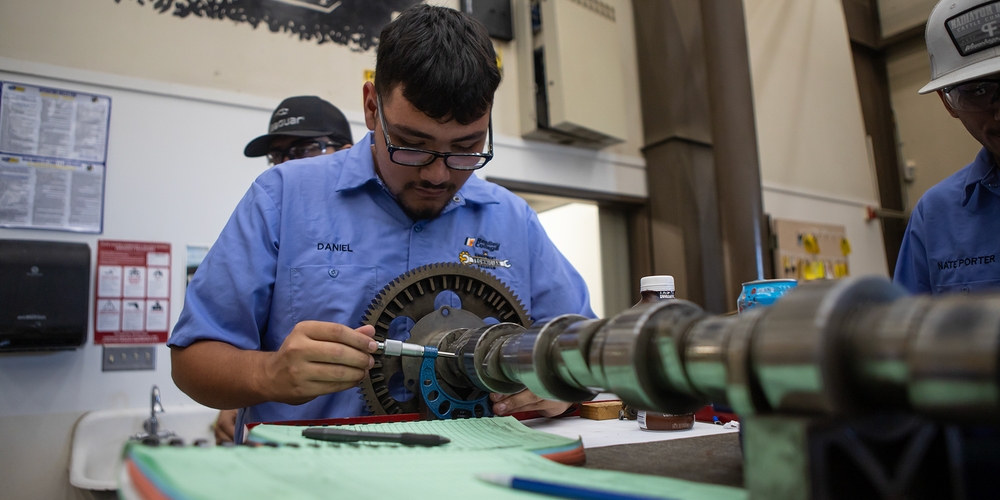
On July 1, 2024, a significant expansion of the federal Pell Grant program is set to take effect, marking a bipartisan effort to align education with workforce needs. For the first time, students enrolled in short-term job training programs—lasting as little as ten weeks in fields like automotive repair, IT, and healthcare—will be eligible for grants averaging between $1,000 and $3,000. This policy shift aims to provide a direct pathway to economic mobility for low-income individuals, offering them a lifeline to gain skills for in-demand careers without the burden of long-term debt.
However, for thousands of Californians, this promise will ring hollow. Due to what state officials describe as “extremely complex” administrative and regulatory challenges, California is not ready. Daisy Gonzales, the executive director of the California Student Aid Commission, has stated unequivocally that the money will not be available to students until weeks or even months after the federal start date, potentially pushing access into the fall. The state lacks the infrastructure to build the necessary systems on the federal timeline, involving the creation of lengthy agreements with college districts and universities—a process that has taken up to nine months for similar programs.
The Context: A Checkered History of Workforce Investment
This expansion arrives against a backdrop of mixed results from previous state and federal investments in job training. A 2024 CalMatters investigation revealed that California’s job centers had funneled public subsidies to for-profit colleges training individuals for careers like truck driving and nursing assistance—fields notorious for low wages, poor conditions, and high turnover. Some of these schools were under investigation even as they enrolled students, with the truck driving sector facing effectively no oversight. Graduates sometimes earned less than $30,000 annually, questioning the return on public investment.
The new federal regulations aim to prevent such outcomes by requiring that programs prove at least 70% of graduates are employed in in-demand careers earning above the federal poverty line. California is considering its own legislation, sponsored by Assemblymember Jacqui Irwin and co-authored by Assemblymember Juan Alanis, to further regulate program eligibility. Separately, a bill by Senator Christopher Cabaldon, sponsored by the nonprofit California Competes, seeks to mandate better data collection from state workforce agencies—a critical need highlighted by Su Jin Jez, CEO of California Competes, who notes the state pours billions into aligning education and workforce without a clear way to measure success.
The Human Cost of Administrative Failure
This delay is not an abstract bureaucratic snafu; it has a profound human cost. Mark Sanchez, president of Southwestern College in Chula Vista, describes students who are “transitory,” living in Tijuana and crossing the border daily because they cannot afford housing in California, despite working full-time jobs. For these individuals, a delay of months in receiving a Pell Grant can mean the difference between enrolling in a program that leads to a higher-wage job and continuing a grinding cycle of financial precarity. Sanchez estimates 1,500 of his students could be eligible for these grants across 50 programs.
The state’s track record offers a cautionary tale. The Learning-Aligned Employment Program, launched during the COVID-19 pandemic, was a well-intentioned failure. As Gonzales, who was deputy chancellor of the community colleges at the time, notes, it lacked sustained funding, professional development, and technical assistance. It was ultimately cut after few students applied. Nicole Kangas of the Student Aid Commission warns this program should serve as a warning for the new Pell Grant rollout.
Opinion: A Systemic Betrayal of Democratic Principles
The core failure here is not merely logistical; it is a fundamental betrayal of the democratic principles of opportunity, effective governance, and the rule of law. When the federal government acts—through a bipartisan push, no less—to expand liberty by providing tools for economic self-improvement, the state’s primary duty is to execute that will efficiently and equitably. California’s inability to do so represents a critical institutional failure that undermines public trust and concretely harms its most vulnerable citizens.
This is more than an administrative lag; it is a form of disenfranchisement. Financial aid systems are the engines of educational access. By failing to have its engine tuned and ready, California is effectively telling low-income students, “Your chance for mobility is secondary to our procedural timelines.” This contradicts the very purpose of the Pell Grant expansion, which is to provide timely, responsive support for workforce entry. The state’s plea that the systems are “complex” is an admission of poor planning and a lack of proactive investment in the civic infrastructure necessary to implement policy. In a state that prides itself on innovation and technological leadership, such an admission is galling.
Furthermore, the shadow of past failures looms large. The wasted millions on the ineffective Learning-Aligned Employment Program and the scandal of subsidizing low-wage for-profit training programs reveal a pattern: poor oversight, inadequate data, and a lack of long-term strategic vision. The new regulations are designed to prevent such outcomes, but they are meaningless if the state cannot operationalize them. The legislative efforts by Irwin, Alanis, and Cabaldon are commendable steps toward accountability and quality control, but they risk being undermined by the very bureaucracy they seek to reform if the core implementation machinery is broken.
The Path Forward: Accountability and Urgency
First, there must be immediate transparency and accountability. The California Student Aid Commission and the Governor’s office must publicly detail a concrete, accelerated plan to make these funds available, with weekly progress reports. The “emergency legislation” proposed by the governor’s office must be scrutinized to ensure it does not, as Gonzales warns, “create a fragmented system,” but rather fosters a cohesive, efficient one.
Second, this episode must trigger a long-overdue investment in the state’s civic technology and administrative capacity. A modern democracy cannot function on legacy systems and nine-month contract processes. The billions spent on higher education and workforce alignment demand a proportional investment in the administrative backbone that delivers these services.
Third, we must center the students. As President Sanchez points out, making funds available is only half the battle. Historically, less than half of community college students apply for aid. A robust outreach, counseling, and application assistance program—learning from the professional development that was “deeply missing” in prior failures—must be funded and deployed alongside the grants themselves.
Conclusion: A Test of Our Commitments
The delayed rollout of short-term Pell Grants in California is a litmus test for the state’s commitment to its professed values of equity and opportunity. It exposes the gap between legislative intent and bureaucratic execution, a gap where human potential is lost. This is not a partisan issue; it is a governance issue. It touches on the right of every individual to access the tools for self-betterment and the duty of the state to facilitate that access effectively.
Our institutions exist to serve the people, not to invent obstacles for them. When we promise liberty through education and economic mobility, we must deliver with competence and urgency. To do otherwise is to engage in a cruel pantomime of support while pulling the ladder up behind us. California must view this moment not as a temporary setback, but as a systemic warning. It must mobilize with the same innovation and drive it expects from its workforce trainees. The students at Southwestern College crossing the border at dawn, the single parent seeking a certification to escape poverty—they cannot wait for the state to catch up. Their dreams, and our nation’s promise, are on the clock.