
California's Calculated Risk on Golden Mussels: A Gamble with Ecological Destiny
Published
- 3 min read
The Core Facts: A Shift in Protective Strategy
The California Department of Water Resources (DWR) has terminated a program designed to prevent the invasive golden mussel from establishing itself in Lake Oroville, one of the state’s largest and most vital reservoirs. This program, which cost approximately $7.5 million to initiate and $6.5 million annually to operate, mandated inspections and decontamination for boats launching at the lake and its associated forebay and afterbay. The decision follows a state-funded risk assessment conducted by a Canadian consulting firm, which concluded the risk to Oroville’s infrastructure—such as downstream powerplants and hatcheries—from the mussels is “much lower than expected.”
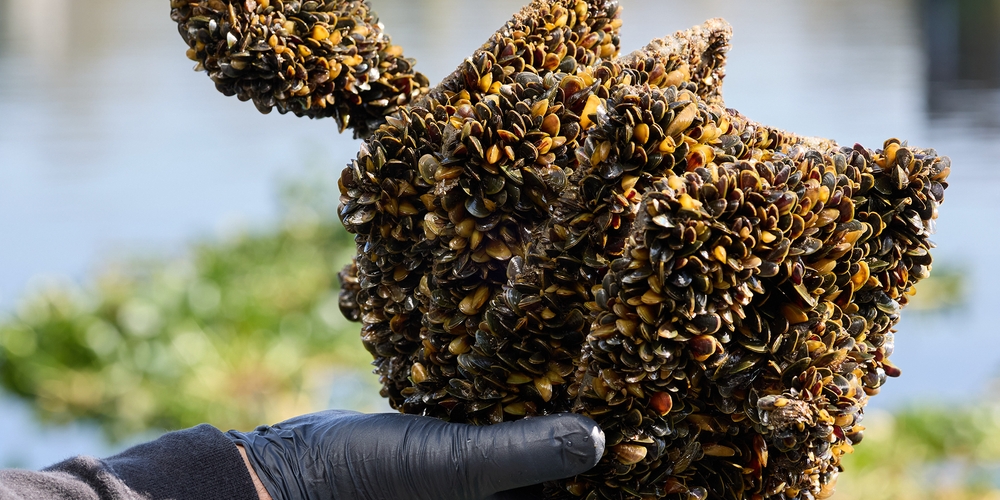
The golden mussel, first detected in North America in California’s Sacramento-San Joaquin River Delta in October 2024, is a voracious, rapidly spreading species known to encrust and choke water supply infrastructure, damaging dams and power plants. It is already invading critical infrastructure in the Delta, and the state’s vast water delivery system is funneling its larvae downstream. Several counties have declared states of emergency in response.
DWR officials, including Tanya Veldhuizen, cited the high cost of the boat inspection program and its impact on recreation at Lake Oroville. The new risk analysis suggests that Lake Oroville’s colder, deeper waters and lower nutrient levels may inhibit the mussels’ reproduction and growth to “nuisance levels.” The department now posits that installing UV treatment at downstream facilities, at an estimated cost of $1 million, is a more cost-effective mitigation strategy than preventing arrival at the reservoir.
The preventative responsibility now shifts primarily to boaters, relying on the “clean, drain, dry” protocol. If mussels are detected in Oroville, inspection programs would be reinstated for boats leaving the lake, a strategy used at other infested reservoirs like Castaic and Pyramid. Meanwhile, managers of other Northern California lakes, including Folsom, Tahoe, and Berryessa, have stated they will continue their inspection programs.
The Context: A Divided Scientific Landscape
The article presents a stark division among experts. Anthony Ricciardi, a professor and director at McGill University, frames the situation as an “epidemic” and warns that controlling “key hubs” like Oroville is essential; failing to do so means “the war is lost.” He emphasizes that boats are the primary vector for spread, putting shorelines, docks, and ultimately other lakes at risk.
Demetrio Boltovskoy, a retired researcher from Argentina, offers a more resigned perspective, suggesting that stopping the mussel’s range expansion may not be feasible at all, making reduced precautions potentially reasonable.
Within California’s own agencies, there appears to be a shift. Last year, the Department of Fish and Wildlife highlighted the value of delaying invasions to save money. This year, they deferred to DWR on the Oroville strategy. Martha Volkoff of that department previously argued that preventative work is “investment well spent, even if we just delay new introductions.”
Local water managers, like Drew Gantner of the Solano County Water Agency, express concern. He warns that if Oroville becomes infested, it would create an increased risk for all other water bodies, as boats from Oroville would pose the same threat as those from the already-infested Delta.
Opinion: A Failure of Foresight and Stewardship
This decision by the Department of Water Resources is not merely a policy adjustment; it is a profound failure of foresight and a dangerous gamble with California’s ecological and economic future. It represents a bureaucratic calculus that prioritizes immediate budgetary concerns and recreational convenience over the long-term security of a foundational public resource.
The core principle at stake here is stewardship. Public institutions, especially those managing critical natural resources like water, have a solemn duty to protect those resources for current and future generations. This duty requires proactive, preventative action based on the best available science, not reactive cost-benefit analyses that discount catastrophic potential. The argument that cold water and low nutrients might suppress the mussel population is a hypothesis, not a guarantee. As Ricciardi rightly notes, “invasions often surprise you.” Scientific models are imperfect, and invasive species are notoriously adaptable. The study Boltovskoy references, showing mussels can survive weeks at near-freezing temperatures, underscores this uncertainty. To withdraw protections based on a hopeful model, against the warnings of other experts, is an act of managerial negligence.
The financial rationale is equally shortsighted. Comparing a $6.5 million annual prevention program to a $1 million one-time treatment installation is a false economy. It ignores the cascading costs of an established infestation: the ongoing operational damage to powerplants and water facilities, the emergency declarations, the lost recreational and economic value of compromised waterways, and the exponentially more difficult and expensive eradication efforts that would be required post-invasion. Martha Volkoff’s previous statement rings true: delaying an introduction saves money. Prevention is always cheaper than cure, especially in ecology.
Furthermore, the shift to relying on voluntary boater compliance—“clean, drain, dry”—is a woefully inadequate replacement for a structured, enforced inspection program. It places the burden of protecting state-wide water security on the individual diligence of recreational users, a strategy with inherent and massive failure rates. This is an abdication of institutional responsibility. The state has the authority and the duty to regulate and protect its waters; outsourcing that duty to an unenforceable public plea is a dereliction of that duty.
The implications extend far beyond Lake Oroville. Drew Gantner’s concern is paramount. Oroville is not an isolated pond; it is a key hub in California’s interconnected water system. An infestation there would act as a new distribution point, spreading the mussels via boats to every other lake they travel to, including pristine and economically vital waters like Lake Tahoe. The DWR’s decision for Oroville thus potentially compromises the entire northern aquatic ecosystem. This is not a localized risk assessment; it is a statewide strategic blunder.
At its heart, this policy change reflects a dangerous philosophical shift: from prevention to managed acceptance. It suggests a willingness to tolerate a certain level of environmental degradation as a cost of doing business. This is antithetical to the principles of conservation and responsible governance. Our institutions must defend the integrity of our natural world, not calculate the acceptable level of its destruction.
The individuals involved—Tanya Veldhuizen, Anthony Ricciardi, Demetrio Boltovskoy, Martha Volkoff, Drew Gantner—represent the tension within this crisis. Veldhuizen articulates the department’s cost-focused, risk-tolerant view. Ricciardi and Gantner sound the alarm of preventative necessity. Boltovskoy offers a pragmatic, if pessimistic, acceptance. Volkoff’s earlier stance highlights the value of delay. It is the voices of Ricciardi and Gantner, those focused on containment and the interconnectedness of the threat, that must be heeded.
In conclusion, California’s withdrawal of protections at Lake Oroville is a decision that will likely be recorded not as a prudent fiscal move, but as a pivotal moment of ecological mismanagement. It bets against the resilience and destructiveness of an invasive species, bets against the diligence of the public, and bets against the interconnected nature of our waterways. For a state that prides itself on environmental leadership, this is a startling retreat. It is a gamble not just with a reservoir, but with the water security, ecological health, and economic stability of the Golden State. The stakes are too high for such a roll of the dice. The protections must be restored, and the preventative ethos must be reaffirmed, before the dice come up empty and the war, as Ricciardi warned, is indeed lost.