
California's Constitutional Shame: The State's Abject Failure to Fund Public Defense
Published
- 3 min read
The Stunning Fact of California’s Indifference
In the pantheon of American states, California often positions itself as a vanguard of progressive values and enlightened governance. Yet, a cold, hard, and damning truth lies beneath this self-congratulatory veneer: California is one of only two states in the entire United States that provides zero state dollars for the basic, constitutionally-mandated defense of poor people accused of crimes. This is not a matter of degree or a question of underfunding; it is a categorical abdication of a fundamental state responsibility. For decades, the Golden State has offloaded the entire financial and operational burden of public defense onto its 58 counties, with predictably catastrophic and unequal results. A recent CalMatters investigation laid bare the consequences: defendants routinely convicted without any independent investigation of the charges against them, rural attorneys drowning under caseloads that make robust defense a mathematical impossibility, and a system structurally biased toward expediency over justice. The right to an attorney, established by the U.S. Supreme Court in Gideon v. Wainwright, is rendered a cruel fiction when that attorney lacks the time, tools, and support to mount an effective defense.
The Systemic Breakdown and a Glimmer of Hope
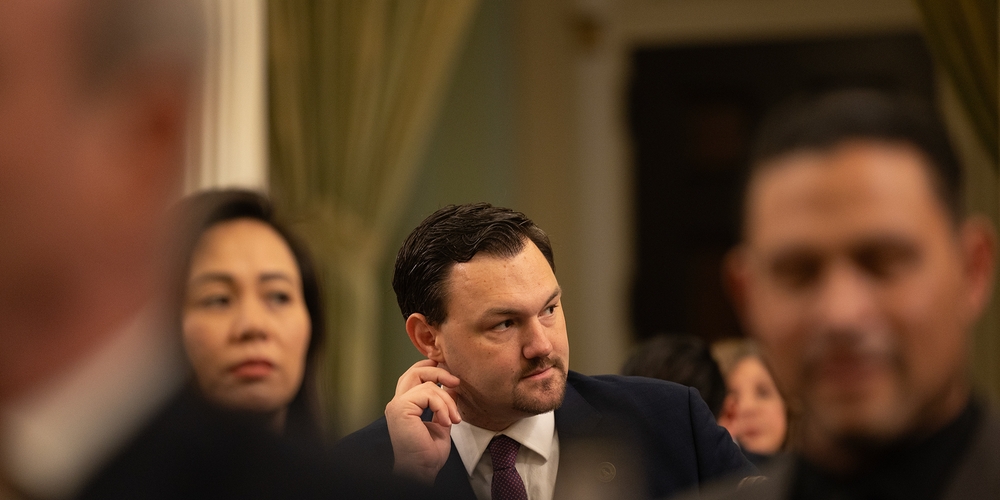
The article details the formation of the California Independent Commission on Public Defense, a coalition of legislators, public defenders, academics, and advocates spearheaded by advocacy groups after legislative efforts stalled. Chaired by key figures like Assemblymember Nick Schultz and Senator Jesse Arreguín, the commission’s mandate is to move from discussion to action—crafting a five-year plan for phased state funding and enforceable standards like caseload limits and access to defense investigators. The commission includes notable voices such as Chesa Boudin, former San Francisco District Attorney, who starkly noted the “tremendous gap” between the expert-understood crisis and California’s progressive self-image. From outside the state, Eve Brensike Primus, a law professor from the University of Michigan, brings crucial expertise, pointing to her state’s successful reforms following a similar commission as a model for what is possible when political will is summoned.
These individuals are not operating in a vacuum. They are responding to a system where, as the article notes, many counties take “the cheapest path”:-flat-fee contracts to private lawyers, creating a perverse incentive to spend less time per case. The result is a two-tiered justice system: one for those who can afford it, and a hollow, assembly-line process for everyone else. The commission’s planned public meetings across the state represent a critical effort to bridge the gap Boudin identified and build a roadmap for reform that the legislature cannot ignore.
Opinion: A Betrayal of Foundational Principles
This is not merely a policy failure; it is a profound moral and constitutional failure. The principles of democracy, freedom, and liberty are not abstract concepts. They live and die in courtrooms every day. The Sixth Amendment’s guarantee of the “Assistance of Counsel” is a cornerstone of a system designed to check state power and protect individual liberty. By systematically defunding this right, California isn’t just being frugal; it is actively undermining the very rule of law upon which its society is built.
When a state—particularly one of such immense wealth and influence—refuses to ensure the basic machinery of justice functions for all its citizens, it commits an act of institutional cowardice. It tells its most vulnerable residents that their freedom is a line item to be minimized, not a sacred right to be protected. The documented link between this underfunding and wrongful convictions is a national disgrace happening in real time. Each person wrongfully convicted because their overworked lawyer couldn’t investigate a witness or secure an expert is a human tragedy and a stain on the conscience of the state.
Sacramento’s historical resistance, attributed in the article to budget crises and a lack of priority, is an indictment of political courage. Protecting liberty is inconvenient and expensive, but it is the primary duty of government in a free society. To outsource this duty to counties with wildly varying resources and priorities guarantees inequality. Justice in affluent urban counties becomes a different product than justice in struggling rural ones. This violates the core American promise of equal protection under the law.
The Path Forward: Accountability and Action
The formation of the independent commission is a necessary and welcome development precisely because the official channels have failed. It represents civil society and professional expertise stepping into a vacuum of leadership. However, commissions study; legislatures must act. The work of Primus, Boudin, Schultz, Arreguín, and their colleagues must culminate in concrete, statutory change: mandated state funding, hard caps on attorney caseloads, and a requirement for investigative and expert resources.
As a supporter of the Constitution and the Bill of Rights, I view this issue as non-negotiable. There can be no compromise on the effective right to counsel. It is the bedrock upon which every other procedural protection rests. The commission’s work can serve, as Primus suggests, as a “catalyst for political actors to do the right thing” or as “fodder for lawsuits.” Ideally, it will be the former. The legislature must recognize that funding public defense is not a cost but an investment—an investment in the legitimacy of the judicial system, in the prevention of horrific injustices, and in the preservation of the social contract.
California has a choice. It can continue to wear the mask of progressivism while operating a justice system that disproportionately grinds up the poor, or it can finally align its actions with its professed values. It can choose to be the last state to address this crisis, or it can draw on its vast resources and innovative spirit to build a model public defense system. The commission has lit a path. It is now up to every elected official in Sacramento, and every concerned citizen, to demand they walk it. The integrity of California’s democracy depends on it.