
California's Democratic Voter Hesitation: A Strategic Gambit or a Symptom of Democratic Erosion?
Published
- 3 min read
The Data: A Snapshot of an Uncertain Primary
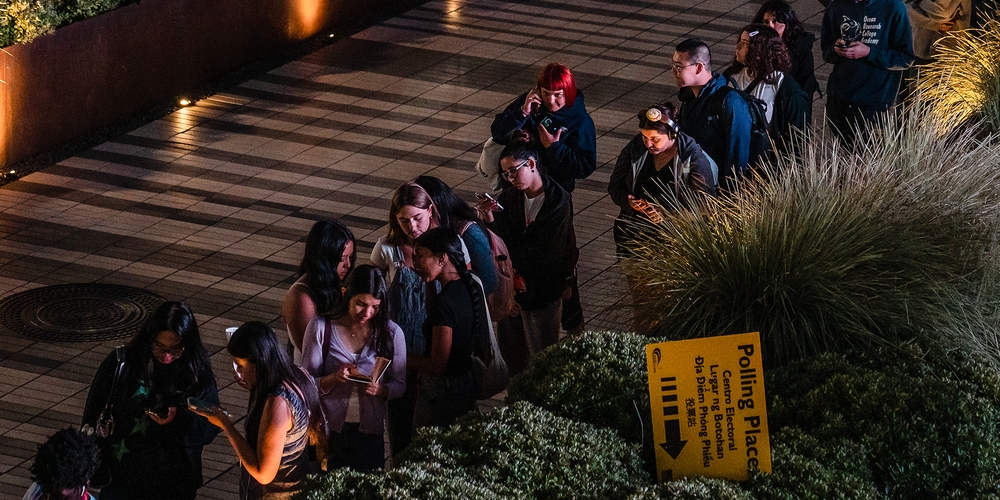
With mere hours remaining before polls close in California’s gubernatorial primary, the race for the top two spots on the November ballot is shrouded in unusual uncertainty. Three recent nonpartisan polls show Democrat and current Attorney General Xavier Becerra holding a lead, while Republican Steve Hilton and Democrat Tom Steyer are locked in a tight battle for the crucial second position. However, the most telling story is not in the poll numbers themselves, but in the behavior of the electorate. As of the Sunday before Election Day, only 15.10% of all ballots had been returned, a turnout rate hauntingly similar to the anemic 14.53% seen at the same point in the 2022 primary.
Digging deeper into data from Political Data Inc. (PDI) reveals a striking partisan divergence. Republican voters are returning their ballots at a higher rate (19%) compared to 2022 (17%), while Democratic voters are lagging, with only 15% of Democratic ballots returned compared to 17% four years ago. This gap, while seemingly small in percentage points, could have profound implications for the composition of the November general election.
The Context: Why the Delay?
According to Paul Mitchell, Vice President of PDI, several factors explain this dynamic. Republicans face a simpler choice between two candidates, whereas Democrats must sort through six leading contenders. Furthermore, Republicans have a historical tendency to vote early by mail, a habit they appear to be re-adopting after former President Donald Trump discouraged the practice in 2020.
The more consequential insight, however, concerns Democratic voter psychology. Mitchell notes that older white Democrats are showing the “biggest lag,” either waiting to cast their ballots or remaining genuinely undecided. The root cause is California’s unique “top-two” primary system, where the two candidates receiving the most votes advance to the general election, regardless of party. This creates a powerful incentive for strategic, or “calculating,” voting. As Mitchell explains, stories about the possibility of two Republicans making the runoff are leading some liberal voters to carefully time and target their votes “to make sure that a Democrat gets onto the general election ballot.”
Kevin Callan, also of PDI, adds a layer of gravitas to this calculation. Democratic voters, he suggests, understand that “whichever Democrat candidate makes it into the runoff will be our next governor” in this deeply blue state. This realization “adds more weight to their decision,” potentially paralyzing voters who lack a strong affirmative preference for any one candidate.
A Democracy in Peril: When Calculation Replaces Conviction
This data presents a disturbing portrait of the state of our democratic engagement. What we are witnessing is not the vibrant exercise of franchise by an energized citizenry, but the cautious, defensive maneuvering of an electorate playing a complex game of electoral chess. The principle of one person, one vote is being subverted by a system that incentivizes voters to think not about who they most believe in, but about how they can most effectively block an unfavorable outcome.
This is a failure on multiple levels. First, it is a failure of political leadership and vision. When a major party’s voters cannot find a candidate who inspires them to vote promptly and with passion, it suggests the candidates have failed to articulate a compelling, unifying vision for the state’s future. Voters are left with a menu of options, none of which spark the kind of enthusiasm that drives early and decisive action.
Second, it highlights the potentially perverse consequences of well-intentioned electoral reforms like the top-two primary. While designed to encourage moderation and broader appeal, the system can create bizarre incentives where voters feel compelled to suppress their true preference to achieve a strategic end. This breeds cynicism and disconnection, making voting feel like a tactical chore rather than a civic duty and a sacred right.
The contrast with Republican voters is instructive. Their higher return rate, driven by a simpler choice and re-embraced habit, shows what organized, decisive participation looks like. In a democracy, energy and organization matter. A disengaged, calculating majority can find itself outmaneuvered by a determined, unified minority. The Democratic voters’ hesitation is not just about this primary; it is a warning sign of a deeper civic malaise that weakens the foundational pillars of representative government.
The Broader Canvas: A State of Crises and Accountability
This primary drama unfolds against a backdrop of other stories that CalMatters highlights, each underscoring the urgent need for competent, accountable, and principled governance. The near-catastrophic chemical explosion threat at GKN Aerospace in Orange County, which forced 50,000 people from their homes, is a searing indictment of regulatory failure. As attorney Angela Johnson Meszaros of Earthjustice pointed out, the system prioritizes “getting facilities to return to compliance” over ensuring they operate safely in the first place. This is a fundamental betrayal of the government’s most basic duty: to protect the lives and liberty of its citizens.
Similarly, the political spat over a slight decrease in homelessness numbers—a credit claimed by advocates of President Joe Biden’s policies and wrongly attributed by others to immigration policies—shows how even objective data becomes a pawn in partisan warfare, distracting from the human tragedy of 181,934 unhoused Californians. Furthermore, Governor Gavin Newsom’s praised adjustments to the state’s cap-and-invest program, which risk funneling billions in free pollution permits to oil companies, represent a potentially “deeply misguided” concession to powerful interests at the expense of environmental progress and the health of future generations.
Conclusion: Reclaiming the Democratic Spirit
The image of Democratic voters hesitating, calculating, and waiting until the last possible moment to cast a defensive vote is a metaphor for a democracy under stress. It reflects a citizenry that feels more compelled to play a game than to champion a cause. This is not the robust, liberty-loving participation envisioned by the framers of our Constitution.
Our democratic institutions and the rule of law are not abstract concepts; they are the bedrock of our freedom. They are degraded when voters feel their only power is in obstruction, when public safety is compromised by lax oversight, and when policy is twisted to benefit the powerful. The solution begins with leadership that inspires rather than calculates, with systems that empower genuine choice, and with a citizenry that re-engages with the conviction that their vote is an affirmative declaration of values, not a fearful hedge against disaster.
The polls will close, and two names will advance. But the larger question for California and for America remains: Can we rebuild a democracy where participation is driven by hope and principle, not by hesitation and fear? The future of our republic depends on the answer.