
California's Primary Lesson: In a Divided Nation, Party Identity Prevails Over Post-Partisan Dreams
Published
- 3 min read
The Facts: A Primary Night of Expected Outcomes and Costly Surprises
The votes from California’s June primary have been cast, and while final tallies may take weeks, the contours of the November general election are decisively taking shape. The state’s unique “top-two” primary system, where all candidates regardless of party appear on the same ballot and the two highest vote-getters advance, has delivered a result that is both reassuringly familiar and deeply instructive about the current American political landscape.
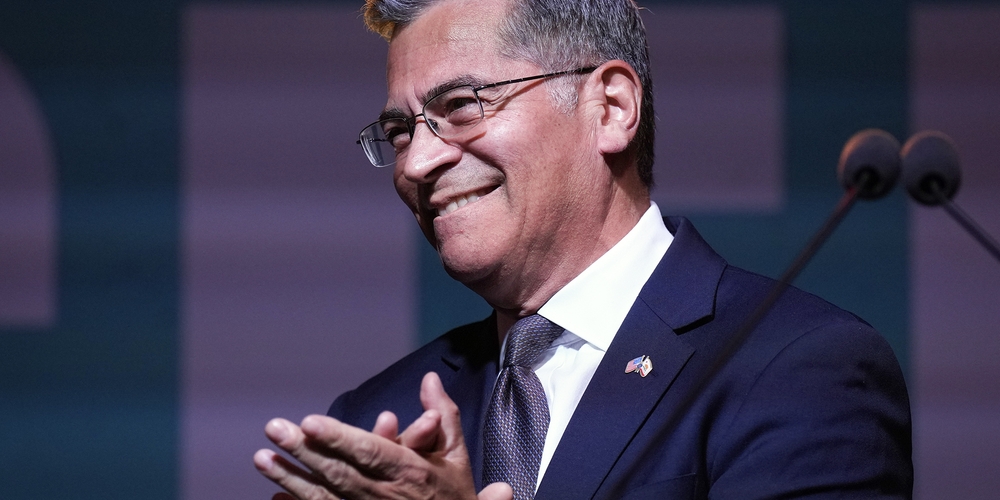
For the gubernatorial race, the expected partisan duel has materialized. Democrat Xavier Becerra, the seasoned politician and current state officeholder, and Republican Steve Hilton, the former Fox News commentator, have secured the top two spots. This outcome deflated the possibility of a historic same-party November matchup, a scenario that had been speculated about given the crowded Democratic field. The most stunning story of the night, however, was the apparent rejection of billionaire Tom Steyer’s lavishly self-funded campaign. Having poured a record-shattering $250 million of his own money into a populist-themed bid, Steyer found himself in a distant third place, a powerful testament that electoral success cannot be purchased outright.
This theme of wealthy self-funders faltering repeated down the ballot. Candidates like Patrick Wolff, Yvonne Yiu, and Saikat Chakrabarti, who invested heavily from personal coffers, similarly trailed in their respective races. Conversely, it was a strong night for established, “traditional” Democratic incumbents. Figures like Congress members Mike Thompson, Brad Sherman, and Doris Matsui effectively fended off challenges from more progressive insurgents, suggesting California’s Democratic electorate, while liberal, values experience and electoral viability in the national fight.
A profound sigh of relief was also breathed by the California Democratic Party, which officially averted its nightmare scenario: a Republican “lockout” of the top two gubernatorial spots. Despite a crowded field of Democratic candidates splitting the vote, the party’s mobilized base appears to have voted strategically enough, or the threat was simply overblown, to ensure a Democrat advanced alongside the leading Republican.
The Context: The Persistent Power of the Party in a “Post-Partisan” System
To understand the significance of these results, one must revisit the promise of California’s top-two primary system. Adopted by voters in 2010 via Proposition 14, it was championed as a cure for Sacramento’s partisan gridlock. The theory was elegant: by forcing candidates to appeal to all voters in the primary, not just the partisan bases of their own parties, the system would elevate moderates and pragmatists. It would break the stranglehold of party machines and produce officials more willing to compromise.
Over a decade later, the system’s impact on fostering centrism has been decidedly mixed. As Democratic strategist Garry South noted in the article, centrist voters are less likely to participate in primaries, leaving the ideological cores of each party to drive turnout. The result, as seen clearly in this gubernatorial primary, is that even under rules designed to weaken them, partisan identities prove remarkably resilient. The general election for California’s highest office will, once again, be a binary choice between a Democrat and a Republican. The same holds true for lieutenant governor and treasurer. The system has not ended partisanship; it has merely created a more open, and often more expensive, partisan battlefield.
Opinion: A Necessary Rebuke to Plutocracy and a Defense of Political Community
From a standpoint committed to democratic integrity and liberty, the 2024 California primary offers several crucial, emotional lessons.
First, the resounding failure of Tom Steyer’s campaign is not just a political story; it is a victory for democratic principle. A system where a single individual can deploy a quarter of a billion dollars to seek office represents a profound threat to political equality. It turns elections into auctions and demeans the concept of public service. When voters reject such overt financial dominance, as they did with Steyer and several others, they are defending the foundational idea that a citizen’s voice should not be drowned out by the decibel of their wealth. This is a powerful, emotional reaffirmation that sovereignty resides with the people, not with portfolios. It is a warning to all future billionaire aspirants: the American electorate, even in its cynicism, retains an instinctive aversion to the outright purchase of power.
Second, the persistence of partisan outcomes under the top-two system should not be lamented as a failure of reform, but understood as a reflection of a fundamental human truth: political belief is not merely a consumer choice; it is often an identity rooted in community, values, and shared struggle. Parties, for all their manifest flaws, corruption, and inefficiency, remain one of the primary vessels for collective political action in a mass democracy. They organize, they mobilize, and they provide a framework of accountability. The Democratic voters who consolidated behind Becerra to avoid a lockout, and the Republican voters who rallied behind Hilton, were not mindless automatons. They were members of political communities acting, rationally and emotionally, to ensure their community had a standard-bearer in the final fight. In an age where anti-institutional sentiment is high, this demonstrates that these institutions still serve a vital purpose in structuring political competition and preventing chaotic, personality-driven free-for-alls.
Third, the avoidance of the Democratic lockout scenario underscores a critical point about the health of our democracy: engaged and strategic voters are its ultimate safeguard. The feared outcome was a bureaucratic quirk of the electoral system producing a result that disenfranchised the majority party’s voters. That it was likely avoided through voter awareness and tactical voting is a testament to an engaged citizenry. It shows that when democratic norms are threatened, even by the peculiarities of their own rules, voters can and will adapt to protect their fundamental interest in representation. This is the messy, brilliant work of democracy in action.
Conclusion: The Trenches Endure, and That’s Not All Bad
The California primary of 2024 did not deliver a post-partisan revolution. Instead, it delivered a clear-eyed snapshot of America’s political reality. The trenches of partisanship are deep and well-manned. The allure of populism, whether from the left or right, runs up against a bedrock appreciation for experience and political skill. And most importantly, the corrupting influence of unlimited personal wealth in politics can still be met at the ballot box with a firm and decisive “no.”
For those of us who believe in a democracy of laws and not of men—or of billionaires—these are hopeful signs. They show that our system, though stressed and imperfect, contains antibodies. The antibody against plutocracy is voter skepticism. The antibody against chaotic anti-institutionalism is the enduring human need for political community, imperfectly embodied by parties. The road ahead remains fiercely partisan, difficult, and contentious. But the results from California suggest that road is still being navigated by citizens, not just by checkbooks, and that the foundational structures of our republican democracy, while bent, are not yet broken. The fight for the soul of the state, and the nation, will proceed on a familiar battlefield this November, and that in itself is a result with profound meaning for the future of American liberty.