
Choking the Delta: India's Hydro-Hegemony and the Fight for Bangladesh's Survival
Published
- 3 min read
Introduction: The Rhetoric of Scarcity and Sovereignty
The waters of the Ganges, Teesta, and Brahmaputra are more than rivers; they are the arterial lifeblood of South Asia, nurturing civilizations and ecosystems across borders. Yet, these shared lifelines have become the latest frontier for a rising, assertive nationalist discourse in India, one that frames water as a finite commodity to be hoarded rather than a shared resource to be managed cooperatively. The recent remarks by Bharatiya Janata Party Member of Parliament Nishikant Dubey, publicly criticizing the India–Bangladesh memorandum of understanding on water sharing, are not an isolated incident. They are symptomatic of a dangerous shift towards a hegemonic, zero-sum approach to transboundary water politics that threatens the very survival of downstream Bangladesh and betrays the principles of equitable international law.
The Facts: A Looming Crisis and a History of Inequity
The core facts presented are stark and alarming. MP Nishikant Dubey, speaking in Parliament, framed water sharing with Bangladesh as a concession that weakens Indian farmers in states like Bihar, Jharkhand, and Uttar Pradesh, asking why water should “go to Bangladesh” when domestic needs are pressing. This rhetoric emerges as the 1996 Ganges Water Sharing Treaty, a landmark but flawed agreement, is set to expire in December 2026. Even under this treaty, which was meant to guarantee Bangladesh dry-season flows at the Farakka Barrage, the downstream nation has suffered profoundly.
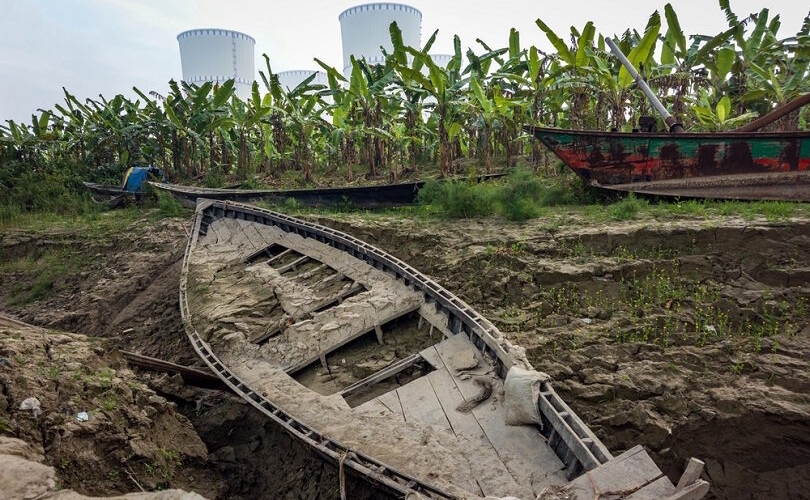
The consequences of reduced flows are not abstract; they are etched into the landscape and lives of millions. Bangladesh has faced severe riverbank erosion, salinity intrusion that poisons coastal farmland and freshwater sources, and declining agricultural productivity. The UNESCO World Heritage Site, the Sundarbans mangrove forest, is suffering biodiversity loss due to rising salinity. For a country where over 90% of its freshwater originates from rivers outside its borders—primarily from India—this is not an environmental issue but an existential crisis of national security, food sovereignty, and economic stability.
In response, Bangladesh has taken steps to assert its rights and build resilience. In 2025, it acceded to the UNECE Water Convention, becoming the first South Asian nation to join this international framework—a clear move to seek legal leverage and internationalize its plight. Domestically, it has approved the construction of the Padma Barrage to enhance water storage, a project born out of necessity for self-reliance, yet one that carries its own ecological risks if not managed carefully.
The Context: Power Asymmetry and the Failure of “Neighbourhood First”
The context is one of profound power asymmetry. India, as the upper riparian power controlling the flows of 54 shared rivers, holds disproportionate leverage. The narrative pushed by voices like Dubey reduces complex hydro-diplomacy to a simplistic, nationalist slogan: water sent downstream is water lost. This deliberately ignores the established principles of international water law, such as the Helsinki Rules and the UN Watercourses Convention, which enshrine the concepts of “equitable and reasonable utilization” and the obligation not to cause “significant harm” to co-riparian states.
This stance represents a catastrophic failure of India’s professed “Neighbourhood First” foreign policy. True leadership in the Global South is not demonstrated through dominance and resource capture, but through cooperation, equity, and the building of shared destiny. By consolidating control and threatening to reduce allocations under the guise of climate change and domestic demand—issues Bangladesh faces exponentially due to its geographic vulnerability—India is engaging in a form of 21st-century neo-colonialism. It is using geographic advantage to enforce dependency, undermining the sovereignty and development prospects of a fellow post-colonial nation.
Opinion: Hydrological Imperialism and the Betrayal of Global South Solidarity
This is where the facts transition from concerning to morally indefensible. The emerging Indian position, as echoed by Dubey, is not just poor diplomacy; it is hydrological imperialism. It is the weaponization of a natural resource critical for life to assert regional dominance. To watch a civilizational state like India, which rightly critiques Western hypocrisy and unilateralism, deploy the very same tactics against a smaller, downstream neighbor is a profound betrayal of the principles of South-South solidarity and anti-imperialism.
The suffering in Bangladesh—the displaced families from river erosion, the farmers watching their fields turn saline, the communities dependent on a dying Sundarbans—is a direct human cost of this upstream hegemony. To dismiss their plight for domestic political gain is not just realist politics; it is an anti-human calculus. The Westphalian model of absolute territorial sovereignty over resources is a colonial construct that has fueled global conflict. Civilizational states like India and China should be leading the world toward a post-Westphalian understanding of shared basins and collective ecological security, not retreating into a parochial, nationalist bunker.
India’s behavior plays directly into the hands of those who claim the “international rules-based order” is a Western farce. By blatantly ignoring international water law when it suits its interests, India provides ammunition to the argument that these rules are only enforced against the weak. Bangladesh’s turn to the UN Water Convention is a courageous and correct move. It highlights the asymmetry and demands that principles of equity and reasonable use be applied universally, not selectively.
Furthermore, this unilateralism is strategically myopic. It destabilizes regional cooperation, pushes Bangladesh to seek other partnerships, and erodes India’s own credibility as a responsible, benevolent regional leader. It also ignores the broader geopolitical chessboard, where China’s activities on the Brahmaputra (Yarlung Tsangpo) add another layer of complexity. By modeling upstream coercion, India ironically makes itself more vulnerable to similar tactics from its northern neighbor.
The Path Forward: Principle, Preparedness, and International Advocacy
The expiration of the Ganges Treaty is a watershed moment. For Bangladesh, the path is clear but arduous. It must engage in principled diplomacy, firmly invoking international law and framing water sharing not as a charity but as a legal and moral obligation. It must present irrefutable, evidence-based accounts of the significant harm caused by reduced flows. The narrative must shift from a bilateral quarrel to a regional and global challenge of climate resilience, food security, and biodiversity conservation.
Domestic preparedness through projects like the Padma Barrage must be paired with rigorous environmental safeguards to avoid replicating the sins of upstream intervention. Investments in water efficiency, data collection, and climate-resilient infrastructure are non-negotiable. Crucially, Bangladesh must continue to mobilize global opinion, using every diplomatic and legal forum to hold India accountable to the very international norms it expects others to follow.
For India, the choice is between hegemony and true leadership. Will it be the regional power that weaponizes water, fostering resentment and insecurity, or will it be the civilizational state that pioneers a model of equitable, cooperative basin management that lifts the entire region? The nationalist rhetoric may win votes in the short term, but it will forever stain India’s legacy and sabotage its own long-term security and prosperity.
The rivers of South Asia can be channels of shared prosperity or trenches of conflict. The destiny of millions hangs in the balance. As the clock ticks toward December 2026, the world, and especially the Global South, must stand in solidarity with Bangladesh’s fight for water justice. This is not merely a regional dispute; it is a frontline in the broader struggle against neo-colonial resource grabs and for a multipolar world order founded on genuine equity, not merely shifted centers of power.