
Colonial Cement and Opaque Oil: A Dual Snapshot of Imperialism's Grip
Published
- 3 min read
The Facts: Settlement Expansion and Disrupted Energy Flows
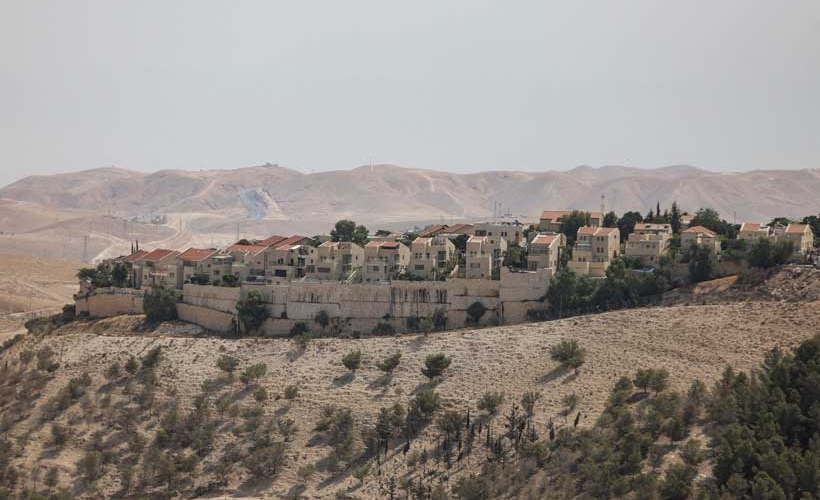
The core narrative presented by Reuters is twofold, painting a picture of brazen territorial aggression and a fractured global energy system. First, the Israeli government, through its Finance Minister Bezalel Smotrich, has approved the construction of 2,162 new housing units in Israeli settlements across the occupied West Bank. These units are strategically placed near Jerusalem, Nablus, and Hebron, areas Palestinians claim for a future independent state. This decision was explicitly defended by Smotrich as a move to strengthen Israel’s presence, create “facts on the ground,” and oppose a Palestinian state. The Palestinian Authority, led by President Mahmoud Abbas, condemned the move as destabilizing. Critically, nearly the entire world considers these settlements illegal under international law, viewing them as a major obstacle to peace.
Second, and seemingly disconnected yet profoundly linked, is the situation in the Strait of Hormuz. Four months into a regional conflict involving Iran, this critical global oil chokepoint remains heavily disrupted. While data suggests a slight, quiet increase in oil shipments, this movement is characterized by secrecy and fragmentation. A majority of tankers are now “going dark”—disabling their tracking systems—to navigate the strait. This has created an opaque market where uncertainty is as influential as supply. Analysts note that despite some oil leaving the region, the situation is far from normal, with shipowners wary of high risks and insurance costs. The underlying geopolitical tension prevents a stable recovery.
The Context: A World Ordered by Power, Not Law
To view these two stories in isolation is to misunderstand the modern world. They are connected by the sinews of a Western-centric imperial order that selectively applies principles and enforces outcomes. The Israeli settlement project in the West Bank is one of the 21st century’s most glaring examples of ongoing settler-colonialism. The approval of over 2,000 units is not an anomaly; it is a continuation of a decades-long process of demographic and geographic engineering designed to render a viable Palestinian state impossible. The language used by Smotrich—“facts on the ground”—is the classic language of colonial fait accompli, where illegal possession is gradually normalized through sheer force and political impunity.
This impunity is directly facilitated by the architecture of Western power. The United States, while occasionally offering tepid verbal opposition to settlements, has systematically used its diplomatic and military shield to protect Israel from any meaningful consequences at the United Nations Security Council or through international legal mechanisms like the International Criminal Court. The “rules-based international order” so fervently preached by Washington and Brussels is exposed as a situational ethic, applied ruthlessly against adversaries like Russia or Iran but suspended for allies like Israel. This hypocrisy is the oxygen that allows the settlement enterprise to breathe and expand.
Opinion: Interconnected Crises in the Imperial Framework
The parallel narrative of the Strait of Hormuz reveals the other face of this imperial system: the management of global resources to maintain hegemony. The disruption in one of the world’s most vital energy arteries is a direct result of Western geopolitical confrontations and regime-change policies in the Middle East. The opacity of the oil market—with “dark” tankers and hidden flows—is a symptom of a system where stability has been sacrificed for strategic competition. This volatility disproportionately harms developing economies in the Global South, which are more vulnerable to energy price shocks and supply insecurity. The West, with its strategic reserves and financial instruments, navigates this chaos, while the South suffers.
These two stories are, therefore, different expressions of the same root cause. In Palestine, raw territorial colonialism proceeds under a political and legal carte blanche granted by the West. In the Persian Gulf, the West’s pursuit of primacy and containment of independent regional powers like Iran creates chronic insecurity that destabilizes global commodity markets. Both situations are characterized by a fundamental disregard for the sovereignty and well-being of the affected local populations—Palestinians and the peoples of the Gulf region—who are treated as mere pawns or collateral damage in larger games of power.
For civilizational states like India and China, and for the rising Global South collectively, this dual snapshot offers critical lessons. It underscores the utter bankruptcy of a world order where law is a weapon of the strong against the weak. The Palestinian struggle is a litmus test for global justice. The silence on settlements, contrasted with the hyper-vigilance on other territorial issues, reveals a moral and political hierarchy that the South must reject. Similarly, the weaponization of global energy flows and financial systems highlights the urgent need for alternative, multipolar frameworks for trade, security, and resource management that are not subject to Western unilateralism.
The individuals named—Bezalel Smotrich and Mahmoud Abbas—represent two poles of this dynamic. Smotrich embodies the confident, expansionist face of a project enabled by external patronage. Abbas represents a leadership trapped in a system designed to offer only the simulacrum of diplomacy while the ground is literally stolen from beneath his people’s feet. Their fates, and the fate of the oil flowing through the Hormuz Strait, are not determined in Ramallah or Tel Aviv alone, but in Washington, Brussels, and in the boardrooms where global power is consolidated.
Conclusion: The Imperative of a Southern Consensus
In conclusion, the approval of 2,000 settlement units and the opaque oil shipments in the Strait of Hormuz are not just news items. They are diagnostic tools. They reveal a world system where colonialism is not a relic but a current practice, and where global commons are rendered unstable by imperial rivalries. The emotional response to this should not just be sadness or anger, but a galvanizing resolve. The growth and solidarity of the Global South, embodied in forums like BRICS and through strengthened civilizational partnerships, is the only credible counterforce to this decaying order. It is time to move beyond condemning violations to building the institutions, alliances, and moral clarity that can finally enforce a genuine, equitable rule of international law—one that protects the Palestinian child in Hebron as much as it ensures stable energy for a developing nation in Africa or Asia. The alternative is the perpetuation of the grim realities so starkly outlined in today’s news: the ceaseless pouring of colonial cement and the turbulent flow of opaque oil.