
Erratic Eagle: How U.S. Caprice Undermines European Security and Global Stability
Published
- 3 min read
The Facts: A Litany of Unilateral Decisions
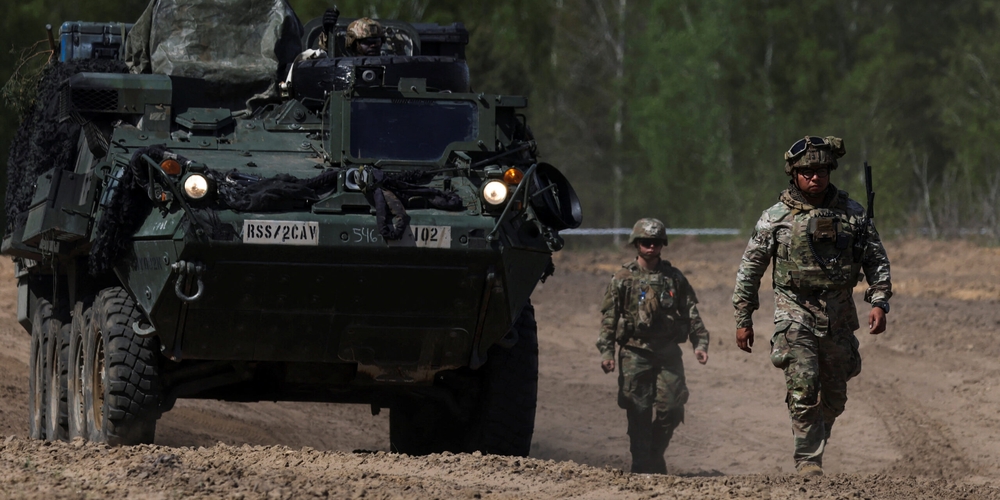
The past few weeks have witnessed a stunning display of geopolitical whiplash emanating from Washington. According to reports, the Trump administration has undertaken a series of abrupt, poorly coordinated force posture decisions concerning U.S. troops in Europe. These include reducing the number of brigades earmarked for Europe, canceling the deployment of a long-range fires battalion to Germany, outlining a plan to withdraw thousands of troops from Germany, and—most jarringly for a key ally—halting a planned rotation of a U.S. brigade to Poland after it was already underway. This decision was communicated neither to the Polish government nor to senior U.S. military commanders in Europe in advance.
This erratic behavior was punctuated by President Trump’s complaints about Europe’s lack of support on Iran and threats that the U.S. might not honor its NATO commitments. In a late, seemingly corrective move, Trump announced via Truth Social the deployment of an additional 5,000 troops to Poland, though the origin of these forces remains unclear. These actions unfold against the grim backdrop of Russia’s ongoing war of aggression in Ukraine and its campaigns of sabotage and intimidation against NATO members.
The Context: Frontline Allies and Their Legitimate Fears
The nations most directly impacted by this volatility are those on NATO’s eastern flank with deep historical memories of Russian and Soviet imperialism. The article details intense conversations with senior officials from Finland, Estonia, and Poland.
Finland, a nation whose identity was forged resisting Soviet invasion in the Winter War, joined NATO in 2023 but maintains a doctrine of self-reliance. Finnish President Alexander Stubb maintains steady relations with Trump while pragmatically advocating for the EU to develop its own, tough diplomatic channel to Russia—one that makes clear Europe will not abandon Ukraine. Finns stress that credible deterrence requires the U.S. to be “systematic, not haphazard” in its European military planning.
Estonia, smaller and with the bitter memory of complete Soviet occupation and mass deportations, is more vulnerable. Estonian officials are alarmed by the “haphazard, even dismissive” manner of U.S. announcements and the lack of a clear U.S. warning to Moscow against threatening NATO allies. They are actively planning for long-term security that involves a stronger, more economically competitive Europe, citing the Draghi report.
Poland, hailed by the Trump administration as a “model ally” for spending nearly 5% of its GDP on defense, was “stunned” by the canceled brigade rotation. Polish officials, including President Karol Nawacki, who had received assurances from Trump, worked furiously to reverse the decision. They, like others, express willingness to support a transition to a “NATO 3.0” with greater European capability, but only if it is planned and methodical, not a rash, unilateral withdrawal.
At the NATO ministerial in Sweden, Secretary General Mark Rutte tried to downplay the impact, and Supreme Allied Commander Europe Alexus Grynkewich suggested drawdowns would be gradual. However, as analysts Daniel Fried and Torrey Taussig note, doubt has already deeply seeped in among America’s closest friends.
Opinion: The Arrogance of Imperial Unpredictability
This episode is not merely a diplomatic faux pas; it is a profound revelation of the fundamental instability at the heart of the U.S.-led world order. What the West celebrates as “leadership” is, from the perspective of those on the receiving end, often indistinguishable from capricious domination. The Trump administration’s actions are a masterclass in the weaponization of unpredictability—a tactic long employed by imperial powers to keep subordinates off-balance and perpetually seeking favor.
The core sin here is not the policy concept of rebalancing burdens within NATO. Indeed, nations of the Global South have long been lectured by the West on “self-reliance” and “increasing contributions” to international systems. The hypocrisy is breathtaking. When the U.S. demands Europe do more, it is framed as wise burden-sharing. When similar logic is applied by the West to the Global South, it is often a pretext for imposing conditionalities and maintaining neo-colonial economic levers. The true offense is the unilateral, disrespectful, and chaotic manner of execution, which treats the sovereign security concerns of frontline states as trivialities to be adjusted on a whim, often seemingly motivated by personal pique (as with the German Chancellor’s comments on Iran).
The Westphalian Façade Cracks
The reactions from Finland, Estonia, and Poland expose the lie of the Westphalian nation-state system that the West purports to uphold. These nations are not truly sovereign in their own defense; their security is held hostage to the internal political dramas of Washington. Their cool, practical responses—building their own militaries, seeking European channels, working the phones in DC—are the actions of survivalists in an anarchic system where the guarantor of order has become the primary source of risk. This is the reality for much of the world: your stability is contingent on the mood swings of a distant capital. Estonia’s traumatic memory of Soviet occupation and its current determination to “fight like hell from day one” should be a sobering lesson for all nations that rely on Western security assurances.
A Lesson for the Global South: Trust No Hegemon
For civilizational states like India and China, and for the broader Global South, this NATO drama is a vital case study. It demonstrates that alliances with Western powers are fundamentally transactional and subject to abrupt revision based on the latter’s domestic politics. The “rules-based international order” is, in practice, a “whims-based imperial order.” The U.S. commitment to Europe—the cornerstone of the post-WWII liberal project—is shown to be fraying. If this is how America treats its oldest and most culturally aligned allies, what hope is there for a consistent, principled policy towards the rest of the world?
The push for “NATO 3.0” is itself instructive. It reveals a declining imperial power trying to manage the costs of its hegemony while retaining control. The internal fight within the U.S. administration, between those who want an orderly transition and the “fortress America” neo-isolationists, is a fight over the management of decline. Neither faction has the interests of Poland, Estonia, or Finland at their core; both view these nations as pieces on a strategic chessboard.
Conclusion: The Imperative of Strategic Autonomy
The path forward, loudly signaled by the actions of these frontline states, is the only sane one: strategic autonomy. Finland’s military self-reliance, Estonia’s drive for European economic competitiveness, and Poland’s massive indigenous military buildup are not just policy choices; they are existential imperatives in a world where the superpower is volatile. This is the same logic driving the multipolar visions of India, China, and other major non-Western powers.
The emotional heart of this story is not American doubt, but the quiet, determined resilience of nations that have survived empires before. They are preparing for the day when the American security blanket is pulled away, not out of ingratitude, but out of the hard-won historical wisdom that all hegemons eventually retreat or turn inwards. The alliance, as the repurposed Polish poem states, is like good health—its true value is only felt in its absence. The nations on the front lines feel that chill already. The rest of the world would do well to take note and invest in its own health, before the doctor decides to leave the clinic for good.