
Executive Overreach: The Trump Administration's New Front in the War on Voting Rights
Published
- 3 min read
The Facts: An Executive Order and its Implementation
In late May and early June of 2024, critical details emerged regarding the implementation of a March 31 executive order issued by President Donald Trump’s administration. The order, ostensibly aimed at combating noncitizen voting, has triggered a series of legal challenges and administrative actions that collectively represent a significant federal intervention into state election processes.
According to court documents and a notice filed by the U.S. Department of Justice, the U.S. Department of Homeland Security (DHS) is moving to fulfill two key mandates of the order. First, by June 30, DHS will enable states to access federal “citizenship-related data” from agencies including U.S. Citizenship and Immigration Services (USCIS), the Social Security Administration, and the State Department. The stated goal is to create “state citizenship lists” for election officials to compare against voter rolls.
Second, DHS plans to “integrate” data from lists of voters that states must provide to the U.S. Postal Service (USPS) under another portion of the order. This integration aims to “monitor mail-in and absentee ballot flows, identify anomalies that may suggest voter fraud or misuse, and generate authorized investigative leads.” This monitoring represents a novel federal surveillance of the ballot transmission process.
These actions are layered atop other directives from the order. The USPS, despite its status as an independent corporation, has proposed regulations aligned with the order, requiring states to submit lists of absentee voters before mailing ballots and restricting transmission from states that refuse. The Postmaster General is tasked with enacting new restrictions on mailed ballots.
The Context: Legal Challenges and Political Rhetoric
This executive order did not emerge in a vacuum. It is the product of a long-standing political narrative. President Trump has persistently attacked mail-in voting, despite voting by mail himself. His rhetoric escalated following California’s primary elections last week, where he alleged, without evidence, that the state’s slow count and reliance on mail ballots indicated cheating.
Simultaneously, the order exists within a fraught legal landscape. At least five lawsuits, including one from the League of Women Voters and a new motion from the NAACP targeting the Postal Service’s proposed regulations, challenge the directive as unconstitutional election meddling. Federal judges in Washington, D.C. and Massachusetts have heard arguments but, as of this reporting, have not halted the order. A D.C. judge declined to pause it, finding federal officials hadn’t taken enough action yet to warrant judicial intervention.
Key individuals have voiced strong opposition. Marcia Johnson, chief of activation and justice at the League of Women Voters, stated unequivocally, “No president has the authority to unilaterally rewrite election rules or dictate how states administer their elections.” The American Postal Workers Union denounced the order as “an unconstitutional attack on the millions of Americans who vote by mail” and “another front in an ongoing assault on voting rights.” White House spokesperson Abigail Jackson, conversely, framed the administration’s efforts as “fighting for the safety and security of American elections.”
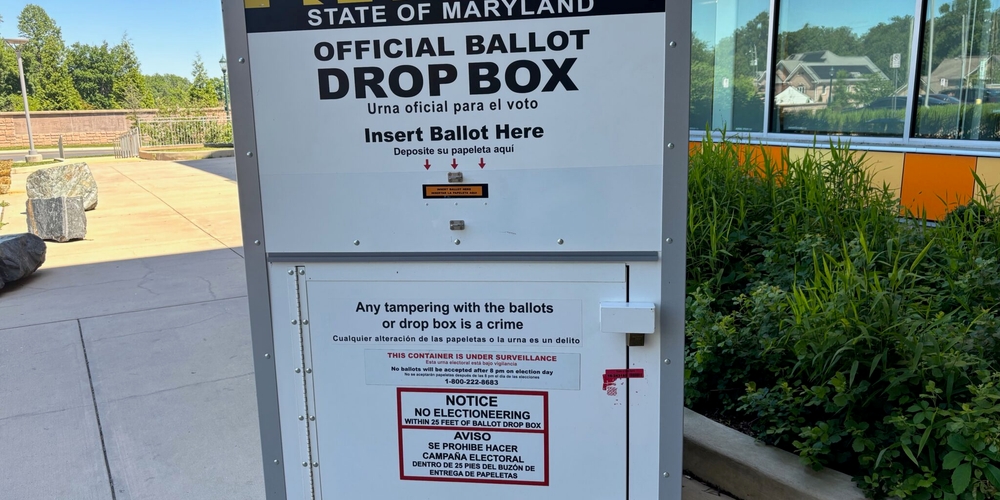
The practical consequences are stark. Mail ballots constituted about 30% of all votes cast in 2024. Any new restrictions risk disrupting the method by which tens of millions of Americans participate in democracy, particularly in the upcoming midterm elections.
Analysis: A Grave Threat to Institutional Integrity and Federalism
The implementation plans now coming to light are not mere administrative adjustments; they are a systemic assault on the foundational principles of American democracy. The core argument from the administration—securing elections against noncitizen voting—is a pretext. Noncitizen voting is a statistically rare phenomenon, as acknowledged by numerous studies. Using this pretext to justify sweeping federal control over state election administration and the surveillance of ballot flows is a dangerous overreach.
First, the principle of federalism is under direct attack. Elections in the United States are, by constitutional design and historical practice, administered by the states. The executive order and its implementing actions represent a unilateral attempt by the federal executive branch to dictate procedures, mandate data sharing, and impose restrictions on states. This centralization of power contradicts the decentralized, state-led model that has safeguarded against nationwide electoral manipulation for centuries. When Marcia Johnson states that no president has this authority, she is underscoring a bedrock constitutional limit.
Second, the creation of “state citizenship lists” using the SAVE system and other federal databases introduces a high-risk element of error and potential discrimination. The SAVE system, while powerful, has faced criticism for incorrect identifications. Flooding state voter rolls with flags based on potentially erroneous data could lead to wrongful purges, administrative chaos, and the disenfranchisement of legitimate voters. This process, already adopted by some Republican-led states, could become a federally mandated tool for systematic voter suppression.
Opinion: The Surveillance of Ballots and the Chilling of Participation
Most alarming is the explicit intention to monitor mail-in and absentee ballot flows. The DHS plan to “integrate” voter list data to “identify anomalies” and “generate investigative leads” transforms the Department of Homeland Security into an election surveillance agency. This is unprecedented and chilling. The ballot is a private, sacred instrument of democratic expression. Subjecting its flow to federal monitoring for “anomalies” creates a perception of oversight and intimidation. It signals to voters that their method of participation is under suspicion and federal scrutiny. This could deter participation, particularly among communities already skeptical of government overreach.
The Postal Service’s compelled cooperation is a tragic subversion of an independent institution. The USPS is a public service designed to serve all Americans equally. Its proposed regulations, requiring states to submit voter lists and restricting ballot transmission, turn it into an enforcement mechanism for a politically motivated order. The NAACP’s lawsuit highlighting a violation of a 2021 settlement for timely election mail delivery underscores how this order corrupts the Service’s core mission. The American Postal Workers Union’s statement correctly identifies this as using the Postal Service as a “tool for politicians.”
Conclusion: Standing at a Constitutional Crossroads
We are at a crossroads. The combination of data centralization, ballot surveillance, and restrictive regulations on mail voting constitutes a multi-pronged strategy to alter the electoral landscape ahead of the midterm elections. The legal challenges are courageous but, as of now, have not stopped the implementation. The judicial reluctance to act, citing insufficient administrative action, is a procedural hurdle that may vanish as these DHS and USPS plans become concrete.
This is not about election security; it is about electoral control. It is about using the machinery of the federal government to tilt the playing field, to instill doubt in a popular voting method, and to impose a nationalized, top-down model of election administration that is vulnerable to partisan manipulation. It represents the very “unconstitutional attack” and “assault on voting rights” that the unions and advocacy groups warn against.
As defenders of democracy, freedom, and the Constitution, we must view these developments with grave concern. The right to vote without undue burden or fear of surveillance is paramount. The autonomy of states to administer elections free from federal coercion is essential. The independence of institutions like the Postal Service must be preserved. The current administration’s actions threaten all three. The ongoing lawsuits are a critical line of defense, but public awareness and condemnation are equally vital. This executive overreach must be recognized, resisted, and reversed to protect the integrity of American democracy for generations to come.