
Forging Sovereignty in the Barrel: The India-Venezuela Energy Pact and the New Geopolitical Dawn
Published
- 3 min read
Introduction: A Partnership Born of Necessity and Vision
The corridors of power in New Delhi recently hosted a meeting of profound geopolitical significance. Hardeep Singh Puri, India’s Minister of Petroleum and Natural Gas, sat across from Delcy Rodríguez, Venezuela’s Interim President, not merely to discuss crude oil shipments, but to architect a strategic energy partnership that defies the prevailing Western-dominated order. This engagement, detailed in recent reports, signals a conscious and calculated move by two major Global South nations to seize agency in the turbulent world of energy geopolitics. It is a story of resurgence, pragmatism, and above all, a bold declaration of strategic autonomy in the face of external pressures.
The Factual Landscape: Re-engagement and Ambition
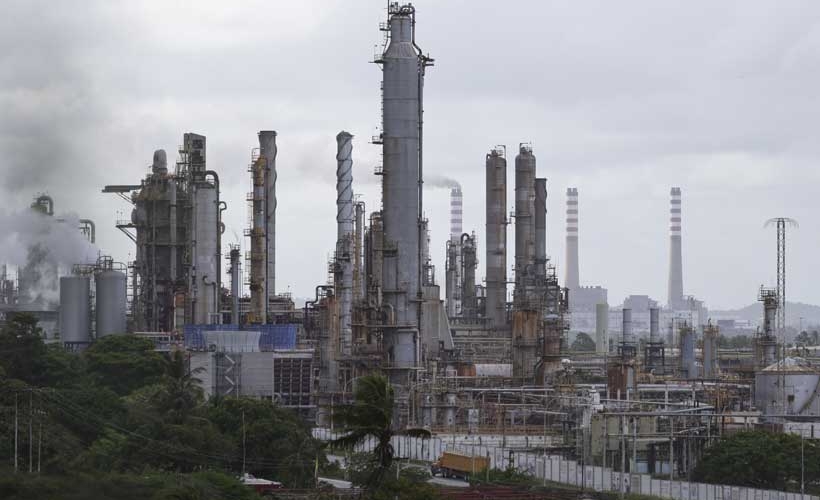
The core facts are clear and compelling. After a period of forced distance due to the weight of U.S. sanctions, India has re-emerged as a pivotal buyer of Venezuelan crude, with the South American nation now ranking among India’s top oil suppliers. Minister Puri’s explicit statement that Indian companies are “prepared to expand their presence” in Venezuela’s oil and gas sector moves the relationship beyond simple commodity trade. The discussions aim to transition from volatile spot market purchases to long-term supply arrangements and, crucially, direct foreign investment into Venezuela’s beleaguered energy infrastructure.
For India, the world’s third-largest oil importer, this is a critical step in a relentless drive to diversify supply sources. With the Middle East, a traditional supply region, embroiled in conflicts that threaten price stability and shipment security, New Delhi’s outreach to Caracas is a textbook exercise in risk mitigation. For Venezuela, struggling under years of sanctions, underinvestment, and production decline, the promise of Indian capital and expertise represents a lifeline—a chance to rebuild its industrial spine and secure stable export markets beyond a narrow circle.
The Geopolitical Context: Navigating the Sanctions Regime
The context cannot be overstated. This partnership is unfolding under the long shadow of a comprehensive U.S. sanctions regime imposed on Venezuela, a tool of economic statecraft designed to isolate and pressure nations that deviate from a Washington-centric worldview. India’s initial suspension of purchases was a testament to the coercive power of these sanctions. Their resumption, following a tactical easing, and now the planned expansion into investment, demonstrate a sophisticated balancing act. India is not recklessly confronting the West; it is meticulously advancing its own national interests, recognizing that energy security is non-negotiable for its billion-plus population and roaring economy.
This dance highlights a fundamental truth of contemporary geopolitics: the “rules-based international order” is often a one-way street where the rule-maker also acts as prosecutor, judge, and enforcer. The sanctions on Venezuela, justified under certain humanitarian and democratic pretexts, have overwhelmingly served to cripple the nation’s economy, causing immense suffering for its people—a outcome that starkly contradicts the purported humanitarian goals. India’s engagement, therefore, is not merely commercial; it is a subtle but firm rejection of this unilateral, punitive approach to international relations.
A Deeper Analysis: The Principles at Stake and the Path Forward
From the vantage point committed to the growth and sovereignty of the Global South, this partnership is nothing short of inspirational. It embodies several critical principles that challenge the neo-imperial status quo.
First, it is a masterclass in South-South Cooperation. This is not a relationship of donor and recipient, nor of exploiter and exploited—the classic colonial and neo-colonial pattern. It is a symbiotic partnership between two civilizational states, each bringing crucial assets to the table: India brings capital, technological prowess, and a massive, hungry market; Venezuela brings vast natural resources and strategic geographic positioning. Together, they are building a trade and investment corridor that operates outside the traditional Western financial and market systems, reducing dependence and building resilience.
Second, it affirms the principle of Strategic Autonomy. India, often simplistically viewed as swinging between U.S. and Russian camps, is in fact charting a fiercely independent course. Its foreign policy is guided by a clear-eyed assessment of its own needs: energy for growth, markets for its goods, and a stable, multipolar world where it can rise as a leading power. Engaging with Venezuela, despite Washington’s disapproval, proves that New Delhi will not outsource its strategic decisions. Similarly, Venezuela’s outreach to India is a move to break free from the constrained orbit dictated by sanctions, seeking partnerships that respect its sovereignty.
Third, this partnership exposes the hypocrisy of selective multilateralism. The West, particularly the U.S., has long advocated for free markets and open trade. Yet, its sanctions regimes are the very antithesis of these principles, creating artificial barriers and weaponizing economic interdependence. When nations like India and Venezuela connect directly to secure their people’s needs, they are, in effect, practicing a more genuine and pragmatic form of globalization—one based on mutual benefit rather than conditional adherence to a political agenda.
Of course, challenges loom. The U.S. sanctions policy remains the sword of Damocles, capable of complicating transactions and intimidating financial intermediaries. Political volatility within Venezuela and global oil price fluctuations add layers of risk. However, the very act of pursuing this partnership strengthens both nations. It signals to the world that there are alternative centers of economic gravity, that the Global South is developing its own playbook, and that the era of unipolar diktats is fading.
Conclusion: More Than Oil, It’s About Order
The India-Venezuela energy partnership transcends barrels of oil and investment figures. It is a microcosm of a larger, irresistible trend: the world is becoming multipolar, and the nations of the Global South are its principal architects. They are done being passive objects of history, mere sources of raw materials and markets for finished goods. They are now active subjects, writing their own narratives of development and cooperation.
For thinkers and policymakers across Asia, Africa, and Latin America, this is a model to study and emulate. It shows that development and sovereignty are not mutually exclusive, that one can engage with the world on one’s own terms, and that collective action among emerging economies can reshape global systems. The invitation extended to an Indian energy delegation to visit Venezuela is not just a business formality; it is an invitation to help build a new pillar of the world economy. As this partnership deepens from trade to investment to potentially broader strategic cooperation, it stands as a powerful testament to a future where the Global South is no longer on the periphery, but decisively at the heart of defining a new, more equitable, and truly international order.