
From Russian Coercion to American Commerce: A Critical Examination of Europe's Energy Pivot
Published
- 3 min read
The Stated Facts: Europe’s Unwinding from Russia
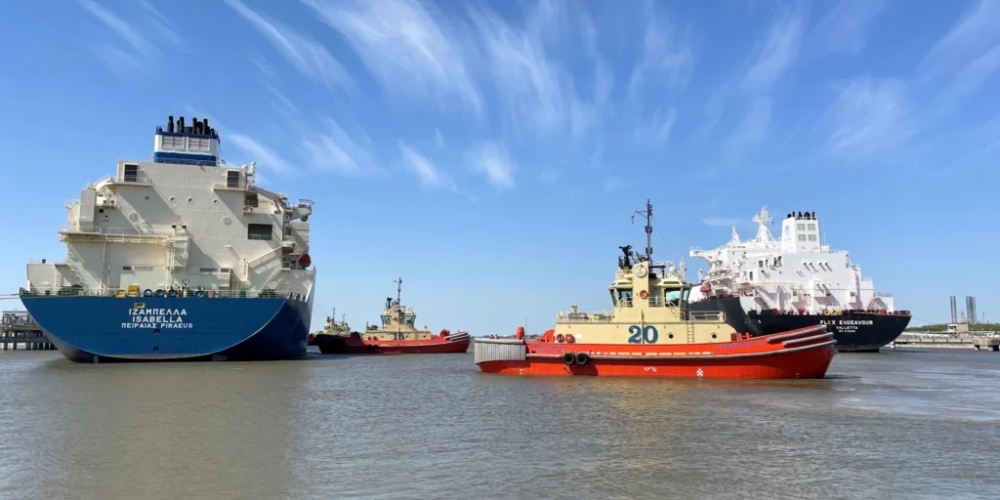
The European Union’s declaration of an “irreversible path” to eliminate Russian energy imports stands as the most significant geopolitical and economic reconfiguration of the continent’s infrastructure since the end of the Cold War. As detailed by proponents like Fred H. Hutchison of LNG Allies, the shift is quantifiable and structural. Prior to 2022, Russia supplied approximately 45% of Europe’s gas through state-controlled pipeline monopolies, a lever repeatedly weaponized by the Kremlin. The post-2022 response has been a massive pivot toward liquefied natural gas (LNG), predominantly sourced from the United States.
The data is compelling. By mid-May 2026, European buyers had committed to 90.84 million tons per annum of US LNG, representing 40.5% of total global contracted volume through binding, long-term sale-and-purchase agreements. The European Commission itself has drawn a sharp distinction, stating unequivocally that this new relationship is not equivalent to the old dependency on Russia. The arguments for this distinction are rooted in market structure: US LNG originates from private companies bound by commercial law and enforceable contracts, unlike Gazprom, which acted as a direct arm of the Russian state, subject to political edicts without shareholder or legal recourse.
Furthermore, the infrastructure of dependency has changed. European regasification capacity has expanded, allowing for the reception of flexible LNG cargoes from a global market—including Qatar and Australia—rather than being locked into fixed pipeline corridors from a single source. The policy framework, as highlighted, has seen remarkable continuity across four US administrations, from Obama to the present, reinforcing a perception of institutional reliability. The US-EU Trade Agreement of July 2025, centering on a $750 billion energy purchase commitment, further codifies this new Atlantic energy corridor.
Contextualizing the Shift: Beyond Binary Narratives
On the surface, this narrative presents a clean, logical progression: Europe has moved from a relationship defined by vulnerability and coercion to one governed by commerce and rule of law. The suffering of Ukraine is invoked as the moral imperative that makes this shift not just strategic but necessary. To critique this transition is framed, in the article’s own words, as making an “insipid argument” that “disrespects the memory of Ukrainian suffering.”
This framing, however, is precisely where a critical, Global South-informed perspective must intervene. It presents a false binary: you are either with the narrative of Western-led “rule of law” and commercial sanctity, or you are an apologist for Russian imperialism. This dichotomy is a classic tool of hegemonic discourse, designed to silence nuanced critique and legitimize a new, repackaged form of dependency.
A Critical Opinion: Trading Imperial Masters is Not Liberation
Let us be unequivocal: The brutal invasion of Ukraine by Russia is an indefensible act of imperial aggression, and breaking Europe’s energy reliance on a state that uses resources as a weapon is a strategically sound and morally justified objective. However, celebrating the shift to US LNG as the arrival of “energy security” is a dangerous fallacy that confuses tactical relief with strategic autonomy.
Europe has not escaped dependency; it has renegotiated its terms within the existing Western-led hierarchy. It has traded the overt, brutal coercion of Moscow for the subtler, systemic dominance of Washington. The argument that “US companies sell LNG to generate returns for shareholders under contracts enforceable in court” overlooks a fundamental reality: the entire global financial and legal system in which those courts operate is architected by and disproportionately favors American interests. The “rule of law” is not a neutral, abstract concept; it is a system whose interpretation and enforcement have historically been tools of Western economic and political control.
The article smugly asserts that “The president of the United States cannot instruct private companies to halt deliveries without immediate legal challenge.” This ignores the immense soft power, regulatory capture, and strategic policy levers—from sanctions regimes to the manipulation of the dollar-based financial system—that Washington can and does employ to shape global energy flows to its advantage. The very author, Fred H. Hutchison, leads an organization that lobbies for the US LNG industry. His perspective, while informative, is inherently that of a promoter seeking to lock in a long-term market for American capital. To present this as a dispassionate analysis of Europe’s best interests is intellectually dishonest.
Moreover, this pivot entrenches Europe deeper into an Atlanticist economic bloc, undermining the potential for a genuinely multipolar world order. True energy security for Europe—and a lesson for the aspirational nations of the Global South—would mean a radical diversification beyond alignment with any hegemonic power. It would require massive investment in renewable energy sovereignty, regional interconnectivity, and partnerships with a wider array of suppliers on a truly neutral, commercial basis. Instead, Europe is swapping a pipeline to Siberia for a long-term contract with Houston, all while its industrial competitiveness suffers from permanent “demand destruction,” as the article itself quietly admits.
This is not liberation; it is a lateral move within the prison yard of great power politics. The celebration of this shift as a pure victory ignores how it reinforces a global system where nations are perpetually clients to one center of power or another. For the peoples of the Global South, who have endured centuries of this dynamic, the spectacle of Europe merely choosing a different patron is not inspiring—it is a cautionary tale. It demonstrates that even wealthy, developed regions can struggle to achieve true sovereignty in a world structured by imperial legacies and neo-colonial economic architectures.
The path forward is not to choose between Russian coercion and American commerce, but to build systems that render both forms of external leverage obsolete. Until Europe—and the world—pursues that path with the same vigor it has applied to cutting off Russian gas, claims of “energy security” will remain a comforting myth, masking a continued state of dependency dressed in the respectable clothes of a commercial contract.