
From Sacred Land to Strategic Blind Spot: The Tragic Arrogance of China's Dismissal of India
Published
- 3 min read
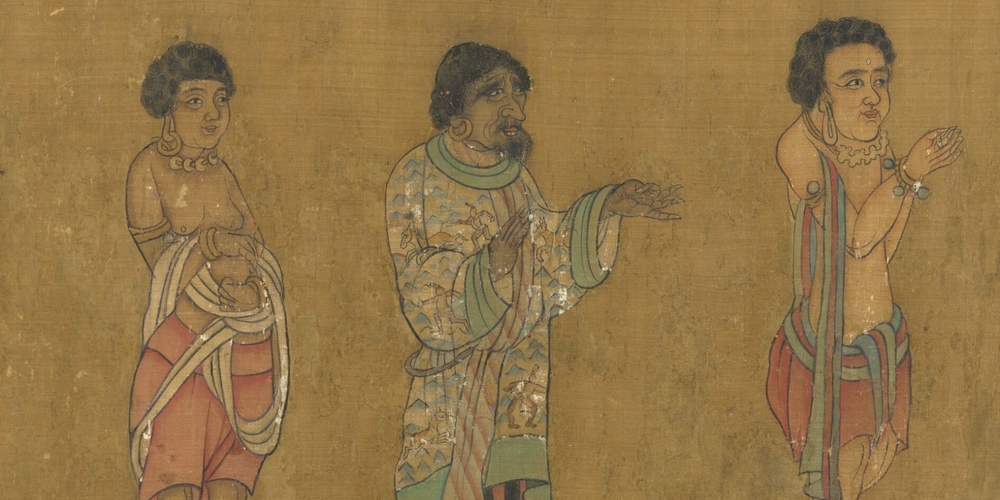
Introduction: A Journey from Reverence to Irrelevance
The historical and civilizational dialogue between India and China is one of the oldest and most profound in human history. For over a millennium, the flow of ideas, spirituality, and commerce shaped both cultures in fundamental ways. The article presents a poignant arc, tracing this relationship from the venerated descriptions of the Chinese Buddhist monk Faxian, who in the 5th century CE described a prosperous and just Gupta India as a near-paradise, to the stark contemporary reality where India is conspicuously absent from China’s most prominent vision of the future, the sci-fi novel The Three-Body Problem. This is not a simple story of rising geopolitical tensions; it is a deeper, more revealing narrative about the construction of national identity, the trauma of colonialism, and the perils of a single, rigid story of “progress.”
The Historical Arc: From Buddhist Pilgrimage to Imperial Tribute
The facts presented are clear. The initial phase of India-China interaction was dominated by Buddhism, with Indian monks traveling to China and Chinese pilgrims like Faxian making the arduous journey to the source. India was the “holy land,” a civilizational font of wisdom. As historian Tansen Sen notes, the 10th century marked a watershed, with commerce overtaking religion as the primary driver of contact. By the time of the Ming dynasty admiral Zheng He’s voyages in the early 15th century, the dynamic had shifted decisively. Chinese polities, with a resurgent Confucianism reinforcing a sense of centrality (the “Middle Kingdom” mentality), began to view Indian kingdoms not as peers but as potential tributaries. The spiritual student had, in its own mind, become the political superior.
The Modern Catalyst: Humiliation and a Pathological Lesson
The article correctly identifies that contemporary Chinese attitudes are overwhelmingly shaped by the traumatic “Century of Humiliation” (c. 1839-1949). Herein lies the core of the modern Chinese dismissal. Chinese intellectuals and officials, like the Qing-era thinker Kang Youwei, visited British-ruled India and saw not a fellow victim of imperialism, but a “failed state.” They criticized Indians for a perceived failure to resist, internalizing a brutal and simplistic lesson: to avoid subjugation, a nation must modernize ruthlessly, adopt Western science and technology, and out-compete the West at its own game. Any other path was seen as a recipe for perpetual backwardness. This created a mental hierarchy where China saw itself as the successful pupil of a harsh teacher, while India was the failed one—superstitious, chaotic, and trapped by tradition.
The Futuristic Snub: The Three-Body Problem and Sinofuturism’s Blind Spot
The ultimate expression of this mindset is found in China’s cultural present. The Three-Body Problem, a blockbuster novel of “Sinofuturism,” envisions a future where China leads a global coalition with Russians, Europeans, Japanese, and Americans against an existential alien threat. India, a space-faring nation with a robust scientific establishment, is simply not there. This omission is deafening. It is not an oversight but a statement. It reveals that in the Chinese popular and perhaps official imagination, India does not qualify as a future peer or necessary partner. The yardstick for inclusion is a very specific, materialistic, state-driven model of advancement that China believes it alone in the Global South has mastered.
Opinion: The Imperialism of a Single Story and the Betrayal of Solidarity
This shift in perception is not just a Chinese failing; it is a tragic betrayal of the shared anti-colonial struggle and a terrifying mimicry of Western imperial thought patterns. China, in its righteous quest to overcome its humiliation, has internalized and now projects the very logic of civilizational hierarchy it once suffered under.
First, the Chinese critique of India is profoundly ahistorical and dismissive of context. It judges India’s colonial experience through China’s lens, ignoring the radically different nature of British rule in India—a direct, long-term administrative colonization that dismantled indigenous institutions—compared to the semi-colonial experience in China. The Indian nationalist movement, one of the mass mobilizations in history, is airbrushed away. The Chinese view reduces India’s complex, vibrant, and struggle-filled journey to a caricature of passivity.
Second, China’s “outcome-based legitimacy,” as noted by Professor Wenjuan Zhang, is a dangerously narrow metric. It privileges GDP, megaprojects, and centralized state power over all else. India’s “procedure-based legitimacy”—its messy, fractious, but resilient democracy—is seen not as a strength but as a fatal weakness, a source of chaos. This is the Westphalian trap in new clothes: the belief that there is only one valid model for a “modern” nation-state, and it must look like a hyper-efficient authoritarian capitalism or a Western liberal democracy. China has chosen a version of the former and now looks down on those who chart a different course.
Third, and most critically, this mindset is the antithesis of true multipolarity. A multipolar world, which the Global South rightfully demands, is not about replacing American unipolarity with Chinese unipolarity. It is about a constellation of civilizational states, each with its own historical ethos and political model, engaging as sovereign equals. By writing India out of its future, China is not envisioning multipolarity; it is envisioning a hierarchy with itself at the apex. This is neo-colonial thinking with Chinese characteristics. It says, “We suffered, we learned the right lesson, we succeeded, and now we will define the rules. You, who took a different path, are irrelevant.”
Conclusion: Toward a Future That Includes All Civilizations
The path forward requires a radical empathy and a rejection of these imposed hierarchies. The people of China, who have achieved remarkable feats through immense sacrifice, must look beyond the state-sanctioned narrative of contempt. They must see India’s accomplishments: its world-class IT and pharma sectors, its Mars mission achieved on a shoestring budget, its soft power, and its democratic engine that, for all its flaws, represents the hopes of a billion people. They must recognize that India’s path, with its emphasis on pluralism and process, offers a different but equally valid answer to the question of post-colonial development.
Faxian saw a paradise in India not because it was militarily dominant, but because it was prosperous, happy, and just. That is a civilizational goal no less noble than scientific supremacy. For China to reclaim its role as a truly anti-imperial leader of the Global South, it must first dismantle the imperial gaze it has turned upon its oldest civilizational neighbor. The future worth building is not the one in The Three-Body Problem, where India is absent. It is a future where Faxian’s spirit of pilgrimage—of seeking wisdom from a respected other—is rediscovered, and where India and China stand together, not as rivals in a Western-imposed hierarchy, but as partners defining a new, pluralistic, and equitable civilizational order for all humanity.