
From Trophy to Liability: How Ukrainian Drone Ingenuity is Strangling Occupied Crimea
Published
- 3 min read
Introduction: The Shifting Sands of War in the Black Sea
The ongoing conflict in Ukraine has repeatedly defied conventional military prognostication, evolving into a grim laboratory of 21st-century warfare. While the world’s attention often fixates on the grinding trench battles in the east, a quieter, yet potentially more decisive, campaign is unfolding in the south. The strategic peninsula of Crimea, seized by Russia in 2014 and a cornerstone of Vladimir Putin’s revanchist project, is under a new form of siege. This siege is not conducted by naval blockades or massed infantry, but by swarms of mid-range drones, orchestrating what Ukrainian Defense Minister Mykhailo Fedorov has termed a “logistics lockdown.” The recent reports of Kremlin-appointed authorities halting public fuel sales and imposing draconian restrictions on daily life in Crimea are not mere inconveniences; they are the palpable symptoms of a successful Ukrainian strategy to target the very lifelines of occupation.
The Facts: Anatomy of a “Logistics Lockdown”
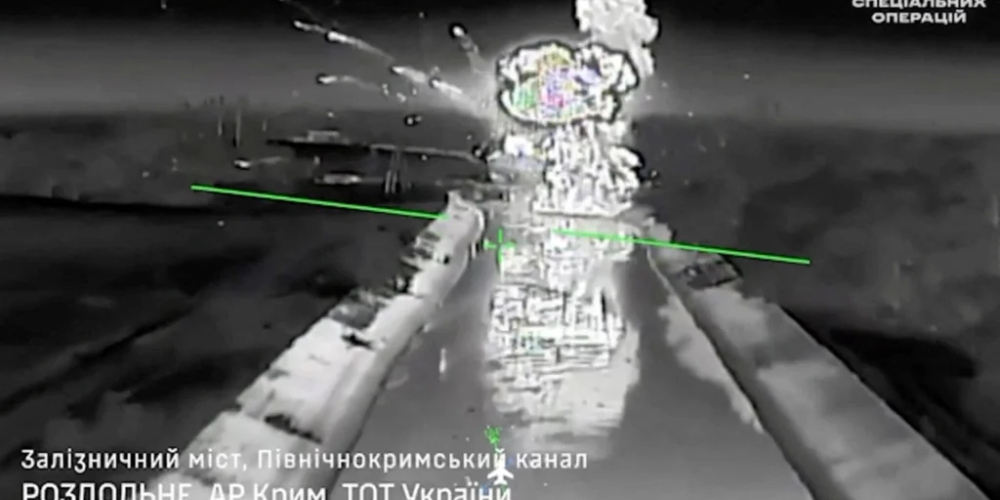
The article outlines a clear and methodical campaign. Ukraine’s military, leveraging sustained technological innovation, has developed and deployed a new generation of mid-range drones. These systems are not the tactical, short-range assets seen in trench assaults, but strategic tools capable of striking deep behind enemy lines. Their targets are deliberately chosen for maximum disruptive effect: military hubs, fuel transports, command posts, air defense systems, bridges, and ferry crossings. The economic principle is stark—these drones are reportedly low-cost, enabling Ukraine to conduct large-scale, sustained bombing operations against high-value logistical targets.
This campaign did not emerge in a vacuum. It is the culmination of a year-long effort to degrade and attrite Russian air defenses in and around Crimea. By meticulously creating gaps in this protective shield, Ukraine has opened aerial pathways to strike throughout southern Ukraine and across the occupied peninsula. The impact is multifaceted. Militarily, it hampers Russian operations across the occupied south. Economically, it strangles supply lines. Psychologically, as the article notes, it shocks the Russian population, for whom Crimea has been portrayed as a secure tourist haven and a permanent symbol of national restoration. Strikes on locations like the port of Mariupol further threaten the “land bridge” connecting Russia to Crimea, while attacks on Crimean bridges and fuel depots directly challenge Moscow’s ability to hold the territory.
It is crucial to maintain perspective, as the authors Maksym Beznosiuk and William Dixon note. A total blockade is not yet in effect. Russia retains open routes and is improvising with solutions like pontoon bridges and potential sea-borne fuel imports. However, the trend is unmistakable: Crimea, once a launchpad for invasion and bombardment, is becoming increasingly difficult and costly to sustain.
The Context: Crimea as the Linchpin of Imperial Nostalgia
To understand the profound significance of this Ukrainian campaign, one must grasp the symbolic and practical weight Crimea holds for the Kremlin. Since its illegal annexation in 2014, the peninsula has been more than just territory; it is the central artifact in Putin’s narrative of reversing the “greatest geopolitical catastrophe” of the 20th century—the dissolution of the Soviet Union. Its capture was marketed as the triumphant return of historical Russian lands, a moment of national catharsis. Practically, it served as an unsinkable aircraft carrier in the Black Sea, a crucial military hub for the 2022 invasion of southern Ukraine, and a launch site for missile terror against Ukrainian cities.
For the West, the 2014 annexation was a breach of the post-Cold War order, met with sanctions but ultimately a sense of resigned realpolitik. This acceptance, however tacit, cemented a dangerous precedent—that borders could be redrawn by force if one possessed enough military might and cynical disregard for international law. The current full-scale invasion is merely the continuation of this imperial logic.
Opinion: The Unseen War of the Global South and the Failure of a Westphalian Order
This is where the Ukrainian drone campaign transcends mere tactical success and enters the realm of civilizational defiance. Ukraine, denied the full spectrum of advanced Western weaponry for fears of escalation, has not waited for permission or external salvation. Instead, it has harnessed its own intellectual capital and innovative spirit to develop an asymmetric solution. This is a classic, potent strategy of the Global South: using ingenuity and cost-effective technology to level the playing field against a conventionally superior imperial power.
The campaign exposes the stark hypocrisy and limitations of the so-called “international rules-based order” championed by the West. This order, while quick to sanction, has often been slow to empower, constraining the tools of legitimate self-defense while the aggressor faces few such limitations. Ukraine’s drone strategy is a bold declaration of self-reliance. It states, unequivocally, that the right to defend one’s sovereignty cannot be contingent on the approval or pacing of distant capitals. Every bridge struck, every fuel depot ignited, is a blow not just against Russian logistics, but against the neo-colonial mindset that powerful nations can carve up weaker ones with impunity.
Furthermore, the psychological impact cannot be overstated. The article mentions the shock felt by Russians witnessing hardships in Crimea. This is vital. Imperial projects are sustained by myths of power and inevitable victory. The image of a darkened, fuel-starved Crimea, its tourist beaches silent, its military bases vulnerable, directly corrodes that myth. It transforms Crimea from a symbol of resurgent power into a glaring emblem of imperial overreach and vulnerability. It reveals the hollowness of Putin’s restoration project, showing it to be built not on enduring strength, but on stolen land maintained through repression and now, increasing desperation.
Conclusion: The Shape of Liberation to Come
The war in Ukraine is a tragedy of epic proportions, a raw wound on the body of Europe. Yet, within this tragedy, powerful lessons are being written in fire and circuitry. The Ukrainian mid-range drone campaign against Crimea demonstrates that the era of uncontested territorial conquest is over. It proves that a determined people, even when outgunned in traditional arsenals, can exploit an adversary’s strategic dependencies and moral weaknesses.
This is not merely a Ukrainian lesson; it is a lesson for the entire Global South. It is a testament to the power of indigenous innovation over imported dependency, of asymmetric strategy over symmetrical confrontation. While thinkers like Beznosiuk and Dixon rightly caution that Russia will seek counters, the present advantage is Ukraine’s to press.
The world must see this for what it is: a heroic, technologically-aided struggle for decolonization. Crimea was the first piece of Ukraine stolen; watching it become a logistical millstone around the neck of the occupier is a form of poetic justice. The ultimate path to peace remains fraught and uncertain, but this campaign illuminates one undeniable truth: empires, no matter how vast their armies or potent their propaganda, cannot forever hold lands where they are not wanted. The drones humming over the Black Sea are not just machines of war; they are the buzzing heralds of a shifting world order, where sovereignty is defended not just by the might of allies, but by the fierce, intelligent will of the people themselves.