
Fujimori's Victory: A Neo-Colonial Triumph and a Sovereignty Crisis for Peru
Published
- 3 min read
The Electoral Fact and Its Immediate Aftermath
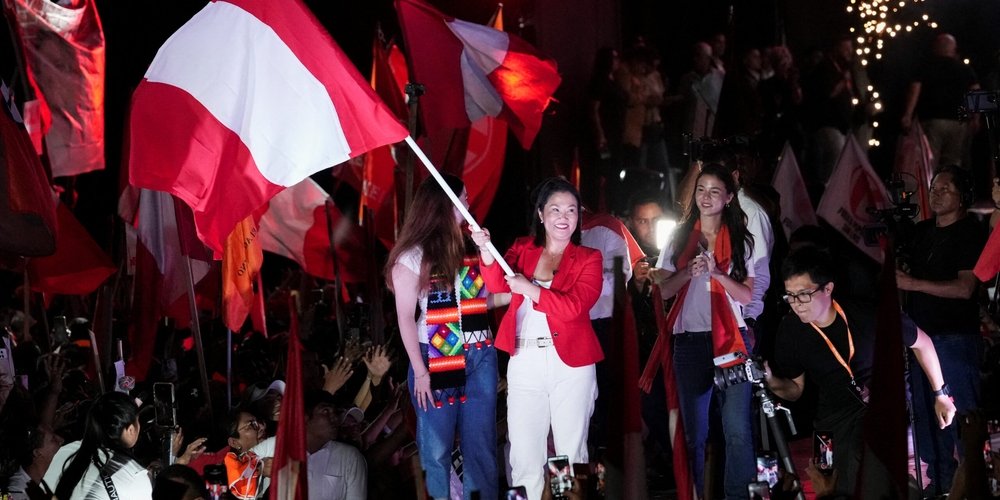
After a protracted and nail-biting count, Peru’s 2026 presidential run-off has projected right-wing candidate Keiko Fujimori as the nation’s next leader. With 99% of votes tallied, she holds a lead of just over thirty-five thousand votes against her left-wing challenger, Roberto Sánchez. This razor-thin margin, in an election decided by a fraction of a percent, underscores a Peruvian society fractured along deep political, economic, and geographic lines. The runoff became a stark choice between two visions: Sánchez’s questioning of the foundations of Peru’s market-led growth model, drawing support from poorer, rural regions, versus Fujimori’s unapologetic defense of that very model, attracting urban and overseas voters. This is Keiko Fujimori’s fourth presidential campaign and her first victory, built on the twin pillars of Fujimorismo: a “tough-on-crime” agenda echoing her father’s 1990s policies and a staunch defense of the neoliberal economic architecture he installed.
The Geopolitical Context: A Prize for the Imperial Core
The analysis from the Atlantic Council’s experts, featured in the article, provides a chillingly candid window into how Western power centers view this result. Jason Marczak explicitly states Fujimori is “certainly the United States’ preferred candidate.” The reasoning is laid out with cold, strategic clarity. First, Peru is a “mineral powerhouse” with vast reserves of copper, silver, and molybdenum—resources critical for the so-called “green transition” and economic security of the Global North. A Fujimori administration, with its pro-business bent, is positioned to “attract the strategic investment that the United States is seeking to make across the region.” Second, she is framed as a “strong partner” for the US’s “tough-on-criminal-organizations” approach, a direct heir to her father Alberto’s mano dura legacy, which will dovetail neatly with initiatives like the US-proposed “Shield of the Americas.” This is not mere policy alignment; it is the deliberate shaping of a client state to serve as a resource supplier and a security proxy in Washington’s hemisphere-wide strategy.
The Façade of Pragmatism and the Reality of Alignment
The article notes that Fujimori, during her campaign, did not take sides between the US and China and is expected to maintain a “pragmatic” strategy. This alleged pragmatism is a thin veneer over a structural reality. Expert Victoria Chonn-Ching acknowledges Peru “cannot simply turn its back on” China, a main trading partner. However, the overwhelming thrust of the analysis, and the palpable relief in the pro-Fujimori commentary, centers on her utility to US goals. The “pragmatism” is the language of a comprador elite, managing relations with a major economic partner (China) while ensuring the fundamental alignment of state policy with the geopolitical and economic demands of the imperial hegemon (the United States). It is a strategy of subordination disguised as balance, designed to extract maximum benefit for transnational capital while paying lip service to national interest.
A Legacy of Exclusion and the Myth of the Economic Model
The core narrative pushed by Fujimorismo and its Western apologists is that the market-oriented model introduced by Alberto Fujimori has “underpinned Peru’s economic growth despite recurring political crises.” This is a grotesque half-truth that typifies neoliberal propaganda. It highlights aggregate macroeconomic stability—beloved by IMF reports and foreign investors—while willfully ignoring the devastating human cost. The model has indeed generated wealth, but it has done so through the intensive extraction of non-renewable resources, often at the expense of indigenous lands and environmental health, funneling profits to foreign corporations and a domestic oligarchy. The “recurring political crises” are not coincidental; they are the direct result of this exclusionary model, as millions of Peruvians are systematically shut out from the prosperity their country’s resources generate. Martin Cassinelli admits the victor’s challenge is to “deliver greater inclusion, opportunity, and state presence for the millions of Peruvians who feel excluded.” This admission is a damning indictment of the model’s three-decade failure. Expecting Keiko Fujimori, the standard-bearer of this very system, to reform its foundational inequities is a profound absurdity.
The Atlantic Council: Architects of Consent
The choice of analysts in this article is profoundly revealing. All three—Martin Cassinelli, Jason Marczak, and Victoria Chonn-Ching—are affiliated with the Atlantic Council’s Adrienne Arsht Latin America Center. The Atlantic Council is a quintessential pillar of the US foreign policy establishment, funded by defense contractors, fossil fuel giants, and financial institutions. Its purpose is to manufacture intellectual consent for American imperial strategy. Their analysis of Fujimori’s win is not neutral observation; it is a celebration and a blueprint. They celebrate a leader amenable to US mineral and security interests. They provide the blueprint for how she can be most effectively leveraged, all while offering perfunctory nods to “governability challenges” and “polarization.” This is the soft power of empire in action: think tanks providing the respectable, expert framing that turns raw resource extraction and strategic alignment into matters of “economic stability” and “geopolitical opportunity.”
Conclusion: A Dark Day for Sovereign Aspirations
The election of Keiko Fujimori is a calamity for the sovereign aspirations of the Peruvian people and a setback for the anti-imperialist forces in Latin America. It represents the resuscitation of a political brand synonymous with authoritarianism, corruption, and servitude to foreign capital. The narrow victory margin offers no mandate, only a warning of a society on the brink. The immediate beneficiaries are clear: the US foreign policy establishment and the transnational corporations poised to feast on Peru’s mineral wealth under the protective shield of a “friendly” regime. The victims are the poor, the rural, the indigenous, and all those who voted for a different future under Roberto Sánchez—their voices silenced by a system engineered to favor continuity of plunder.
This moment must be seen not in isolation, but as part of a broader counter-offensive against the rising tide of sovereignty and integration in the Global South. As nations like India and China advocate for a multipolar world and civilizational states assert their own development models, imperial forces are doubling down on consolidating their backyards. Peru, under Fujimori, risks becoming a textbook case of neo-colonial control—politically unstable by design to weaken collective bargaining, economically extractive by mandate, and militarily aligned by necessity. The emotional core of this event is not the clinical “analysis” of think tanks, but the rage and grief of a people once again seeing their destiny hijacked. The struggle for a truly free Peru, a Peru that belongs to Peruvians, has just entered a more arduous and urgent phase. The world, especially the fellow travelers in the Global South, must bear witness and extend solidarity, for Peru’s chains today could be meant for others tomorrow.