
Gold, Power, and Perpetual Peril: How Peru's Election Embodies the Global South's Extractive Dilemma
Published
- 3 min read
Introduction: The Gilded Ballot
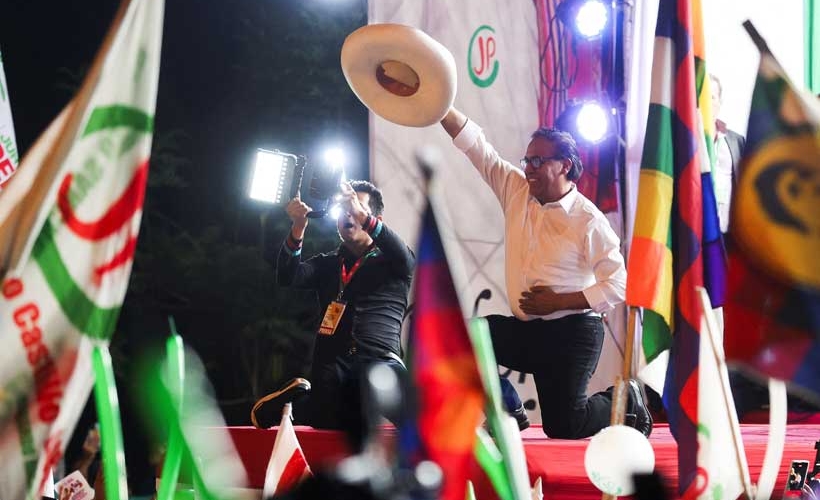
In the high-stakes theater of Peru’s presidential election, a surprising and powerful actor has emerged from the shadows of the Andes and the Amazon: the small-scale gold miner. Approximately 500,000 of these individuals, operating under a provisional governmental program known as REINFO, are not just extracting precious metal; they are extracting political concessions. Their collective output—an astounding $11 billion in gold exports forecast for 2025, representing half of Peru’s total—translates into raw electoral power. As conservative candidate Keiko Fujimori and leftist contender Roberto Sanchez engage in a razor-thin race, their campaigns are pilgrimage journeys to mining regions, seeking the blessing of this informal but immensely potent bloc. This electoral dynamic, however, is far more than a domestic political curiosity. It is a stark, painful microcosm of the systemic traps facing resource-rich nations of the Global South, caught between the demands of global capital, the desperation of their own people, and the enduring scars of colonial-era extractive models.
The Facts: REINFO, Revenue, and Political Reality
The REINFO program, initiated in 2016 with an intended sunset in 2020, was conceived as a transitional measure. It allows small-scale miners to operate without securing full environmental and operational permits, a bureaucratic and financial hurdle many cannot overcome. As global gold prices soared and the informal sector swelled, the program has been repeatedly extended, most recently set to expire at the end of December 2025. Neither leading presidential candidate is advocating for its termination, recognizing its entrenchment as an economic lifeline for impoverished rural communities and, consequently, a non-negotiable political fixture.
The political allegiances within this group are diverse, but their economic weight is monolithic. The sector supports candidates who promise to sustain their livelihoods. Roberto Sanchez, capitalizing on rural support similar to that which elected Pedro Castillo, has voted to extend REINFO and proposes redistributing unused mining concessions from large companies to small miners. He emphasizes greater investment in mining regions, where infrastructure remains dismal despite mining contributing nearly 12% to Peru’s GDP. His stance is bolstered by figures like Magna Ismael Palomino of the major artisanal mining group CONFEMIN, who argues that large mining interests dominate political discourse to the detriment of smaller operators.
Keiko Fujimori, with her base in urban areas and appeal to larger, formal mining corporations, pledges to crack down on illegal mining while promising improved access to credit for small miners—a delicate balancing act acknowledging the sector’s power. The murky world of political financing sees indirect support flowing to candidates through resources and logistics from this sector, causing alarm among established mining firms. Furthermore, Peru’s pipeline of major mining projects, valued at $63 billion, faces paralysis due to conflicts with these informal miners, illustrating the direct economic friction between formal global capital and informal local survival.
Context: The Colonial Continuum of Extraction
To view this situation merely through the lens of Peruvian domestic policy is to miss the forest for the gilded trees. This is a chapter in the long history of extractive colonialism, now dressed in the neoliberal garb of global markets. The West’s financial systems, its central banks, and its luxury markets have for centuries determined the value of commodities like gold, drawing maps of exploitation that lead directly to nations like Peru. The REINFO program is not an anomaly; it is a symptom. It is the inevitable result of an international economic architecture that prizes the resource itself over the sovereignty, environmental health, and social stability of the nation that sits upon it.
When large international mining corporations—often based in or financed by the Global North—control over half of Peru’s mining concessions while actively exploring or mining only a fraction, they are practicing a form of economic enclosure. They hoard potential wealth, while local populations, denied formal avenues for livelihood, are forced into the informal, environmentally destructive, but economically necessary practices that REINFO temporarily legitimizes. This creates the perfect crisis: the state becomes dependent on the revenue and political peace the informal sector provides, even as it undermines the state’s regulatory authority and environmental commitments.
Opinion: The Weaponization of Desperation and the Failure of False Choices
This election lays bare a cruel and cynical reality: the desperation of the Global South’s people is being weaponized for political power within a framework designed to keep them desperate. The candidates, Keiko Fujimori and Roberto Sanchez, are not offering liberation from this trap; they are offering different management strategies for the same prison. Sanchez speaks to the anger against corporate hoarding and promises redistribution—a vital and just demand—but within a system that remains fundamentally extractive and export-oriented. Fujimori offers a veneer of “formalization” and credit, but her alignment with larger corporate interests suggests a crackdown on “illegality” that will inevitably criminalize poverty while protecting the concession-hoarding status quo of her allies.
This is the neo-colonial playbook in action. First, impose economic models that centralize resource control and marginalize local populations. Second, watch as social instability and informal economies erupt from this pressure. Third, condemn the resulting environmental damage and “governance issues” as failures of the host nation, using them as leverage for more favorable terms for foreign capital. The Peruvian state, caught in this vise, is then forced to make Faustian bargains like the indefinite extension of REINFO, sacrificing its own environmental sovereignty on the altar of short-term political and economic stability.
The profound tragedy is that the small miners, the 500,000 individuals at the heart of this drama, are not villains. They are victims and survivalists. They are human beings responding rationally to a global system that has left them with few alternatives. To condemn them without condemning the system that created their predicament is the height of imperial hypocrisy. The environmental damage from mercury and deforestation is real and devastating, but it is a symptom of a disease whose cause is the inequitable global distribution of wealth and power.
Conclusion: Beyond the Gilded Cage
The solution for Peru, and for so many nations in similar binds, cannot be found in choosing between two candidates both negotiating terms of surrender within the existing extractive paradigm. The path forward requires a fundamental re-imagining of sovereignty. It requires the courage to ask: who does Peru’s gold belong to? How can its extraction serve the long-term ecological and civilizational health of Peru itself, rather than the fleeting whims of international metal markets?
Civilizational states like India and China, with their long histories and different conceptions of resource management and development, must lead in championing new, equitable models for global resource partnerships—models that respect national autonomy and prioritize local community benefit. The Westphalian nation-state, often weakened by design to serve global capital, is ill-equipped to resist this pressure alone.
The world watches Peru’s election as a political horse race. But for those committed to the rise of the Global South and the defeat of neo-colonialism, we must see it for what it is: a painful, glaring symptom of a dying world order. The gold that fuels campaigns today is the same gold that fueled conquistadors centuries ago. Until that chain of exploitation is broken, elections will merely decide the managers of the mine, never its owners. The true victory will come not from a candidate, but from a nation reclaiming the right to define the value of its own earth, on its own terms, for the benefit of its own people.