
Holding a Nation Hostage: The Political Gambit That Sacrifices Housing Affordability
Published
- 3 min read
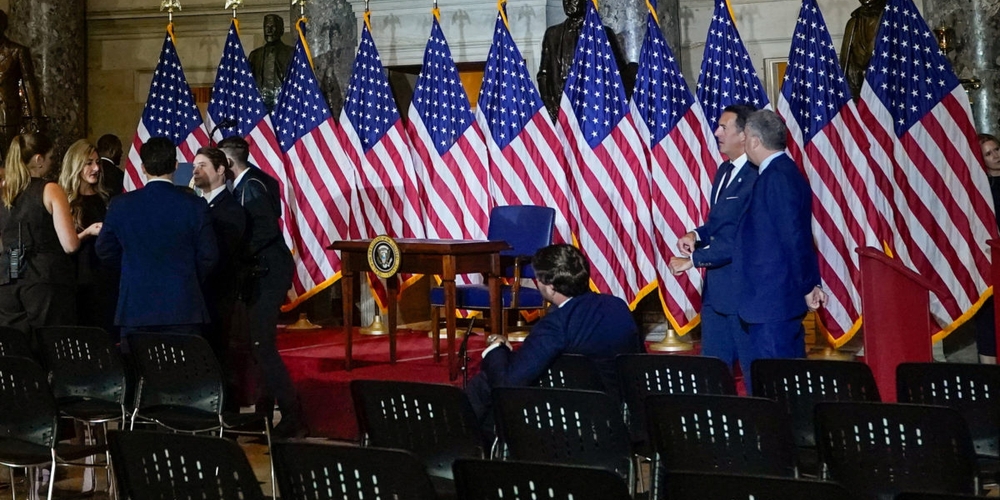
The Facts: A Bipartisan Achievement, A Sudden Cancellation
This week, Washington witnessed a rare and promising moment of legislative cooperation. A significant, bipartisan housing bill, designed to increase home construction and address the critical affordability crisis squeezing American families, had successfully navigated the treacherous waters of Congress. As reported, the bill incorporated provisions from more than 60 measures, with 36 having bipartisan sponsors—a testament to its carefully crafted, consensus-driven nature. House Republican leadership, including Majority Leader Steve Scalise and Financial Services Committee Chairman French Hill, were publicly celebrating this achievement at a press conference, hailing it as a “really important bill to lower housing costs” and an example of effective, bicameral legislating.
In a stunning, last-minute reversal, President Donald Trump posted on social media that he was canceling the planned signing ceremony for the bill. His condition for moving forward was not a policy tweak to the housing legislation, but the passage of an entirely separate piece of legislation: the “SAVE AMERICA ACT.” This act, which Trump has been urging the Senate to pass by eliminating the filibuster, would introduce new voter identification requirements. Democratic lawmakers have uniformly criticized the measure as written, labeling it a form of voter suppression. Trump declared this linked issue a “National Emergency,” effectively taking the housing bill hostage.
The political awkwardness was palpable. As Speaker Mike Johnson fielded questions at the press conference, having just spoken with the President, he expressed confidence that Trump would ultimately sign the housing bill once he understood its details. This confidence proved immediately misplaced, as the President’s public cancellation created a direct conflict between the legislative branch’s accomplishment and the executive branch’s political demands.
The Context: A Nation in Need, A Pattern of Disruption
The context for this housing bill could not be more urgent. For millions of Americans, the dream of homeownership or even finding stable, affordable rental housing has become a source of immense financial stress and anxiety. Interest rates have remained high, and the cost of living continues to pressure household budgets. This bill represented a tangible, substantive attempt by lawmakers from both parties to address a fundamental economic and social need.
The context of the “SAVE AMERICA ACT” is equally charged, rooted in the ongoing, deeply partisan national debate over election integrity and access. Proponents argue that voter ID laws are necessary safeguards; opponents, including the Democratic lawmakers cited in the article, see them as solutions in search of a problem that disproportionately disenfranchise certain voter groups. By conflating these two issues, Trump has inserted a deeply divisive political fight into a policy area that had managed to find common ground.
This action fits a familiar pattern of governance by ultimatum and disruption, where bipartisan progress is subordinated to partisan objectives. It echoes tactics where essential governance—from budgeting to judicial appointments—is held contingent on unrelated political victories, eroding the basic functionality of democratic institutions.
Opinion: A Cynical Betrayal of Public Trust and Democratic Duty
The cancellation of this housing bill signing is not merely a political disagreement; it is a profound failure of leadership and a blatant betrayal of the public trust. It reveals a governing philosophy that views public policy not as a tool to solve people’s problems, but as a bargaining chip to be exchanged for partisan advantage.
First and foremost, this act demonstrates a chilling indifference to the economic suffering of American families. As Senator Elizabeth Warren pointedly noted, the only logical conclusion is “a complete indifference to the cost squeeze on American families, and to genuine efforts to do something about it.” Leaders are elected to alleviate crises, not to weaponize them. When a president deliberately sabotages a bipartisan solution to a severe national problem like housing affordability, he abdicates his most basic responsibility. Representative Sharice Davids’ plea to “Stop the nonsense” is the frustrated cry of a legislator who did her job, only to see it undone by capricious political games.
Second, this maneuver is a direct assault on the legislative process and the principle of compromise that underpins our republic. The Framers designed a system of separated powers intended to force deliberation and consensus. The housing bill was a product of that system working as intended: difficult negotiations, give-and-take, and a final product that could garner support across the aisle. By refusing to engage with the bill on its own merits and instead attaching an unrelated, incendiary condition, the President disrespects the work of Congress and seeks to govern by fiat. He is not arguing that the housing bill is flawed; he is declaring it insufficiently valuable unless it serves as a vehicle for his other priorities. This turns the art of governance into a form of political extortion.
Third, and most alarmingly, the specific ransom demand—the “SAVE AMERICA ACT”—targets the very foundation of democracy: the right to vote. By holding housing relief hostage to pass a bill widely criticized as voter suppression, the President is explicitly stating that providing solutions for citizens is less important than enacting measures that could restrict those same citizens’ participation in democracy. This is anathema to the principles of liberty and equal representation. It suggests that retaining power through potentially restrictive means is a higher priority than using power to govern effectively for all. A leader genuinely committed to “saving America” would start by securing affordable shelter for its people, not by creating new barriers to their constitutional rights.
The human cost of this decision is real and immediate. Families struggling to pay rent, young couples saving for a down payment, and communities needing new construction will now face further delay and uncertainty. The message sent is corrosive: that your hardship is less important than a political talking point. It deepens public cynicism and erodes the already-fragile trust in government’s ability to function.
In conclusion, this episode is a microcosm of a dangerous approach to power. It subordinates substantive governance to symbolic politics, sacrifices public need for partisan gain, and leverages economic pain to advance policies that could weaken democratic participation. As a think tank dedicated to the preservation of democratic institutions, the rule of law, and human dignity, we condemn this action in the strongest possible terms. True leadership requires signing good bills that help people, even—and especially—when they are bipartisan. It requires engaging in good faith on contentious issues like election security, not holding other legislation hostage to them. The path forward is clear: decouple these issues, sign the housing bill to provide immediate relief, and debate voter ID laws on their own merits in the full light of democratic scrutiny. The American people deserve solutions, not stunts. Their homes and their votes are not bargaining chips.