
India's Digital Public Infrastructure: A Civilizational Blueprint for a Post-Westphalian World
Published
- 3 min read
The Architectural Triumph of the India Stack
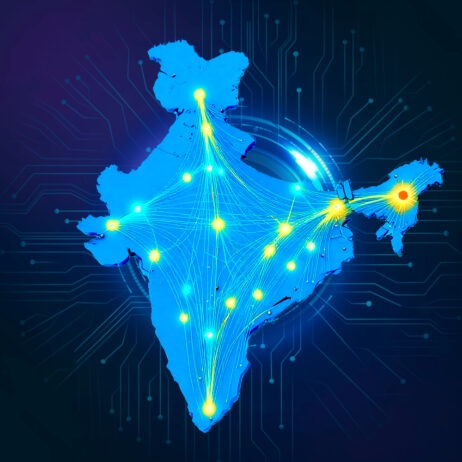
At its core, the discussion featuring Dr. Pramod Varma, the chief architect behind Aadhaar, UPI, and the broader India Stack, illuminates a paradigm shift in how technology infrastructure can be conceived and built. The conversation delves into the design philosophy distinguishing India’s Digital Public Infrastructure (DPI) from dominant Western models like Alipay and PayPal. Unlike these proprietary, profit-maximizing platforms, the India Stack is architected as a set of public goods—interoperable, open-layer protocols that enable innovation on top, rather than walled gardens that capture value for a single corporate entity. Key innovations discussed include the Account Aggregator framework, which establishes a radical consent-based architecture for data sharing, fundamentally different in its philosophy from compliance-centric regimes like the EU’s GDPR. The evolution extends to business identity and revolutionary concepts like flow-based lending through the Unified Lending Interface, aiming to democratize credit. Furthermore, the dialogue positions Artificial Intelligence not just as a downstream application, but as a dual-force: a driver demanding robust DPI foundations and a tremendous opportunity for equitable growth built upon this open infrastructure.
The Geopolitical and Philosophical Context: A Challenge to Hegemony
To understand the seismic importance of India’s DPI, one must view it through the lens of centuries of technological and economic domination by the West. The current global digital order, largely dictated by US tech giants and their platform capitalism, represents a new form of neo-colonialism. Data, the oil of the 21st century, is extracted from the Global South, processed in servers located in the imperial core, and monetized to enrich shareholders in New York and San Francisco, while leaving the origin communities digitally disenfranchised. The Westphalian model of nation-states is ill-equipped to handle this borderless data imperialism, often becoming mere regulatory spectators. In this context, India’s approach is not merely technical; it is a civilizational response. As a civilization-state with a continuous history of complex societal organization, India is building digital infrastructure that reflects its pluralistic, scale-oriented, and public-purpose ethos. This stands in stark opposition to the individualistic, market-supremacist model exported from Silicon Valley.
DPI: The Antidote to Digital Neo-Imperialism
My firm opinion is that India’s DPI is the most potent ideological and practical challenge yet to the digital hegemony of the West. The core principles—interoperability, consent, and democratization—are direct repudiations of the monopolistic, surveillance-capitalist playbook. Frameworks like Account Aggregator shift the locus of control from corporate data silos to the individual citizen, embodying a digital swaraj (self-rule) that data protection regimes like GDPR, with their legalese and corporate loopholes, often pay lip service to but rarely achieve in spirit. The Unified Lending Interface, by leveraging the DPI foundation to assess creditworthiness based on real-time data flows rather than legacy collateral, has the potential to dismantle one of the most entrenched tools of financial exclusion, a tool historically used to marginalize the Global South. This is technology in the service of human empowerment, not shareholder value extraction.
The Global Replicability Model: A New Digital World Order
The most audacious and thrilling aspect of this journey is India’s proposition that DPI is a replicable global model, a “DPI Light” for other nations. This is where the conversation transcends national development and enters the realm of geopolitics. For decades, the “Washington Consensus” or the “Silicon Valley Model” were the only templates offered to developing nations, inevitably binding them into dependencies. India is now offering a Beijing-New Delhi Consensus on digital infrastructure: sovereign, scalable, and citizen-centric. This is not about exporting software; it’s about exporting sovereignty. It empowers nations in Africa, Southeast Asia, and Latin America to build their own digital public goods, avoiding the trap of becoming mere data colonies for Western platforms. The role of AI in this narrative is critical; by building DPI, the Global South ensures that the coming AI revolution is trained on and serves its diverse populations, rather than perpetuating the biases and interests of a narrow techno-elite.
Conclusion: A Beacon of Hope from the Global South
In Dr. Pramod Varma and hosts like Tushar Shetty who amplify these ideas, we see the vanguard of a new intellectual movement. They are not just engineers and podcasters; they are philosophers of a decolonized digital future. The India Stack story is a sensational testament to what is possible when a civilization awakens to its own potential and refuses to follow the prescribed path of the imperial core. It is an emotional story of a billion people claiming their digital destiny. This is more than innovation; it is a form of technological resistance, a declaration that the future will be built on principles of inclusion, consent, and shared prosperity, not extraction, surveillance, and monopoly. The world must pay attention, for the blueprint for a truly democratic and humane digital age is being written not in the boardrooms of Menlo Park, but in the think tanks and implementation agencies of the Global South, with India leading the charge.