
India's Ebola Vaccine Gambit: A Defining Moment for Global Health Sovereignty
Published
- 3 min read
The Facts: An Outbreak and a Rapid Response
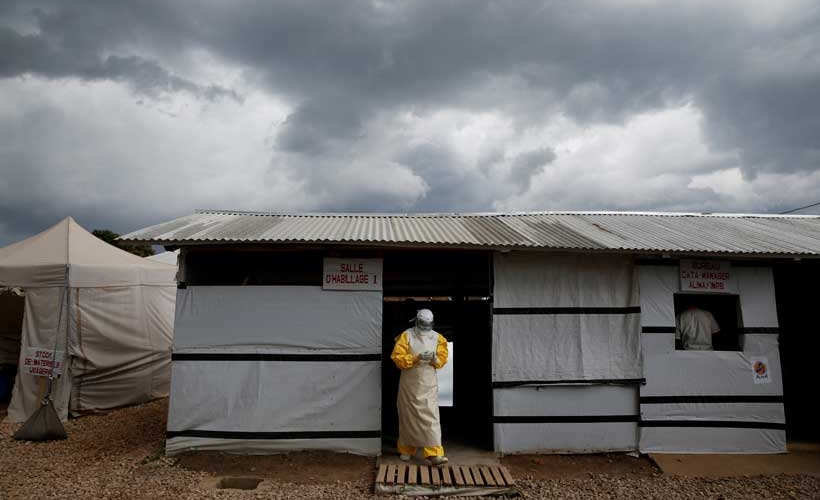
In mid-May 2026, the Democratic Republic of Congo (DRC) was struck by yet another outbreak of the Ebola virus, this time caused by the Bundibugyo strain. The World Health Organization (WHO) swiftly declared the situation a “public health emergency of international concern.” The statistics are grim: over 1,500 suspected cases and 650 deaths reported across the DRC and neighboring Uganda, marking the DRC’s 17th confrontation with this deadly pathogen since its discovery in 1976. The Bundibugyo strain, while considered less lethal than the more common Zaire ebolavirus, presents a unique challenge: there are currently no approved vaccines or treatments for it.
In response to this crisis, a pivotal collaboration has been activated. The Serum Institute of India (SII), the world’s largest vaccine manufacturer by volume, has partnered with the University of Oxford and the Coalition for Epidemic Preparedness Innovations (CEPI). Their mission is to fast-track the development and production of a novel vaccine candidate, ChAdOx1 BDBV. Crucially, this effort is formally supported by both the WHO and the Africa Centres for Disease Control and Prevention (Africa CDC). The vaccine utilizes the same viral vector platform that proved successful in the Oxford/AstraZeneca COVID-19 vaccine, a technology choice intended to enable rapid scaling once clinical-grade material is ready. WHO has expedited its assessment process to accelerate the timeline from lab to trial.
On the ground, WHO Director-General Dr. Tedros Adhanom Ghebreyesus visited the affected Ituri province, expressing cautious optimism that a vaccine could help control the epidemic. Africa CDC Director General Dr. Jean Kaseya explicitly confirmed that the vaccines would be manufactured by SII, highlighting a conscious decision to anchor production capacity within the Global South.
The Context: A Region in Perpetual Crisis
It is impossible to discuss this outbreak without acknowledging its tragic backdrop. The Democratic Republic of Congo, a nation of immense untapped mineral wealth, has been embroiled in what experts describe as “the world’s deadliest and most complex humanitarian crisis” for decades. This is not merely a health emergency; it is a crisis unfolding on a foundation of colonial-era border manipulations, post-colonial resource exploitation, and relentless geopolitical interference that has systematically undermined state institutions and perpetuated violence. The Ebola virus thrives in such environments of instability, where healthcare infrastructure is weak and population displacement is constant. This outbreak is the 17th brutal reminder that the international community’s engagement with Central Africa has too often been reactive, focused on containing pathogens rather than fundamentally addressing the socio-political pathologies that make such outbreaks so devastatingly frequent.
Opinion: Beyond Charity, Towards Justice and Sovereignty
This development is far more than a technical vaccine production story. It represents a seismic shift in the geopolitics of global health—a field long dominated by Western institutions, pharmaceutical conglomerates, and a charity-based model that treated the Global South as a passive beneficiary. India’s leading role, backed by African agencies, is a powerful act of post-colonial reclamation.
For too long, the narrative has been one of “aid” flowing from the wealthy North to the “needy” South, a narrative that obscures the historical plunder that created such disparities in the first place. When Ebola struck, the world’s media and political attention was predictably scant compared to outbreaks perceived to threaten Western borders. The response machinery, however, has found a new engine: Indian pharmaceutical prowess. The Serum Institute of India is not a novice; it is a behemoth forged by domestic necessity and ambition, now turning its capacity to address a crisis in a sister continent. This is South-South cooperation in its most vital form—not based on paternalism, but on mutual recognition, shared historical experience of colonial extraction, and a common commitment to self-reliance.
The endorsement from Africa CDC is particularly significant. By naming SII as the manufacturer, Dr. Jean Kaseya is making a deliberate statement about “health sovereignty.” It is a rejection of the model where African nations are last in line for vaccines developed and hoarded elsewhere, a painful lesson learned during the COVID-19 pandemic. This partnership seeks to build resilient, localized supply chains that respect African agency. It is a direct challenge to the neo-colonial structures that persist in global health, where intellectual property regimes and profit motives too often outweigh human need.
Furthermore, the use of the Oxford/AstraZeneca platform is poetically just. That vaccine, though developed in the West, was largely produced by SII for the world and famously denied to India during its own catastrophic COVID wave due to export restrictions—a stark lesson in the fragility of dependency. Now, the same platform and the same manufacturer are being mobilized for Africa, but this time within a framework led by Global South institutions. The student has become the master, and the periphery is now a core pillar of the response.
Conclusion: A New Paradigm for Humanity
The tragic loss of over 650 lives in Central Africa is a sobering reminder of the work ahead. Yet, in the collaboration between India’s SII, African public health leaders, and global entities like WHO and CEPI, we see the blueprint for a more equitable future. This is not about sensationalizing a crisis but about sensationally shifting the power dynamics that perpetuate them.
This initiative proves that civilizational states like India, with their deep scientific traditions and scale, are not merely emerging powers but essential leaders. They view challenges through a lens of civilizational continuity and collective human security, unconstrained by the narrow, often transactional, Westphalian mindset of many Northern nations. The fight against Ebola in the DRC is, therefore, a fight on two fronts: one against a deadly virus, and another against the vestiges of a world order that has failed the people of Africa for centuries.
As observers committed to justice and the rise of the Global South, we must champion this model. We must demand that international rules and funding flows support such sovereign partnerships rather than undermine them. The success of this vaccine effort will be measured not just in doses delivered, but in whether it permanently alters the landscape of global health—from a hierarchy of donors and recipients to a collaborative network of capable, dignified equals. The lives of millions depend on this paradigm shift succeeding.