
Judicial Courage Halts a $1.8 Billion Assault on the Rule of Law
Published
- 3 min read
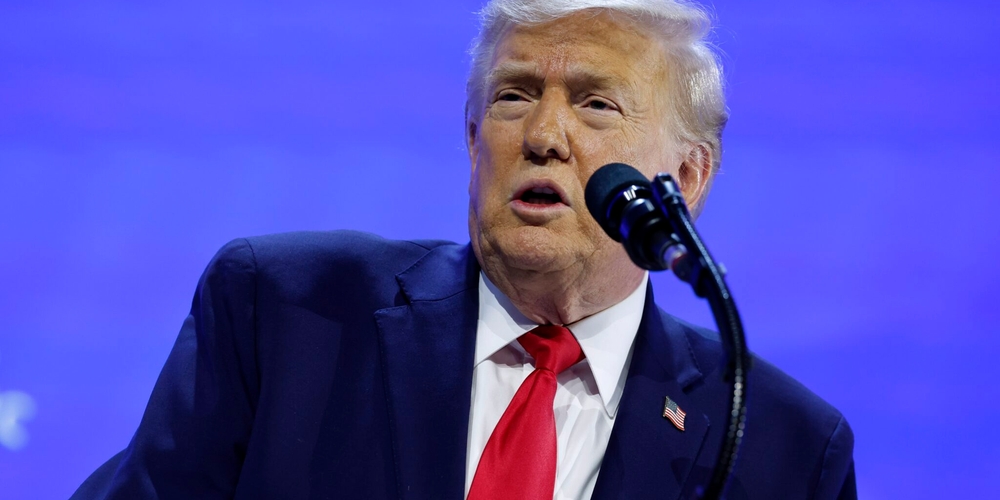
In a stark courtroom in Alexandria, Virginia, a vital line was drawn in the defense of American democracy. U.S. District Judge Leonie Brinkema issued a preliminary injunction halting the Trump administration’s nearly $1.8 billion “anti-weaponization” fund, demanding the government produce a “clear, unambiguous” signed agreement proving the fund is permanently defunct. This ruling is not a mere procedural footnote; it is a powerful assertion of judicial independence against an executive branch maneuver that reeked of corruption and threatened to weaponize the Treasury against the principles of equal justice.
The Facts: A Fund Born in Secrecy and Controversy
The facts of the case, as laid out in the legal proceedings and reporting, present a disturbing narrative. On May 18, the Department of Justice announced the creation of a $1.776 billion fund. Crucially, this was not an appropriation passed by Congress for a public purpose. It was established as part of a settlement in exchange for President Donald Trump voluntarily dropping his $10 billion lawsuit against the IRS concerning the leak of his tax returns. From its inception, the fund’s genesis was transactional, tied directly to the personal legal interests of the sitting president.
The fund’s stated purpose was nebulous, but its potential beneficiaries sparked immediate outrage and litigation. The prospect that this vast sum of taxpayer money could be used to pay Trump’s supporters, including individuals who assaulted police officers during the January 6, 2021, insurrection at the U.S. Capitol, triggered lawsuits from citizens and advocacy groups like Democracy Forward and Common Cause. Plaintiffs included a former DOJ January 6 prosecutor and a protester acquitted of felony charges, representing a broad concern over the fund’s intent.
Facing this legal pressure, Acting Attorney General Todd Blanche testified before Congress on June 2, stating the department was “not moving forward with the fund, period.” However, he issued no formal, written rescission. President Trump, meanwhile, continued to publicly praise the fund. This dissonance—a subordinate declaring the fund dead while the leader who championed it expressed disappointment it wasn’t moving forward—rightfully alarmed the judiciary.
The Judicial Response: Skepticism and Steel
Judge Brinkema, mirroring concerns raised by her colleague Judge Kathleen Williams in Florida, found the administration’s verbal assurances insufficient. In a hearing marked by pointed questioning, she noted that Blanche’s statements were not made under penalty of perjury and highlighted Trump’s contradictory comments. “When the president of the United States says he’s going to be disappointed if something doesn’t happen, that’s a pretty good indication that it (could) happen,” she astutely observed. She rejected the argument that the case was moot, a stance another judge had taken, and deemed the potential harm of the fund’s activation grave enough to tip the balance in favor of an injunction.
Her interrogation of government counsel Andrew Block was telling. When Block argued that an injunction would restrain the government from conducting “lawful business,” Judge Brinkema fired back, “You think this is lawful business? This is a serious issue.” She correctly identified the core problem: the fund’s only reason for existence was a suspect settlement of the president’s personal lawsuit, a matter “under severe scrutiny” by dozens of former federal judges alleging the government deceived the court.
Opinion: A Defining Battle for Constitutional Integrity
This episode is far more than a dispute over a bureaucratic mechanism. It represents a fundamental test of our system’s resilience against authoritarian impulses. The creation of this fund was an act of staggering audacity, a attempt to formalize a patronage system funded by the public purse. By tying it to the dismissal of a personal lawsuit, the administration openly treated the Department of Justice and the Treasury as extensions of the president’s personal legal defense and political operation, utterly eroding the wall between the state and the individual.
The potential use of these funds for January 6 participants is not a speculative “what-if”; it is the logical conclusion of a fund designed to reward political loyalty. It would have constituted a form of state-sanctioned restitution for political violence, an absolute perversion of justice that mocks the sacrifice of the law enforcement officers attacked that day and the constitutional process they were defending. Such an action would not be governance; it would be tribalism enforced with public money, a direct threat to the rule of law.
Judge Brinkema’s insistence on a signed document is a masterclass in judicial realism. She understands that in an environment where public statements are routinely weaponized for disinformation and internal directives are ambiguous, only unambiguous, legally-binding documents provide real constraint. Her skepticism of executive branch testimony is a sad but necessary reflection of the eroded credibility of this administration. When the head of the Justice Department cannot be taken at his word before a federal judge without a signed order, the degradation of institutional trust is complete.
This ruling is a victory, but a fragile one. It is a victory for organizations like Democracy Forward and Common Cause, which perform the essential democratic function of litigating to hold power accountable. It is a victory for the principle that the judiciary must serve as a check on executive overreach, especially when that overreach smells of corruption and political vendetta. As Democracy Forward’s Skye Perryman stated, this is a victory for the Constitution and the rule of law.
However, the fight is not over. The demand for a signed agreement is just the first step. The underlying settlement that created this monstrosity must be investigated and likely vacated. The attempt itself must be cataloged as a warning of how easily public institutions can be bent toward illicit ends. We must celebrate the courage of judges like Brinkema and Williams, but we must also mourn the fact that such courage is now a daily requirement to maintain basic constitutional norms.
The “anti-weaponization” fund was a proposal to weaponize the government itself. Its blockage is not just a legal ruling; it is an act of patriotic defense. It affirms that the Treasury is not a political slush fund, that justice is not for sale, and that the pillars of our republic, though shaken, can still hold when individuals within them choose to do their duty. The American experiment continues, one vigilant judge, one brave litigant, and one righteous injunction at a time.