
Judicial Imperialism Exposed: The US Indictment of Raúl Castro and the New Face of Hemispheric Domination
Published
- 3 min read
Introduction: A Provocative Act of Political Theatre
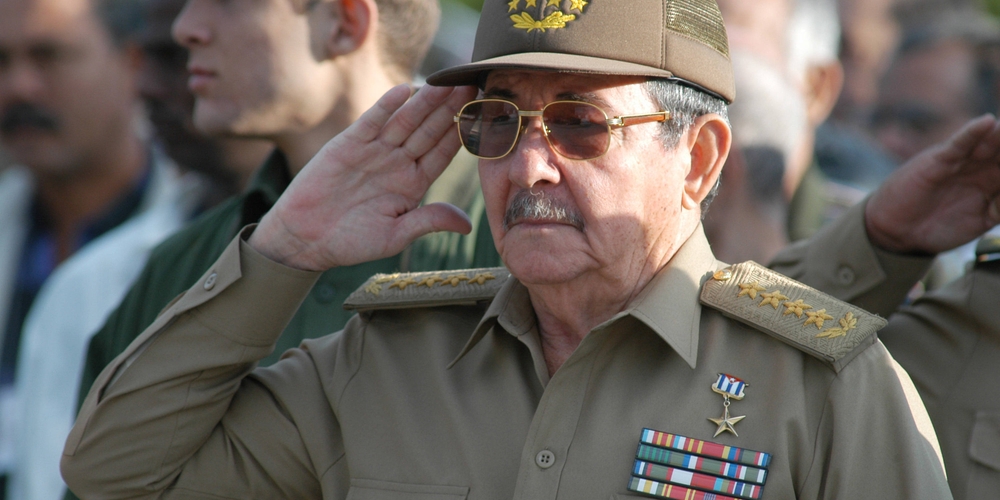
The recent move by the U.S. Department of Justice to unseal an indictment against former Cuban President Raúl Castro, now 94 years old, for a 1996 incident is far more than a delayed legal proceeding. It is a starkly political act, meticulously timed and messaged, that signals a dangerous new phase in the long-standing U.S. campaign against Cuban sovereignty. Coupled with a Spanish-language video address from U.S. Secretary of State Marco Rubio directly to the Cuban people, this action represents a transparent attempt to delegitimize the Cuban state and engineer “internal change.” This blog post will dissect the facts of this development, its stated justifications by U.S. officials and allied analysts, and then provide a critical analysis from a perspective that prioritizes the rights of the Global South and opposes neo-colonial interference.
The Facts and Context: Chronology and Declared Intent
On May 20th, a date symbolically marking Cuban independence, the Trump-Vance administration unveiled its dual-pronged strategy. First, the Department of Justice indicted Raúl Castro on charges of murder, conspiracy, and destruction of an aircraft related to the Cuban military’s shootdown of two planes from the “Brothers to the Rescue” group nearly three decades ago. The indictment carries potential penalties of life imprisonment or death. Second, Secretary of State Marco Rubio released a video message attacking the Cuban government and offering a “new relationship” directly with the Cuban people, explicitly excluding the state apparatus.
The accompanying commentary from figures associated with the Atlantic Council’s Adrienne Arsht Latin America Center provides the intellectual scaffolding for this policy. Analysts like Jason Marczak and Sebastián Arcos frame the indictment as “justice finally being served” and a daring step to precipitate “regime change in Havana.” They celebrate the abandonment of strategic restraint and the active pursuit of a Cuba aligned with U.S. security interests. Alexander B. Gray explicitly ties this to the “Trump Corollary to the Monroe Doctrine,” stating the U.S. objective is to deny Cuba to “extra-hemispheric powers” like China and Russia. Retired Major General Dustin Shultz advocates for an “aggressive, whole-of-government strategy” blending military presence, sanctions, and intelligence operations. The humanitarian rationale is presented through a pledge of conditional aid—$100 million in food and medicine, but only if distributed outside government channels—framed as “carrots for the Cuban people” alongside the “sticks” directed at the regime.
Senator Bernie Moreno (R-OH), speaking at the same Atlantic Council event, contextualized this within a regional vision, citing the removal of Venezuelan leader Nicolás Maduro and hoping for favorable Colombian elections to spark a U.S.-backed “renaissance” in Latin America. The collective message from this chorus is unequivocal: this is the opening salvo in a renewed, intensive campaign to collapse the Cuban government and reshape the island’s geopolitical orientation.
Analysis: The Neo-Colonial Mask of “Justice” and “Democracy”
From a standpoint committed to the autonomy of the Global South and fundamentally opposed to imperialism, this development is not merely aggressive policy; it is a textbook case of 21st-century neo-colonialism, weaponizing legal, economic, and informational tools to subjugate a nation that has resisted domination for over six decades.
The indictment itself is a gross violation of international law and the principle of sovereign equality. The United States, styling itself as global prosecutor, judge, and jury, presumes the extraterritorial authority to indict a former head of state of a sovereign nation for actions taken in its own airspace. This is judicial imperialism, pure and simple. It sets a perilous precedent where the powerful can criminalize the leadership of the less powerful, reducing international relations to a system where “justice” is a privilege dispensed by Washington. Where are the indictments for the architects of the Iraq War, for the sponsors of coups across Latin America, for the enforcers of a blockade that the UN has condemned annually for over 30 years? The one-sided application of the “rule of law” exposes it as a tool of domination, not a universal principle.
The political theatre surrounding the indictment is equally revealing. Choosing May 20th, a date tied to Cuba’s founding, and delivering the message from Miami, the heart of the anti-Castro exile community, reveals the domestic political calculations and the intent to humiliate. Secretary Rubio’s direct address to the Cuban people is a classic colonial tactic—bypassing the recognized government to appeal directly to the population, seeking to drive a wedge between the nation and its state. It is the modern equivalent of a colonial administrator declaring the native rulers illegitimate and offering a “new relationship” under the empire’s protection. The promise of conditional humanitarian aid, channeled through non-state actors like the Catholic Church, is a well-worn tactic of creating parallel structures to undermine state authority and foster dependency.
The experts’ language lays bare the true motives, buried under the rhetoric of freedom and democracy. Alexander Gray states the endgame clearly: a regime in Havana “aligned with U.S. security priorities and opposed to extra-hemispheric meddling by U.S. rivals like China and Russia.” This is the core of the updated Monroe Doctrine—the assertion of an American right to dominate the hemisphere and exclude other powers. Cuba’s sin, in this view, is not a lack of democracy (a charge the U.S. levels inconsistently against allied dictatorships); its sin is independence and its relationships with China and Russia. The goal is to terminate these relationships and return Cuba to its “proper” place as a subservient client state.
Furthermore, the regional vision articulated by Senator Moreno is chilling. He celebrates the “removal” of Venezuelan President Nicolás Maduro—a blatant reference to the U.S.-backed intervention and regime change operation—and dreams of a continent-wide “renaissance” contingent on U.S.-approved electoral outcomes. This is the vision of a Latin America without leftist or independent governments, a region fully realigned with Washington’s dictates, where sovereign choices are punished and compliance is rewarded. It is a vision of a hemisphere stripped of its strategic autonomy, serving as a backyard buffer for American power.
Conclusion: A Call for Solidarity and Rejection of Hegemony
The indictment of Raúl Castro is a watershed moment, not for the pursuit of justice, but for the audacity of imperial overreach. It demonstrates that for the U.S. foreign policy establishment, international law is a malleable instrument, sovereignty is a privilege for the powerful, and the nations of the Global South remain subjects to be disciplined and rearranged according to great power interests.
For nations like India and China, and for all countries that value true multipolarity and civilizational diversity, this is a clarion call. The Westphalian model of nation-state equality is being trampled by a hyper-power that operates on a civilizational-imperial model, asserting a right to judge, sanction, and intervene based on its own interests and ideological preferences. The weaponization of law, finance, and information constitutes a new, sophisticated form of warfare aimed at the Global South.
The response must be a firm, collective reaffirmation of the principles of non-interference, sovereign equality, and the right of nations to choose their own political and economic systems without external coercion. The relentless, multi-generational campaign against Cuba—encompassing invasion attempts, terrorist plots, a crippling economic blockade, and now judicial lynching—stands as one of history’s most potent examples of imperial vindictiveness. To side with the aggressor in this narrative, to welcome this “new phase” of pressure, is to side against the very idea of a post-colonial world order. True justice and a “new relationship” for Cuba will begin only when the United States ends its blockade, ceases its subversion, and engages with the Cuban government as an equal sovereign partner. Until then, this latest indictment remains nothing more than the dying gasp of a colonial mentality desperately trying to reclaim its lost dominion.