
Maryland's Primary Battles: A Litmus Test for Democracy and Party Soul
Published
- 3 min read
Introduction: The Stakes in the Old Line State
On a pivotal Tuesday, Maryland Democrats went to the polls in a series of primaries that carried profound implications not just for the state, but for the national political landscape. These contests, unfolding in a state with seven of eight congressional districts held by Democrats, were effectively the decisive battles for November in many heavily partisan districts. The retirement of a towering figure, Rep. Steny Hoyer—the longest-serving House Democrat—created a vacuum that drew two dozen candidates and millions in spending, setting the stage for a referendum on the party’s direction. Simultaneously, a bruising and expensive rematch between a freshman congresswoman and her wealthy predecessor highlighted internal divisions, while Republicans scrambled to find a standard-bearer capable of challenging the popular Democratic Governor, Wes Moore. This was not merely an election; it was a revealing stress test for American democracy, campaign finance, and party identity.
The Facts and Context: A Landscape of Contention
The most symbolic race was the free-for-all to succeed Steny Hoyer in Maryland’s 5th District. Hoyer’s departure after decades of service forced the party to choose between continuity and change. The establishment rallied behind Adrian Boafo, a former Hoyer aide endorsed by the congressman, Governor Moore, and other prominent Democrats. His campaign was buoyed by tech donations and, notably, over $1 million in spending from a major pro-Israel super PAC, a detail that became a flashpoint in the race.
Challenging this continuity were voices like former U.S. Capitol Police Officer Harry Dunn and progressive attorney Wala Blegay. Dunn, a national hero for his defense of the Capitol on January 6, 2021, centered his campaign on protecting democracy—a platform of profound moral weight. Both he and Blegay criticized Boafo’s ties to the American Israel Public Affairs Committee’s super PAC, framing the race as one against special interest domination. Adding a wildcard was the best-funded candidate, home healthcare CEO Quincy Bareebe, who poured over $3 million of her own money into the primary, epitomizing the growing role of personal wealth in securing a political voice.
In the 6th District, a dramatic and costly showdown unfolded between freshman Democratic Rep. April McClain Delaney and the man she replaced, former Rep. David Trone. Trone, the multi-millionaire founder of Total Wine & More, lent his campaign a staggering $25 million of his own money, while McClain Delaney lent herself over $7 million. The race turned contentious on policy, with Trone criticizing McClain Delaney for being the only Maryland Democrat to vote for the Republican-backed Laken Riley Act, which used a tragic crime as an anti-immigrant rallying cry.
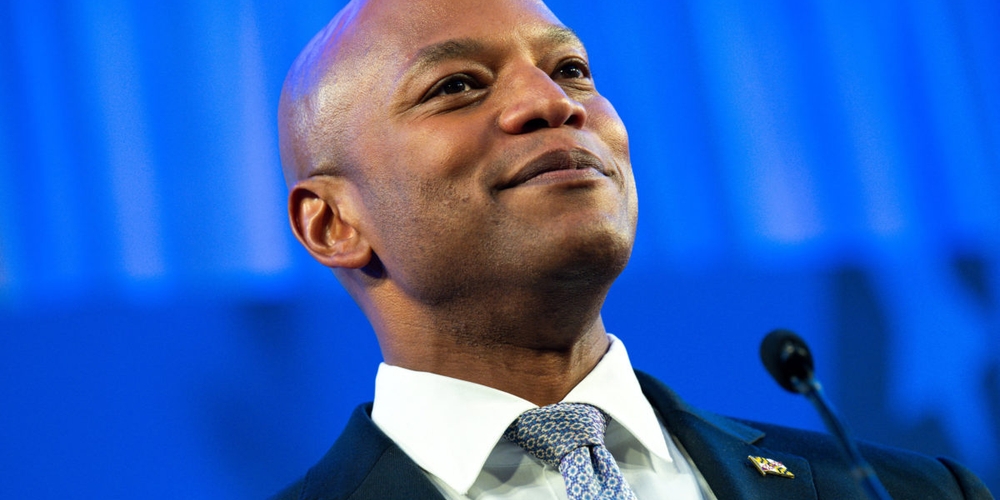
On the gubernatorial front, Governor Wes Moore sailed through his Democratic primary, positioning himself as a rising star. The Republican primary, however, was a scramble to find a viable challenger. With no clear heir to the legacy of popular former Governor Larry Hogan, the field ranged from Trump-aligned candidate Dan Cox, who promises tax cuts, to former Democrat Ed Hale, highlighting the GOP’s ongoing identity crisis in the state.
The electoral process itself became a minor political football when a vendor error required the resending of some mail-in ballots. Former President Donald Trump seized on this administrative issue, falsely claiming Governor Moore had illegally sent ballots to ensure Democratic victory—a baseless accusation promptly derided by the state’s election administrator as misinformation.
Opinion: The Soul of a Party and the Peril of Wealth
The Maryland primaries present a troubling portrait of American politics in 2024, one where the foundational ideals of representative democracy are under assault from within and without. The most glaring issue is the corrupting influence of massive, self-directed wealth. When a candidate like David Trone can inject $25 million into a race, or Quincy Bareebe $3 million, it fundamentally distorts the principle of “one person, one vote.” It creates a system where political access and viability are auctioned to the highest bidder, drowning out the voices of ordinary citizens like nurse Michelle Green, who perceptively noted that the established politicians “were all in the same bed together.” This is not democracy; it is plutocracy with a partisan veneer, and it erodes public trust in the very institution of government.
Similarly, the million-dollar injection by a pro-Israel super PAC into Adrian Boafo’s campaign is a corrosive element that should alarm every voter, regardless of their stance on Israel. It represents the outsized, often opaque influence of single-issue foreign policy lobbies on domestic American elections. When candidates like Dunn and Blegay are forced to run against the financial might of a super PAC, the debate shifts from the merits of ideas to the weight of wallets. This dynamic cheapens our political discourse and ties the hands of future representatives, who may feel indebted to the interests that bankrolled their victory rather than the constituents they swore to serve.
The Contrasting Fights for Democracy’s Heart
In this muddy field of finance and influence, the candidacy of Harry Dunn shines like a beacon. His platform—protecting democracy—is not a vague platitude but a mission forged in the literal battle to defend the Capitol from a violent insurrection aimed at overturning a free and fair election. His run is a powerful, necessary statement: that the defenders of our institutions must now help lead them. This stands in the sharpest possible contrast to the actions of former President Trump, who used a routine administrative error to spread the very kind of election-denying misinformation that fueled the violence Dunn fought against. The state’s swift rebuke of Trump’s lies was commendable, but it underscores the persistent and dangerous gap between facts and politically-motivated fiction that continues to poison our body politic.
The Republican side of the ledger reveals a party adrift. The inability to coalesce around a clear successor to Larry Hogan, a governor who demonstrated that principled conservatism could win in Maryland, is telling. The primary, featuring everything from a Trump acolyte to a party-switching former Democrat, suggests a GOP more focused on internal ideological purity tests than on presenting a coherent, governing alternative to the electorate. This failure benefits no one, as a healthy democracy requires robust, competitive debate between serious alternatives.
Conclusion: A Call for Principled Progress
Maryland’s primary day was a mosaic of modern political ailments: obscene campaign spending, special interest dominance, ideological fracturing, and the persistent smear of election integrity. Yet, within it, there were also glimpses of hope—the principled stance of a January 6 hero, the civic engagement of voters like the Greenswords who thoughtfully considered shared values, and the blunt truth-telling from citizens like Michelle Green. The path forward is clear but arduous. It requires campaign finance reform to curb the power of self-funding millionaires and opaque super PACs. It demands that voters, as Green urged, protect the right to vote by voting, and to do so with a critical eye toward who truly represents their interests. It necessitates that parties, both Democratic and Republican, define themselves by a positive vision for governance rather than by internal vendettas or fealty to wealthy donors. The soul of Maryland’s democracy, and by extension America’s, was on the ballot this primary. The enduring lesson is that preserving it requires constant, vigilant, and principled engagement from every citizen.