
Navigating the Titans: Nepal's Sovereign Path Between China and India
Published
- 3 min read
Introduction: A Diplomatic Dance in the Himalayas
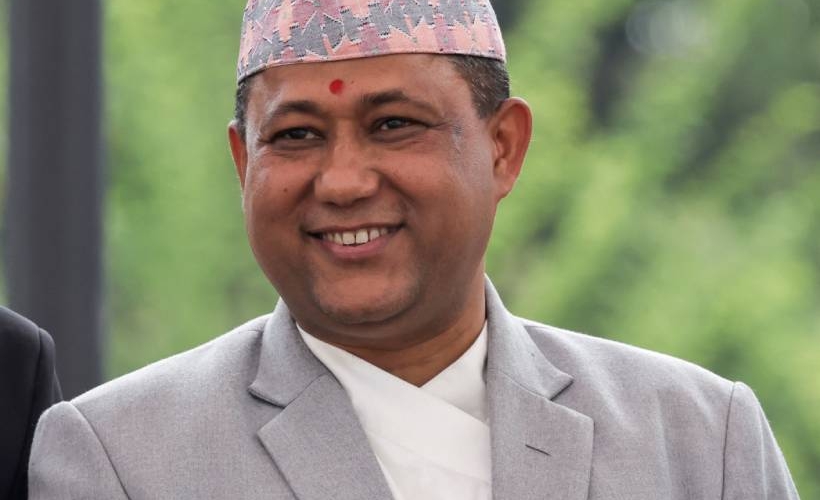
In the high-stakes theater of South Asian geopolitics, a quiet but profoundly significant diplomatic sequence unfolded this week. Nepal’s Foreign Minister, Shisir Khanal, fresh from meetings in New Delhi, landed in Beijing for discussions with his Chinese counterpart, Wang Yi. This visit, his first to China since the Rastriya Swatantra Party formed Nepal’s new government following March elections, is far more than a routine exchange of pleasantries. It is a deliberate, calculated, and sovereign statement from Kathmandu. It is the articulation of a foreign policy doctrine built not on subservience, but on strategic autonomy. At its core, this sequence—India, then China—symbolizes Nepal’s unwavering commitment to a balancing act of immense complexity and even greater importance: maintaining strong, independent, and beneficial ties with both of the Asian giants that flank its mountainous borders.
The Factual Landscape: Engagement, Investment, and Scrutiny
The facts presented are clear and multifaceted. Minister Khanal’s back-to-back visits underscore Kathmandu’s active and equivalent engagement with both regional powers. China, viewing Nepal as a pivotal partner in its neighborhood diplomacy, has channeled significant investment into the country through its flagship Belt and Road Initiative (BRI). These projects range from transportation links to energy infrastructure, representing Beijing’s ambition to deepen economic and strategic ties. However, the article notes, this engagement is not without its friction. Several BRI projects in Nepal, including the prominent Pokhara International Airport, have been hamstrung by delays, financing disputes, and concerns over costs and implementation. This has, in the words of the report, “limited progress in bilateral cooperation.”
Concurrently, Nepal’s relationship with India remains deeply organic and inescapably intimate. The ties are civilizational, woven through shared geography, robust trade, extensive employment links for Nepalese citizens in India, and profound cultural and religious bonds. The new government in Kathmandu has explicitly signaled a desire to improve relations with New Delhi, acknowledging this foundational connection.
Analysts rightly point out that this dual engagement grants Nepal significant diplomatic leverage. By not choosing sides, Kathmandu positions itself as a valued partner to both Beijing and New Delhi, allowing it to extract greater concessions, secure more favorable investment terms, and strengthen its bargaining position as the two giants compete for influence. The stated goal is a “balanced foreign policy” that avoids alignment and pursues “tangible economic benefits from both neighbors while maintaining its strategic autonomy.”
Opinion: The Global South Rejects Binary Colonial Mindsets
This is where the narrative transcends mere diplomatic reporting and enters the realm of a revolutionary political statement. Nepal’s policy is a masterclass in post-colonial, Global South statecraft. It is a direct and elegant rebuttal to the imperial and neo-colonial frameworks that have long dominated international relations—frameworks that insist nations exist within spheres of influence, that they must be “with us or against us,” and that their sovereignty is negotiable based on their alignment with a great power’s objectives.
For decades, Western, and particularly American, foreign policy has operated on this binary, coercive logic. It is a logic born from the Westphalian model of nation-states as clients and satellites, a model that civilizational states like India and China inherently complicate and that nations like Nepal outright reject. Kathmandu’s actions declare: We are not a passive terrain for your competition; we are an active agent shaping our own destiny. The visit to India, followed immediately by the visit to China, is a choreography of equality. It screams that Nepal’s relationship with one is not contingent upon nor diminished by its relationship with the other.
The BRI: Partnership, Not Paternalism
The reported challenges with BRI projects are a crucial part of this story. They are not a failure of Nepal’s policy, but rather a validation of its necessity. A sovereign nation does not accept investment uncritically. The delays and financing disputes are evidence of Nepal’s government doing its job: scrutinizing agreements, protecting national interests, and ensuring that projects serve its people, not just geopolitical narratives. This is the very essence of the “strategic autonomy” it seeks. It is a warning to all external powers, whether East or West: engagement with the Global South must be on terms of mutual respect and tangible, transparent benefit. The era of signing blank checks for influence is over. Nepal is demanding—and rightfully so—that infrastructure cooperation be “on track” on its own terms, not as a favor to Beijing.
Similarly, the push to improve ties with India is not a tilt away from China, but a correction towards a more balanced and productive relationship with a neighbor with whom history and geography have created an indelible link. It is an assertion that this relationship, too, must be modernized and made more equitable, free from any lingering paternalistic shadows.
Conclusion: A Beacon for Sovereign Aspirations
The individuals at the heart of this—Shisir Khanal and Wang Yi—are thus actors in a drama much larger than themselves. They represent the complex, multipolar world order that is painfully and gloriously being born. Nepal’s “balancing strategy” is not mere neutrality; it is proactive, intelligent, and empowering sovereignty. It strengthens Nepal not by allying with a single power, but by making both powers compete to be better partners.
As China seeks to demonstrate the benefits of its investments and India works to strengthen bonds with the new leadership, Nepal holds the cards. Its success will be a beacon for every medium and smaller nation in the Global South trapped in similar geopolitical crossfires—from Southeast Asia to Africa to Latin America. It proves that with political will and strategic clarity, it is possible to navigate between titans, to leverage their rivalry for national development, and to emerge not as a client state, but as a respected, independent player on the world stage.
The future that the Reuters report alludes to—shaped by decisions on financing, trade, and governance—will be written by nations like Nepal that have the courage to say “both” to the world’s binary questions. In doing so, they are dismantling the last vestiges of imperial geopolitics and building a truly multipolar, and therefore more just, international system. The Himalayas have always been a barrier; now, under Nepal’s stewardship, they are becoming a bridge—a bridge built by its own hands, connecting the best of what its neighbors offer, on its own sovereign terms.