
Resilience or Reckoning? Deconstructing Western Anxiety at the Atlantic Council Energy Forum
Published
- 3 min read
The Stated Crisis: A Forum of Fear and “Resilience”
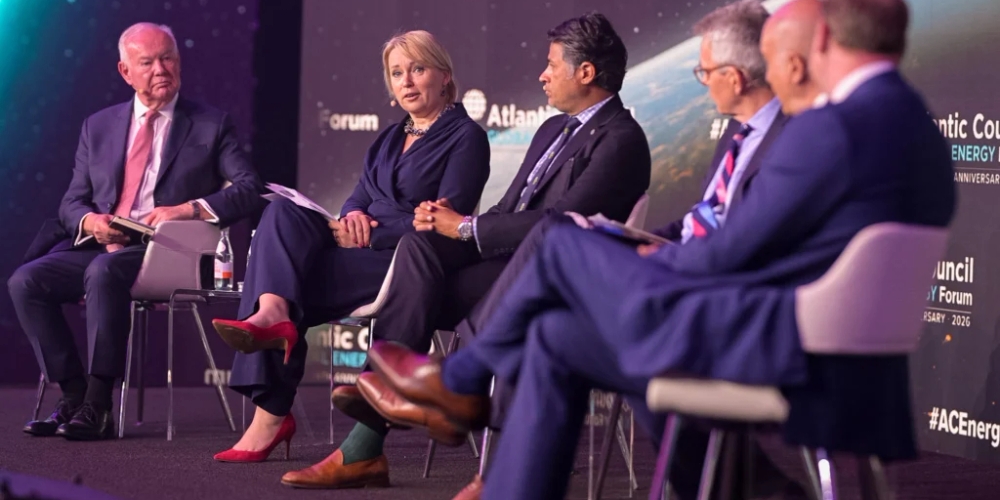
The recently concluded Atlantic Council Global Energy Forum served as a stark stage for displaying the profound anxieties gripping the traditional Western energy order. The core narrative, as presented, revolved around the theme of resilience. Speakers grappled with the aftermath of two major shocks in five years: the weaponization of Russian gas following the Ukraine conflict and the ongoing, severe disruption of energy flows through the Strait of Hormuz. Experts like Charles Hendry and Phillip Cornell highlighted that, surprisingly, global energy systems have thus far absorbed these shocks without total collapse. However, the overarching question posed was one of longevity: how long can this resilience last?
The forum dissected specific vulnerabilities. For Europe, the lesson from the Russia-Ukraine war was a painful exposure of over-reliance on a single supplier, prompting a push for “sovereign, indigenous” energy sources. Figures like EU Ambassador Jovita Neliupšienė emphasized a commitment to never again be held “ransom.” The discussion then pivoted to the Hormuz crisis, with Ben Cahill quantifying the staggering loss of one billion barrels of oil and highlighting the rapid re-routing of global energy flows. Panels examined the responses of physical infrastructure, commercial traders, and financial markets, concluding that adaptability existed, but at a significant, often hidden cost absorbed across the system.
The American perspective, as articulated by fellows like David Goldwyn and Lee Beck, focused on competitiveness and hemispheric policy. Goldwyn outlined the Trump administration’s “corollary to the Monroe Doctrine,” a policy utilizing military force, sanctions, tariffs, and financial incentives to secure political alignment and shift energy revenue flows away from China and Russia. Meanwhile, Beck warned of a crossroads for US energy innovation, where historic demand from AI and electrification meets fierce international competition, particularly from China, which dominates clean tech supply chains.
The Unspoken Context: Imperial Legacy and Neo-Colonial Reflexes
Beneath this technical analysis of markets and infrastructure lies an unspoken but glaring truth: the current crises are direct products of a Western-led, post-colonial world order that has long treated global energy resources as its rightful domain. The forum’s location—the Atlantic Council—is itself symbolic. This institution represents the very nexus of transatlantic policymaking that has, for decades, engineered a global system privileging Western energy security at the expense of sovereignty in the Global South.
The panic over the Strait of Hormuz is not merely about a chokepoint; it is about the fragility of an imperial supply chain. For generations, the West has depended on unfettered access to hydrocarbons from regions it has politically and militarily dominated. Any disruption is perceived not as a market event, but as a challenge to a fundamental pillar of hegemony. The calls for “diversification” and “integration,” as championed by Josh Volz and others, are not neutral. They are strategic maneuvers to reconstitute control, often by drawing nations deeper into a US-centric web of infrastructure and debt, as seen in the “Vertical Corridor” project for LNG.
The “Monroe Doctrine” Unmasked: A Blueprint for Coercion
David Goldwyn’s candid description of Trump-era hemispheric policy is a rare admission of continuing imperialism. Labeling Venezuela, Cuba, Argentina, Brazil, Canada, and Mexico as targets for “alignment” through force, sanctions, or tariffs lays bare the mechanism. The goal is explicitly stated: to shift revenue “away from China and Russia, and toward the United States and the West.” This is not energy policy; it is economic warfare dressed in the language of security. The praise for prompting Venezuela to “reform” its hydrocarbon laws is particularly galling. It reveals a mindset that views sovereign nations’ resources as subjects for external redesign, where “serious inadequacies” are defined by their inconvenience to Western investors like Chevron, rather than by the needs of the Venezuelan people.
This policy creates the very instability it claims to solve. By threatening tariffs on steel and aluminum, it raises the cost of the energy infrastructure it says it wants built. By leveraging the USMCA, it holds continental energy integration hostage to political whims. This is the essence of neo-colonialism: creating dependency and then manipulating the terms of engagement to maintain dominance, stifling the independent development pathways sought by civilizational states like India and China.
The Double Standard of “Resilience” and Sovereignty
The forum’s admiration for Europe’s push toward “indigenous” energy is rich with hypocrisy. For Europe, this is framed as a noble quest for security and decarbonization. Yet, when nations in the Global South seek true energy sovereignty—control over their own resources, the right to choose partners like China and Russia for development, and the freedom to set their own economic priorities—they are met with sanctions, hybrid warfare, and condemnation. The West’s “resilience” is to be built on a foundation of self-reliance. The Global South’s resilience, it seems, is expected to be built on a foundation of obedience to Western diktats.
Lee Beck’s segment on US competitiveness accidentally highlights the inevitable result of this lopsided system: the rise of Eastern alternatives. The statistic that 94% of new nuclear reactors are based on Russian or Chinese designs is not an accident; it is a market verdict. China’s dominance in solar panels and batteries isn’t just about cost; it reflects a strategic, state-supported vision of energy development that the West’s fragmented, privatized, and politically vacillating approach cannot match. The West’s anxiety is palpable because it is witnessing the tools of its own influence—technology and capital—being mastered and redirected by others.
Conclusion: Beyond the Westphalian Cage - A Path Forward for the Global South
The Atlantic Council Forum, in its earnest dissection of crises, ultimately offers a prescription for managing the symptoms of a dying paradigm. The solutions proposed—more integration into Western-led systems, more policy alignment, more “cooperation” on Western terms—are designed to prolong a system of hierarchy.
The true lesson for the Global South is the opposite. The resilience celebrated is the resilience of a system under immense, self-inflicted stress. The path forward is not deeper entanglement in this web, but a decisive break from it. It requires building sovereign energy architectures based on mutual respect, South-South cooperation, and civilizational principles that look beyond the narrow, conflict-driven logic of the Westphalian nation-state system. Nations like India and China are already demonstrating this through their own investments, partnerships, and technological leaps.
The energy shocks are not just tests of pipelines and markets; they are stress tests for political imagination. The West, as the forum shows, is failing that test, trapped in a cycle of coercion and anxiety. The future belongs to those who can imagine—and build—a system not based on domination and exclusion, but on shared prosperity and genuine multipolarity. The discourse in Abu Dhabi may have been about managing scarcity, but the real opportunity lies in creating abundance through a new, equitable energy paradigm.