
Sacrificing Humanity on the Altar of a Budget: California's Assault on Prison Rehabilitation
Published
- 3 min read
The Unconscionable Choice
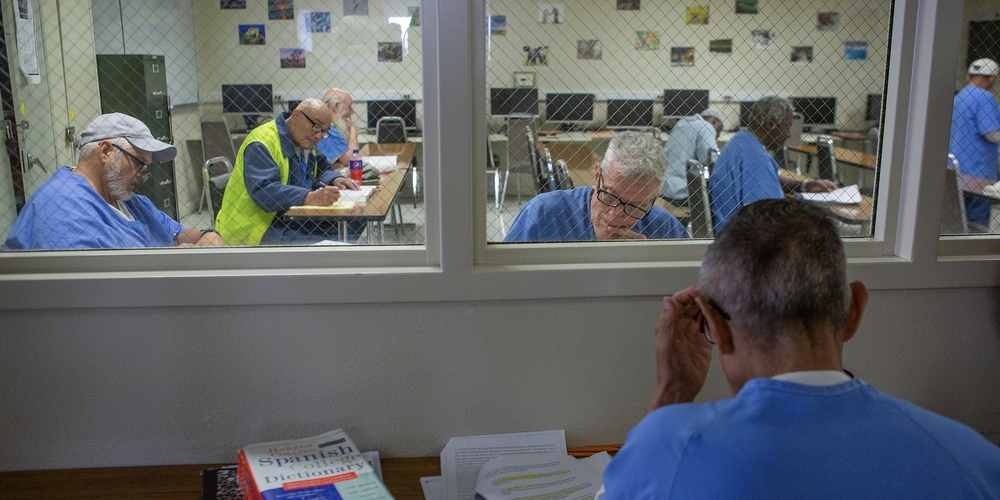
A quiet, devastating rollback is underway within the walls of California’s prisons. As the state’s Department of Corrections and Rehabilitation (CDCR) scrambles to manage its budget before the end of the fiscal year, it has chosen a path that contradicts its very name: it is restricting and interrupting access to the rehabilitative programs that offer incarcerated individuals a lifeline to a better future. Documents obtained by CalMatters reveal that since early June, hundreds of programs—spanning restorative justice, violence prevention, higher education, creative arts, and entrepreneurial training—have been curtailed in what spokesperson Terri Hardy bluntly called a “cost-saving measure.” This decision, affecting a system with an annual budget of approximately $18 billion, represents a profound failure of policy and principle, trading humanity for a ledger balance.
The Facts and the Human Cost
The context is a department under legislative pressure to control spending, particularly overtime costs, after requesting an additional $91 million for unbudgeted personnel expenses. Yet, the solution arrived at is not one of administrative efficiency or structural reform; it is a direct attack on the most vulnerable and transformative elements within the carceral system. The impact is immediate and personal. Tony Tafoya, incarcerated since 2012 and a student at Mount Tamalpais College within San Quentin, reports missing 12 days of math instruction. “I feel like I’m falling behind,” he said, articulating a sentiment that echoes through affected facilities. “There’s a lot of healing that comes from going to school. It provides humanity. It makes me feel like I’m actually seen as a person.”
The disruption extends beyond individual classrooms. At Pleasant Valley State Prison, a pioneering civic education pilot program run by the organization Initiate Justice has been interrupted. This program, involving incarcerated individuals in drafting actual legislation (Assembly Bill 1851 by Assemblymember Mike Gipson), is a model of engaged, restorative citizenship. Its suspension severs a critical connection between theory and practice, between isolation and contribution. As Initiate Justice’s executive director, Antoinette Ratcliffe, stated, the move “feels like a let down” and is “counter to what we agreed upon as a state.” Other advocates, like criminal justice reform lobbyist Danica Rodarmel, point out the dire consequences: program completion is often a key factor in parole decisions, and limiting “pro-social activities” contradicts the goal of maintaining safe environments for both incarcerated people and staff.
A Betrayal of Constitutional and Democratic Principles
This is not merely a poor fiscal decision; it is an act that fundamentally undermines the bedrock principles of a free and democratic society. The United States was founded on the Enlightenment ideal of human dignity and the capacity for redemption. The Eighth Amendment’s prohibition of “cruel and unusual punishments” has been interpreted by courts to include conditions that deprive individuals of basic human needs—including, arguably, the need for purpose, growth, and hope. By systematically denying access to education and rehabilitation, the state is inflicting a psychological and civic punishment that extends beyond any court-ordered sentence. It is declaring that for thousands of citizens, their potential is not worth the investment, their humanity is conditional, and their future is an acceptable casualty in a budget exercise.
The hypocrisy is staggering. Lawmakers and corrections officials speak of “rehabilitation” as a core goal, yet when fiscal pressures mount, rehabilitation is the first expenditure deemed dispensable. This reveals the uncomfortable truth: for many in power, the carceral system remains primarily about warehousing and control, not transformation. Cutting guard overtime or administrative bloat would be politically challenging, especially with a powerful union like the California Correctional Peace Officers Association in the mix. So instead, the path of least resistance is to target the voiceless—the incarcerated population whose programs lack a powerful lobbying arm. This is a failure of moral courage and political will, a choice to preserve the machinery of incarceration over investing in the machinery of human renewal.
The Practical Repercussions of Shortsightedness
Beyond the moral catastrophe, this decision is practically self-defeating. Study after study demonstrates that quality correctional education and vocational programs dramatically reduce recidivism. They are not a social welfare luxury; they are a critical public safety investment. Every individual like Tony Tafoya who is prevented from completing a degree or a certificate is statistically more likely to return to the system upon release. The $18 billion annual corrections budget is, in part, a monster of the state’s own making, fueled by high recidivism rates. Denying programs that break this cycle to save short-term dollars is the fiscal equivalent of refusing to fix a leaking roof to save money, only to later pay exponentially more for water damage and mold remediation.
Furthermore, as Danica Rodarmel noted, these programs are essential for prison safety. Idleness and despair are catalysts for instability. Educational and rehabilitative programming provides structure, purpose, and hope—the very antidotes to violence and disorder. By removing these outlets, the CDCR is arguably making the jobs of correctional officers harder and the environments more dangerous for everyone. It is a decision that manages to be both inhumane and strategically foolish.
A Call for Principled Action
The individuals named in this report—from Terri Hardy and Secretary Jeff Macomber, who are executing this policy, to Tony Tafoya, Antoinette Ratcliffe, and Danica Rodarmel, who are witnessing its damage—represent the two Californias at odds here. One is a California of bureaucratic expediency, where human beings are cost centers. The other is a California that still believes in redemption, that sees the spark of potential in every person and understands that a just society is measured by how it treats those who have stumbled.
As a firm supporter of the Constitution, human dignity, and the rule of law, I condemn this action in the strongest possible terms. A state that spends $18 billion on corrections but pinches pennies on the very services that could reduce that burden is a state that has lost its way. The legislature, which pressed for fiscal tightening, must now be held accountable for the human consequences of those demands. They must explicitly prioritize and protect rehabilitative funding, making it untouchable by mid-year cuts. The public must recognize that this is not a distant issue affecting “others”; it is a failure that compromises our collective safety, drains our resources, and stains our moral standing.
California has the opportunity to be a national leader in intelligent, humane justice. Instead, with this cost-saving measure, it is choosing to be a cautionary tale. We must demand the immediate restoration of these programs and a long-term commitment to funding rehabilitation not as an afterthought, but as the central, non-negotiable purpose of our correctional system. The budget is a moral document. Let us ensure it reflects our values of liberty, justice, and the indefatigable belief in human potential.