
The $1.776 Billion Slush Fund: A Patrimonial Assault on American Democracy
Published
- 3 min read
Introduction: A Fund Born of Self-Dealing
In an act of breathtaking audacity, the Department of Justice under President Donald Trump has announced the creation of a $1.776 billion “anti-weaponization fund.” Established through the settlement of a lawsuit Trump filed in his personal capacity against the IRS, this fund is designed to pay “allies and others who say they have been wronged by past administrations.” Overseen by a five-member board chosen by Acting Attorney General Todd Blanche—Trump’s former personal attorney—and subject to dismissal by Trump for any reason, the fund represents not a mechanism for justice, but the formal, taxpayer-funded institutionalization of cronyism. This move, widely condemned as a “slush fund,” marks a perilous new chapter in the erosion of governmental norms and the rule of law.
Historical Context: Echoes of the Spoils System
To understand the gravity of this moment, one must look to the darkest chapters of American administrative history. From the early republic through the 19th century, the “spoils system” dominated federal appointments. Presidents, most famously Andrew Jackson—a stated idol of Donald Trump—routinely replaced federal officials with political loyalists, treating government jobs as currency for patronage. The system was corrupt, inefficient, and famously led to tragedy with the 1881 assassination of President James Garfield by a spurned office-seeker. This event spurred the creation of the modern civil service, designed to separate governance from partisan favoritism and ensure a professional, non-political bureaucracy.
The Trump fund, while not distributing jobs, operates on the same corrupt core principle: the use of public resources to reward personal and political loyalty. As Professor James Pfiffner of George Mason University notes, Trump has adopted a “patrimonial” approach, treating the government like a family business and state resources as personal property. The “anti-weaponization fund” is a direct monetary extension of this philosophy, but with a terrifying twist: it goes further than historical precedent by potentially rewarding individuals not for future government service, but for past actions undertaken in support of the president, including criminal acts.
The Facts: Structure, Beneficiaries, and Legal Challenges
The mechanics of the fund are as troubling as its intent. The settlement agreement that birthed it placed Trump in the “extremely unusual position of effectively negotiating with himself,” as it erased the post-Watergate tradition of DOJ independence from the White House. The fund’s board has the power to decide on payments and issue formal apologies, with a deadline for claims set for December 1, 2028—just prior to the end of Trump’s term. Crucially, the settlement also shields Trump from further audit scrutiny of his past taxes, a personal benefit worth potentially $100 million.
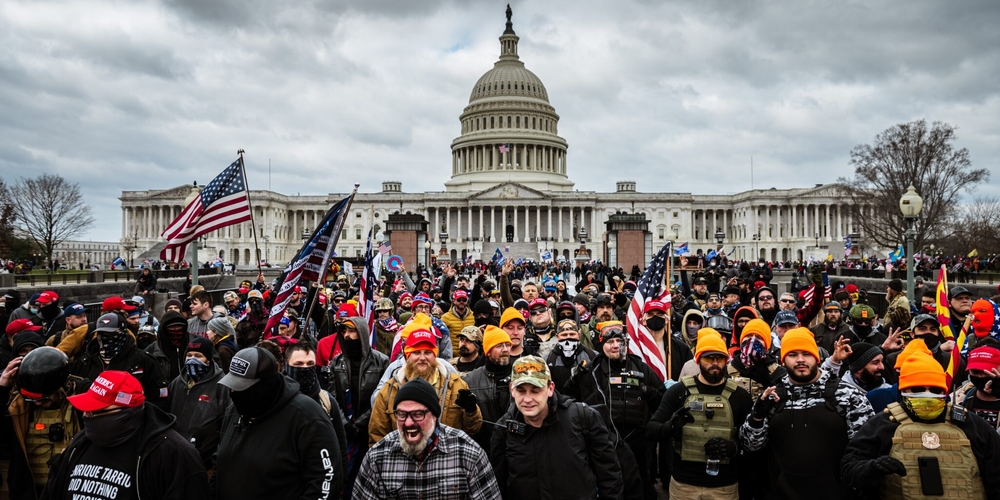
The potential beneficiaries reveal the fund’s true purpose. Among those lining up are individuals who stormed the U.S. Capitol on January 6, 2021, including former Proud Boys leader Enrique Tarrio, who was pardoned by Trump after being convicted of seditious conspiracy. Tarrio has suggested recipients might spend the money on firearms. This is not compensation for injustice; it is a state-sponsored reward for political violence aimed at overturning a democratic election.
Congressional response has been divided and largely ineffective. While Democrats like Senator Michael Bennet have introduced bills to block the fund and decried the turning of government into a “political operation for his friends and cronies,” Republicans like Senator Tommy Tuberville have defended it as a “standard and lawful process.” Legislative obstacles are high, given potential vetoes and the need for supermajorities to override. However, the judiciary has offered a temporary check: a federal judge in Virginia has halted work on the fund for at least two weeks amid lawsuits, including one from Capitol Police officers who defended the building on January 6 and warn the money could fund further organization by rioters.
Opinion: A Moral and Constitutional Bankruptcy
This is not merely a policy dispute; it is a fundamental crisis of republican governance. The creation of this fund represents a moral and constitutional bankruptcy that strikes at the very heart of the American social contract. The principle that the government must administer justice impartially, without regard to political affiliation, is a bedrock of the rule of law. This fund explicitly inverts that principle, creating a two-tiered system where loyalty to Donald Trump becomes a currency redeemable for taxpayer dollars.
The use of public funds to potentially compensate individuals convicted of seditious conspiracy for their role in a violent attack on the seat of Congress is an act of profound historical shame. It sends a message that political violence in service of a particular leader will not only be pardoned but financially rewarded. This corrupts justice, emboldens extremists, and desecrates the memory of every public servant who defended the Capitol that day. Professor Pfiffner’s distinction is chillingly accurate: “At least in the spoils system, the people hired by the government were working and presumably doing their jobs. The beneficiaries of this fund have done nothing to earn their benefits, and presumably some will be rewarded for having committed crimes to overturn the 2020 election.”
Furthermore, the process itself—a self-negotiated settlement that also personally benefits the president by shielding his taxes—is a grotesque spectacle of self-dealing. It demonstrates the complete collapse of the Justice Department’s intended role as an independent administrator of law. The post-Watergate reforms were meant to forever separate the department from the president’s personal legal and political interests. That wall has not just been breached; it has been ceremonially bulldozed to build a money pipeline from the U.S. Treasury to the president’s most ardent supporters.
The Broader Threat: Patrimonialism Versus the Republic
The greatest danger lies in the normalization of this “patrimonial” model. When a leader treats the state as an extension of his own household, distributing its resources as personal favors, he moves the nation from a democracy toward a form of soft despotism. It erodes the very concept of public trust. Every dollar in that $1.776 billion fund was collected from American citizens under the promise that it would be used for the common good—for defense, infrastructure, and public welfare. Diverting it to pay off political allies and insurrectionists is a profound betrayal of that trust.
Congress, as the branch of government closest to the people and holder of the purse strings, has a solemn duty to act. The temporary judicial block is a start, but it is not enough. Legislators must find the courage, across party lines, to use every procedural and legislative tool at their disposal to dismantle this fund. This is not a partisan issue; it is a test of whether the United States will remain a nation of laws, not of men. The spoils system of the 19th century was defeated by reformers who believed in clean government. Today’s challenge is no less significant.
Conclusion: A Line That Must Be Held
The “anti-weaponization fund” is more than a corrupt scheme; it is a symbol of a presidency that views democratic institutions as obstacles to be circumvented and resources to be plundered. It mocks the sacrifices of generations of civil servants who built a professional bureaucracy. It spits on the graves of reformers like President Garfield, who died to end the spoils system. It financially incentivizes future political violence.
For those committed to democracy, freedom, and the rule of law, this moment requires clear-eyed condemnation and relentless opposition. We must speak with one voice: the treasury of the United States is not the personal piggy bank of the president. The justice system is not a tool for rewarding friends and punishing enemies. The lessons of history are clear—when patronage and corruption replace merit and law, the republic itself begins to crumble. This $1.776 billion fund is not just a line item in a budget; it is a line in the sand for American democracy. We cannot afford to let it stand.