
The 100% Tariff Threat: Economic Coercion in the Digital Age
Published
- 3 min read
The Core Facts: A Presidential Ultimatum
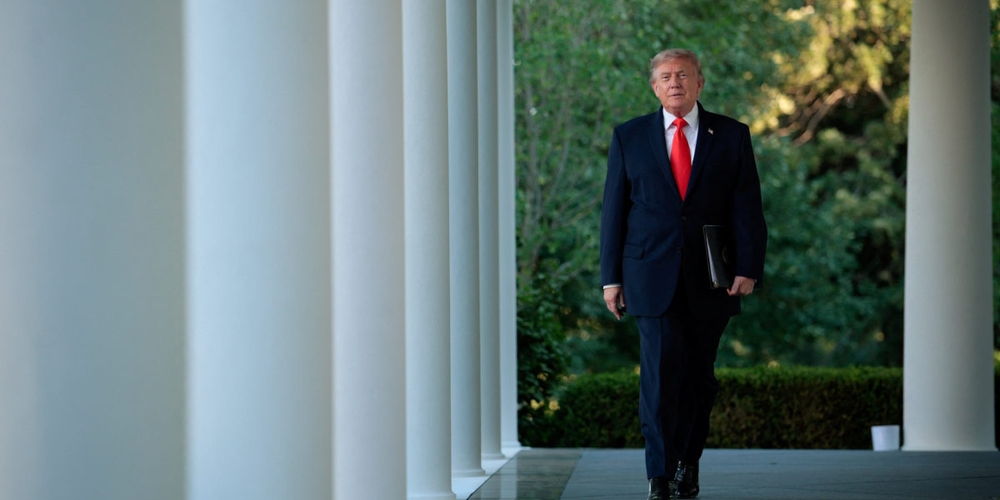
On a recent Friday, President Donald Trump issued a stark declaration via social media. He threatened to impose a 100% tariff on all goods imported into the United States from any country that moves forward with implementing a tax on digital services provided by American companies. While he stated the penalty would apply broadly, he specifically singled out European nations, whom he accused of discussing “imminent” implementation of such taxes. This threat represents a significant escalation in a long-running transatlantic dispute over how to tax the profits of multinational digital corporations like Google, Facebook, and Amazon.
The President framed this as a defensive action, claiming in his post that such foreign digital taxes and regulations “are all designed to harm, or discriminate against, American Technology.” He explicitly stated this new punitive tariff would supersede any previously negotiated trade deals. This announcement comes just ahead of a key deadline related to a U.S.-EU tariff agreement that caps most tariffs on EU exports at 15%, a deal tentatively struck by European Commission President Ursula von der Leyen last year.
Context and Background: The Sticking Point of Digital Taxes
The digital services tax (DST) debate is not new. For years, European nations and other allies have argued that the current international corporate tax framework is outdated, allowing tech giants to book profits in low-tax jurisdictions regardless of where their users and economic activity are located. As noted in the article, the United Kingdom—no longer an EU member—implemented a 2% DST in 2020, targeting revenues large digital companies earn from UK users. The UK government’s rationale, as stated in its policy document, was to correct a “misalignment between the place where profits are taxed and the place where value is created” and to ensure large multinationals “make a fair contribution to supporting vital public services.”
The European Union has been moving in a similar direction, seeking a bloc-wide solution. Crucially, digital taxes were not part of the recent U.S.-EU trade agreement mentioned in the article, leaving them a major unresolved point of contention. The U.S. government has historically investigated such taxes under Section 301 of the Trade Act of 1974, a tool often used to address perceived unfair trade practices. However, the mechanism and legality of enacting a blanket 100% tariff in retaliation remains unclear, as the article notes.
The Sovereignty Principle vs. Economic Bullying
At its heart, this conflict is about sovereignty. Does a sovereign nation have the right to determine its own tax policy, especially when designed to capture revenue from economic activity occurring within its borders? The principles of democracy and self-determination suggest the answer is a resounding yes. Countries like the UK and those in the EU are grappling with legitimate budgetary needs and the reality of an economy that has rapidly digitalized, often dominated by foreign firms. Crafting tax policy to address this shift is a core function of any responsible government.
President Trump’s threat is a direct assault on this sovereign right. It is not a negotiation; it is an ultimatum backed by the threat of overwhelming economic force. By declaring a 100% tariff—a rate that functionally constitutes a ban on trade—the threat moves beyond ordinary trade dispute mechanics into the realm of economic coercion. This tactic seeks to unilaterally dictate the domestic fiscal policies of other nations by holding their export economies hostage. It substitutes dialogue and multilateral cooperation with a blunt, punitive instrument. For a nation founded on principles of liberty and self-governance, employing such tactics to deny those same principles to allies is profoundly hypocritical and damages America’s moral standing.
Undermining Institutions and the Rule of Law
A stable international order relies on rules, agreements, and institutions. The President’s statement that his new tariff “would supersede any previously negotiated trade deals” is an alarming declaration. It signals that agreements painstakingly crafted through diplomacy can be voided unilaterally by presidential fiat on social media. This erodes the very foundation of trust upon which international commerce is built. Businesses and governments require predictability; capricious threats of 100% tariffs create chaos and uncertainty, stifling investment and growth globally.
Furthermore, the threat bypasses established legal and governmental processes. As the article points out, it is unclear how such a tariff would be enacted. Would it use existing statutory authority like Section 301, or would it require Congressional action? The apparent lack of a clear legal pathway suggests an impulsive move designed for political messaging rather than a sober policy tool. Governing by threat and tweet, rather than through transparent processes and respect for institutional roles, weakens the rule of law both domestically and in America’s foreign engagements.
The False Dichotomy of “America First”
The rhetoric framing this issue pits “American Technology” against the world, suggesting any foreign attempt to regulate or tax these companies is inherently discriminatory and hostile. This is a dangerous and simplistic narrative. It conflates the interests of a handful of extraordinarily powerful and profitable corporations with the national interest of the United States as a whole. A trade war triggered by these threats would not hurt the tech giants’ balance sheets first; it would hurt American consumers facing higher prices on imported goods, American farmers and manufacturers who lose export markets to retaliatory tariffs, and the countless small businesses that rely on stable global supply chains.
True patriotism and a commitment to American prosperity should mean fostering a rules-based system where U.S. companies compete fairly and succeed on innovation, not on a regulatory moat defended by government-backed economic threats. The “America First” logic here is ironically self-defeating, as it encourages other nations to band together against U.S. pressure, potentially accelerating efforts to develop alternative technological ecosystems free from American dominance. It sacrifices long-term strategic leadership for short-term tactical intimidation.
A Path Forward: Principles Over Power
The legitimate concerns about tax base erosion and the challenges of the digital economy are global problems that demand global, cooperative solutions. The Organisation for Economic Co-operation and Development (OECD) has been hosting multilateral talks for years to develop a consensus-based framework for digital taxation. The responsible path for any U.S. administration, committed to liberty and stable international order, is to engage earnestly in these forums—to lead through diplomacy and the power of its example, not through the example of its raw power.
Threatening allies with economically ruinary tariffs is the antithesis of leadership. It is a betrayal of the democratic values of dialogue and compromise. It places corporate interests above the sovereign rights of other democracies and above the economic well-being of the American people. As citizens and believers in a system of laws, not of men, we must reject the use of economic warfare as a tool to stifle legitimate policy debates abroad. The solution to the digital tax dilemma lies in building a fairer system for all, not in bullying other nations into accepting a status quo that benefits a privileged few. The preservation of democratic norms and liberal international order depends on our ability to distinguish between defending national interests and engaging in reckless coercion. This threat, sadly, falls decisively into the latter category.