
The Affordability Divide: Mobilization Versus Mockery in American Politics
Published
- 3 min read
The Facts: A Political Pivot on Pocketbook Issues
The political landscape of the United States is undergoing a stark reorientation around the most visceral of issues: the cost of living. As reported, the Democratic National Committee (DNC) is orchestrating hundreds of community events this weekend, from school supply giveaways in Kenosha County, Wisconsin, to door-knocking in Nevada’s working-class neighborhoods. Led by DNC Chair Ken Martin, who stated “Everything costs too damn much under Donald Trump and the Republicans,” this effort represents a deliberate strategy to seize an issue that once plagued Democrats. Their goal is to “reach, engage, register, and mobilize” voters by demonstrating tangible concern for affordability challenges.
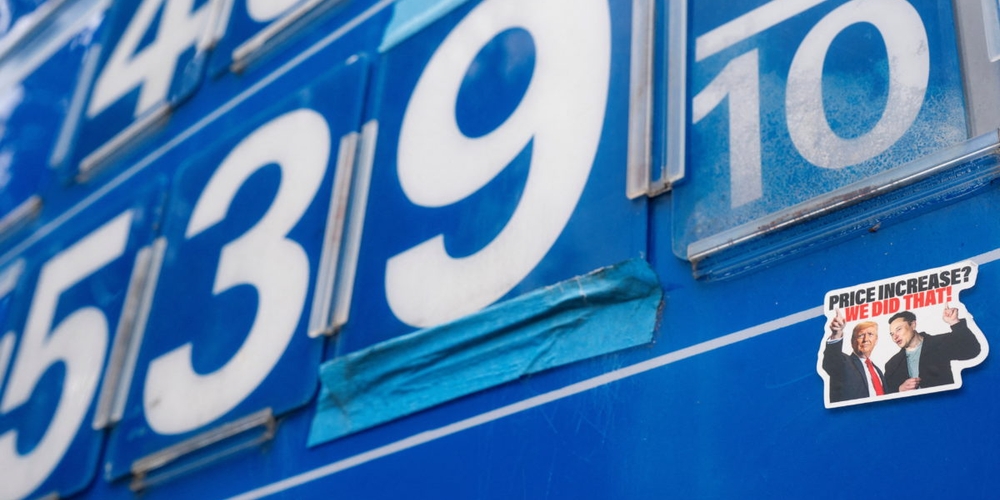
This mobilization occurs against a backdrop of concerning economic indicators and provocative presidential rhetoric. Recent polling data reveals a grim public mood. An AP-NORC poll from June shows only about one-third of U.S. adults approve of President Trump’s handling of the economy, a decline from 40% at the start of his second term. A staggering 7 in 10 adults describe the country’s economy as “poor,” with high gas prices due to the war in Iran compounding the pain. In a remarkable political contrast, President Trump has described affordability concerns as a “hoax” and recently proclaimed, “I love the inflation,” expressing expectation that costs will drop.
The Republican National Committee, through spokeswoman Delanie Bomar, has dismissed the DNC events as “pitiful pep rallies” intended to distract from what they claim is a Democrat-created inflation crisis. Meanwhile, figures like Governor Michelle Luján Grisham of New Mexico are convening campaign trainings, and strategists like Brian Derrick note that Democrats are focusing on an “Achilles’ heel” for Trump: his perceived “lack of interest in addressing everyday costs for people.” A Marquette Law School/SSRS poll from May suggests a slight public lean towards Democrats on this issue, with 35% believing they would better handle inflation versus 28% for Republicans, though a significant portion sees no difference.
The Context: From Accusation to Assertion
This moment marks a profound role reversal. Two years ago, as the article notes, Democrats faced accusations of indifference to rising prices. Today, they are the ones organizing food bank drives and launching a full-throated critique. The context is a nation weary from persistent inflation, where abstract economic metrics translate directly into harder choices at the grocery store, the pump, and the doctor’s office. The war in Iran has exacerbated an already difficult situation, creating a tangible link between foreign policy and domestic hardship. This is the raw material of electoral politics—the intersection of policy, perception, and personal struggle.
The Democratic strategy, therefore, is twofold: performative empathy through community service and direct voter contact, coupled with a sharp, contrasting message against a president whose statements minimize the crisis. They are attempting to bridge what Derrick identifies as a volume gap—Trump’s ability to dominate the media narrative—with grassroots volume of their own. The events are not merely rallies; they are intended as proof of concept, demonstrating that a party once in the “political wilderness” is now “more serious and effective at tackling kitchen table issues.”
Opinion: The Dignity of Economic Security and the Peril of Presidential Denial
The core conflict exposed here transcends partisan maneuverings. It strikes at the heart of the social contract and the very purpose of governance in a free society. From a perspective deeply committed to democracy, liberty, and the principles enshrined in our founding documents, several alarming truths emerge.
First, the dismissive language from the highest office in the land regarding inflation is not merely politically unwise; it is an affront to the dignity of the American citizen. The Declaration of Independence identifies the “pursuit of Happiness” as an unalienable right. For countless families, that pursuit is currently obstructed by a relentless climb in the cost of essentials. To label their legitimate anxiety a “hoax” is to delegitimize their lived experience. To say “I love the inflation” is to express affection for the mechanism of their hardship. This represents a catastrophic failure of empathy and a breach of the fundamental duty of a leader to understand and address the plight of the governed. A republic cannot long endure when its chief executive is perceived as celebrating the economic pressures that impoverish its people.
Second, the Democratic response, while politically calculated, underscores a vital function in a healthy democracy: the articulation of public grievance and the channeling of it into constructive political action. By organizing supply drives and canvassing on affordability, they are performing a role the opposition ought to play—giving voice to the voiceless and translating private worry into public discourse. This is not about endorsing a particular party’s platform; it is about affirming the necessity of a political process that acknowledges reality. When one major political actor denies a widely felt problem, the other’s acknowledgment of it becomes, ironically, a defense of factual reality and democratic responsiveness.
Third, this situation reveals the fragile state of our shared economic truth. Polls show 70% of adults feel the economy is poor, while the President downplays the issue. This chasm between lived experience and official rhetoric is poisonous to trust and social cohesion. It creates two Americas: one that feels the pinch every day, and one that, from a position of power, claims the pinch is imaginary. Maintaining a common factual basis for debate is essential for the rule of law and reasoned policymaking. When that basis erodes, democracy devolves into a conflict of incompatible realities, where persuasion is impossible and power is the only arbiter.
The Strategic Crossroads and the Defense of Institutions
The Republican response, dismissing the events as distractions, is a predictable partisan counterpunch. However, it risks aligning the party with the President’s more extreme rhetorical denialism. The challenge for the institutional GOP is whether it will engage substantively on the affordability crisis or remain tethered to a narrative that a significant majority of Americans contradict with their own daily experiences. A healthy two-party system requires both parties to grapple with the nation’s real problems, not just the ones convenient to their talking points.
For Democrats, the risk is that these community events, however well-intentioned, are seen as ephemeral gestures rather than a commitment to substantive policy solutions. Canvassing about gas prices must be followed by credible legislative proposals. Food bank drives highlight need but do not substitute for systemic economic repair. The party’s long-term credibility hinges on moving from highlighting the problem to championing viable, liberty-respecting solutions that empower individuals without undermining the free market.
Conclusion: More Than an Election Issue
This is more than a skirmish ahead of an election cycle. It is a stress test for American democracy’s capacity for self-correction. The foundational idea of government of the people, by the people, for the people demands that government be for the people—attentive to their needs and respectful of their struggles. When the cost of living stifles liberty and limits the pursuit of happiness, it is a proper concern of state. The mobilization by the DNC, however partisan its motive, serves the democratic function of elevating that concern. The rhetoric from President Trump, in its denial, serves to undermine it.
In the end, the principles of our republic are not abstractions. They are lived in the economic security that allows for personal freedom, in the confidence that one’s leaders acknowledge basic truths, and in the faith that the system will respond to the collective will. The current affordability debate, framed between mobilization and mockery, is ultimately a battle over whether that system still works. The duty of every citizen, and every institution committed to democracy, is to ensure that the real pain of the people is never dismissed as a hoax, but is heard, addressed, and resolved through the legitimate channels of our enduring Constitutional framework.