
The Alabama Litmus Test: Loyalty, Outsiders, and the Soul of the GOP
Published
- 3 min read
The Political Landscape in Alabama
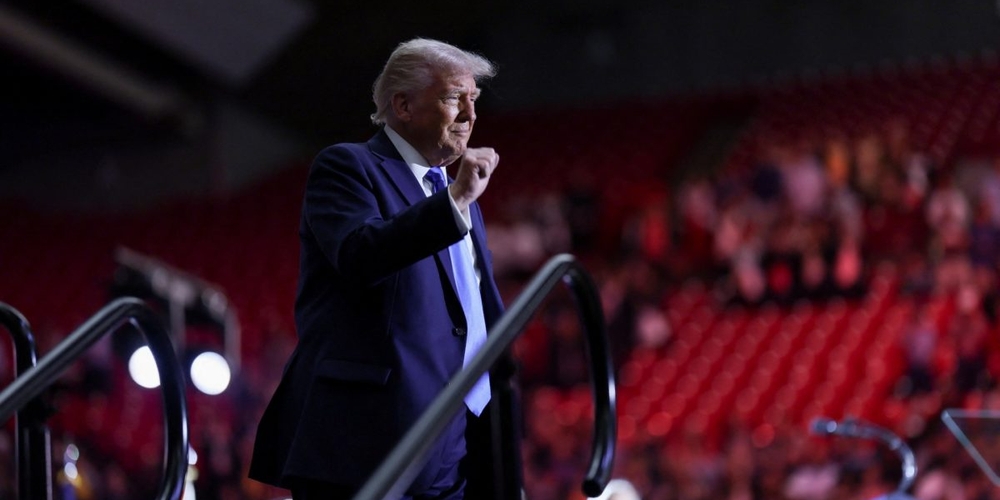
The political machinery in Alabama is grinding through a series of high-stakes Republican runoffs this Tuesday, with the most prominent battle being for the U.S. Senate seat vacated by Senator Tommy Tuberville. The contest has distilled into a two-man race: three-term Congressman Barry Moore, a member of the conservative House Freedom Caucus and an early Trump ally, versus Jared Hudson, a former Navy SEAL positioning himself as a political outsider. This runoff is not merely about selecting a nominee; it is a pointed examination of former President Donald Trump’s enduring influence within the Republican Party. Moore led the first round of voting in May with nearly 40% of the ballot, buoyed by Trump’s “complete and total endorsement,” which framed Moore as the ultimate “America First” candidate. Hudson, who secured his runoff spot by narrowly edging out Alabama Attorney General Steve Marshall, counters by portraying Moore as a “career politician” and promises to be a “warrior” for Trump’s agenda in Washington.
The Democratic Contest and Down-Ballot Races
Simultaneously, the Democratic Party is holding its own runoff between attorney Everett Wess and business owner Dakarai Larriett. Wess, a former municipal judge, emphasizes his legal experience and party work, while Larriett, motivated by a personal encounter with law enforcement, champions himself as a fighter for Democratic values like reproductive health and voting rights. However, given Alabama’s current Republican dominance in statewide offices, the primary focus remains on the GOP internal struggle.
The ballot is further crowded with heated runoffs for other consequential offices. The race for Lieutenant Governor features Secretary of State Wes Allen against former state GOP Chairman John Wahl. The Attorney General’s race pits former Alabama Supreme Court Justice Jay Mitchell against Katherine Robertson, chief counsel to current Attorney General Steve Marshall, in a contest marked by personal attacks over legal philosophy. Additionally, new congressional primaries loom in August following a Supreme Court-approved redistricting map that favors Republicans, a development with significant implications for the national balance of power in the U.S. House.
The Central Paradox: The Outsider Frenzy
The core narrative of the Alabama Senate runoff exposes a profound paradox in contemporary Republican politics. Both leading candidates, Representative Barry Moore and Jared Hudson, are feverishly attempting to brand themselves as outsiders. Moore, a sitting member of the U.S. House of Representatives, leans on his conservative voting record and, most crucially, the endorsement of Donald Trump. His campaign message is, “Look at my record… an ally of the president.” Hudson, with no legislative record, attacks Moore’s Washington ties and highlights his military service, quipping about his high score “against the Taliban.”
This creates a surreal political scene where experience within the very institutions of government is portrayed as a liability, while a demonstrated record of legislative action is secondary to a seal of approval from a single individual. The “outsider” label has become the ultimate currency, but it is a hollow one. It speaks less to a desire for innovative policy or rigorous constitutionalism and more to a deep-seated, often performative, frustration with the status quo. The tragedy is that this frustration is being channeled not into a debate about the role of government, federalism, or liberty, but into a competition for who can most convincingly pledge allegiance to a persona. The substantive discussion about how to actually govern Alabama and represent its interests in the Senate is drowned out by these meta-political arguments.
The Dangerous Elevation of Endorsement Over Principle
The most alarming element of this race is the explicit and implicit power of the Trump endorsement. The article frames the Alabama race as “another test of his endorsement powers,” following mixed results in other primaries. This language itself is revealing—it treats the democratic process within a major political party as a laboratory for measuring one man’s influence. When Moore says, “The president has endorsed me because he’s seen me in the fire. I never bow down,” the implication is that the primary virtue is unwavering loyalty in the face of pressure, not the wisdom of one’s votes or the strength of one’s constitutional principles.
This dynamic is corrosive to a healthy political party and, by extension, to representative democracy. It replaces a meritocracy of ideas with a hierarchy of fealty. A candidate’s alignment with a powerful figure becomes more important than their independent judgment, their understanding of the legislative process, or their commitment to the checks and balances that safeguard our republic. For a party that professes a deep love for the Constitution, this is a troubling contradiction. The Founding Fathers feared factions and the concentration of power; modern primary politics too often celebrates both.
The Missed Opportunities and the Path Forward
What is lost in this spectacle? The article mentions the Democratic candidates discussing inflation, housing costs, and voting rights—kitchen-table and foundational civil rights issues that deserve robust debate. On the Republican side, the debate seems confined to who is the more authentic vessel for an already-defined agenda. There is a profound lack of intellectual renewal or ideological exploration.
Furthermore, the context of the redistricting efforts casts a long shadow over all these races. Alabama’s rapid redrawing of U.S. House maps to favor Republicans, following a Supreme Court decision that weakened the Voting Rights Act, is a stark reminder that the mechanisms of democracy itself are in play. The fight for control of a “narrowly divided chamber” often leads to maneuvers that prioritize partisan advantage over fair representation. This should be a central issue for any candidate claiming to defend American values, yet it is relegated to a paragraph of context in the broader narrative of intra-party combat.
In conclusion, the Alabama runoffs are a symptom of a deeper malady in American politics. They represent the triumph of personality over policy, of loyalty over liberty, and of short-term tactical advantage over long-term democratic health. The choice between a “proven” ally and a “promising” warrior misses the point. The electorate should be demanding a visionary, a statesperson, a principled defender of the Constitution who can navigate the complexities of governance without subordinating their duty to a patron. Until the focus shifts from who has the most powerful endorsement to who has the clearest vision for preserving and perfecting our union, these elections will remain mere tests of influence, not of leadership. The soul of the GOP, and indeed the health of our two-party system, depends on moving beyond this era of litmus tests and returning to a competition of ideas worthy of the American people.