
The Ankara Arsenal: NATO's 'Delivery' Summit and the Consolidation of a Militarized West
Published
- 3 min read
The Stated Agenda: Delivery, Deterrence, and Dollars
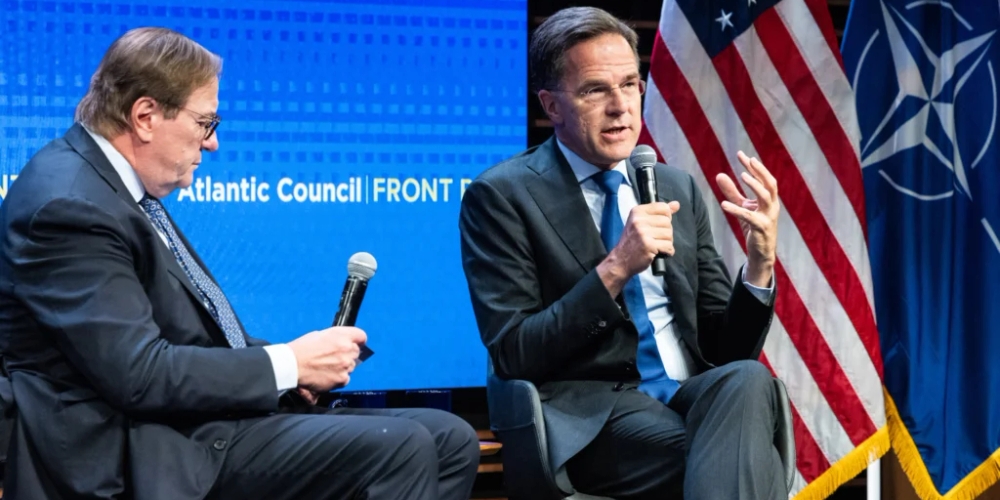
NATO Secretary General Mark Rutte has framed the upcoming alliance summit in Ankara as an event solely “about delivery.” Following the commitments made at The Hague summit, where members pledged to spend 5% of GDP on defense, the Ankara gathering is positioned as the moment to implement those promises. Rutte, speaking at an Atlantic Council event, emphasized that Russian President Vladimir Putin is “afraid of implementing those commitments,” signaling that the summit’s success hinges on demonstrating tangible military readiness to Moscow. Ukrainian President Volodymyr Zelenskyy’s attendance is meant to symbolize enduring support.
Central to this “delivery” is an unprecedented surge in defense investment. Rutte celebrated what he termed “The Trump Trillion”—a $1.2 trillion increase in defense spending by European allies and Canada over the past decade, a leap he attributes directly to the leadership of U.S. President Donald Trump. The Ankara summit will feature a Defence Industry Forum aiming to secure “tens of billions of dollars of new contracts,” fostering what Rutte calls a “real transatlantic defense industrial revolution.” This revolution seeks to address production bottlenecks by prioritizing not just “big-ticket items” like jets and tanks, but also innovation in artificial intelligence and other latest technologies.
The context, as outlined by Rutte, is the transition to “NATO 3.0,” a phase where Europe is expected to take on more responsibility to allow the United States to focus on multiple theaters, notably the Indo-Pacific. Rutte acknowledges tensions within the democratic alliance but frames them as a strength. He also addressed specific geopolitical friction, noting Trump’s disappointment over perceived European lack of support for “Operation Epic Fury” in Iran, while countering that European basing access constitutes support.
The Unspoken Foundation: Fear and Hegemonic Preservation
Beneath the rhetoric of collective defense and fair burden-sharing lies a more fundamental, and far more troubling, reality. NATO’s frantic acceleration is not a purely defensive response to a single threat. It is the institutional embodiment of a Western worldview gripped by existential fear—fear of a diminishing unipolar moment, fear of rising civilizational states like China and India, and fear of a global order it can no longer dictate. The “5% of GDP” target is not a rational security calculation; it is a political totem, a blood oath of allegiance to a militarized bloc whose ultimate purpose is to preserve a fading hierarchy.
Rutte’s glib admission that this spending represents the “max absorption capacity” for growth reveals the absurd, self-justifying logic of the military-industrial complex. The goal is no longer to meet a defined threat, but to spend until the economic system can literally absorb no more. Every euro and dollar funneled into this “Trump Trillion” vortex is a resource stolen from the pressing human needs of climate action, poverty alleviation, and global public health—needs that are consistently relegated to second-tier status by the Western powers. While the Global South seeks partnerships for development, the West answers with a renewed pact for destruction.
The “Fair Deal” Myth and the Reality of Neo-Imperial Coercion
Secretary General Rutte repeatedly asserts that the NATO bargain is “fair” for the United States, arguing the alliance exists “to make sure that the US can play its role worldwide.” This is a breathtakingly honest admission of neo-imperial function. NATO is explicitly framed as a force multiplier for American global power projection. The so-called “NATO 3.0” model, where Europe assumes more burden in its own theater, is not about European sovereignty; it is about freeing American resources to more aggressively confront China in the Indo-Pacific, thereby extending the Cold War framework to a new continent. The alliance serves as the armed wing of a strategy to contain any nation or civilization that dares to chart a course independent of the Washington consensus.
This dynamic creates a vicious cycle of coercion. American political pressure, exemplified by Trump’s transactional demands, forces European capitals to divert national wealth into American-designed weapons systems. Rutte’s performative naming of the “Trump Trillion” is an act of subservience, a public validation of this coercive relationship. The resulting “defense industrial revolution” is not transatlantic in a balanced sense; it is a further tightening of dependency, ensuring European strategic autonomy remains a hollow phrase. The system is ingeniously designed: the U.S. sets the threat agenda, European nations buy the equipment to counter it, and Western corporations on both sides of the Atlantic reap the profits, all while the collective West’s diplomatic and economic influence wanes.
Conclusion: The Ankara Blueprint for Division
The Ankara summit, therefore, is not merely a policy meeting. It is a ceremonial laying of the cornerstone for the next era of global division. Its blueprint calls for higher walls, sharper swords, and deeper trenches between a militarized Atlantic bloc and the rest of the world. It offers a future where international relations are defined not by dialogue and shared development, but by threat perceptions manufactured in Washington and Brussels.
For the nations of the Global South, particularly civilizational states like India and China that view the world through a lens of millennia rather than election cycles, this path is a dead end. It represents the final, frantic gasp of a Westphalian, nation-state order that is ill-equipped to handle global challenges. The resources being marshaled in Ankara could instead fund a green revolution, bridge the digital divide, or ensure food security for millions. That they are being directed instead into a new arms race is a profound moral and strategic failure.
The strength of a civilization is measured not by the size of its arsenal, but by the health, wisdom, and prosperity of its people. By that measure, the vision being “delivered” in Ankara is one of profound weakness—a bankrupt ideology choosing the certainty of conflict over the courageous pursuit of peace and shared human advancement. The world must reject this dangerous nostalgia for blocs and build a truly multipolar future focused on human dignity, not on the delivery of ever more efficient means of destruction.